Gentrification
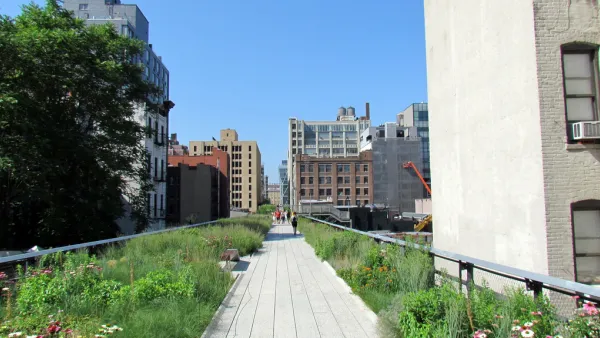
The High Line as Symbol of 'Severe Economic Inequality'
A recent article in Salon cites the High Line as perhaps the most conspicuous example of how municipal governments are subsidizing wealthy corporate or private interests while many citizens continue to suffer low wages and benefits.
How Do Neighborhoods Become Wealthy?
A new study by the Federal Reserve Bank of Cleveland examines a “troubling consistency” of neighborhoods—that is that over the past 30 years, the poorest neighborhoods have stayed that way.
1,500 Affordable Housing Units Proposed for Philadelphia
The “1,500 New Affordable Housing Units Initiative” would target gentrifying neighborhoods in the hopes of preserving a mix of incomes where housing costs are pricing-out long-term residents.
What Does it Take to Be New York City’s Next 'It' Market?
“Underpriced land and room for upward growth in rents is the magic formula that developers seek in the next hot neighborhood.” Just to the east of prospect Park in Brooklyn is a place that has both.
On the Racial Complications of Gentrification in Portland
Anna Griffin, reporting for the Oregonian, produced a pair of recent articles examining the process of gentrification in Portland—a city that recent saw gentrification controversy spark over the location of a Trader Joe’s.
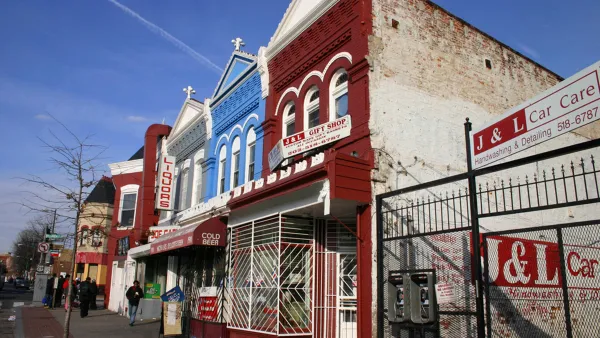
Containing the Impacts of Gentrification for Long-Time Homeowners
Given the unprecedented nature of the gentrification occurring in American cities, many cities have had to respond swiftly to the pressures of changing neighborhoods. A new article surveys cities using property tax relief to support urban homeowners.
Debunking the One-Size-Fits-All Gentrification Model
Not all gentrification is alike. New research show just how different gentrification is in St. Louis as compared to Seattle or San Francisco.
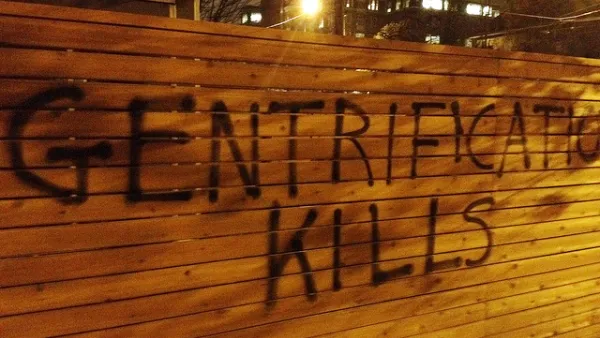
Gentrification: We’re Both the Problem and the Solution
As cities become increasingly desirable, gentrification becomes increasingly prevalent. The best places moving forward will be those willing to commit the best of themselves in working together.
A Discussion About the Post-Gentrification Discussion
“At this point I’m battling gentrification fatigue,” proclaims Dax-Devlon Ross, who has written extensively about his experiences as a self-proclaimed “black gentrifier” in West Harlem.
Will Chinatowns Soon Be Extinct?
The formation of Chinatowns in the United States began in the late 19th Century, and since then have provided an important immigrant gateway. But gentrification and rising expenses in U.S. cities are shrinking many Chinatowns.
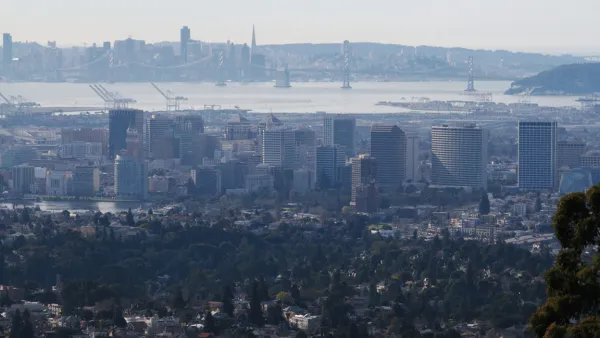
How to ‘Not Be a Gentrifier’—Oakland Edition
As an urbanist, it can be easy to think of gentrification as a macroeconomic trend or a collection of data points, not as an individual experience. A community organizer in Oakland would like to bring the issue home for the city’s newcomers.
Gentrification Also Hurts Shrinking Cities
Recent research calls for policies to incentivize affordable housing in the urban cores of shrinking cities like Buffalo and Cleveland, lest gentrification drive low income residents away from the resources and efficiencies found in urban density.
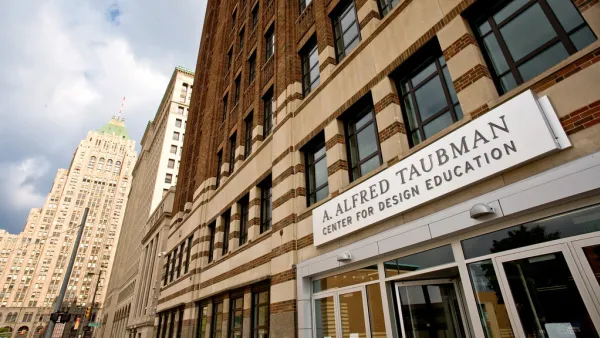
Professionals Priced Out of Hot Detroit Neighborhoods
As unbelievable as it may sound in a city with tens of thousands of vacant properties, young professionals are being priced out of popular Detroit neighborhoods like Midtown and Corktown as demand far exceeds supply.
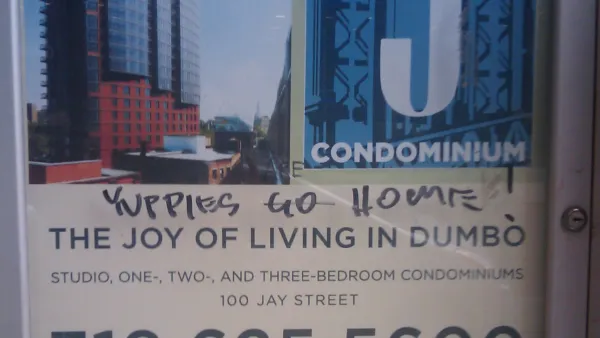
Gentrification and Displacement: Not the Relationship You Might Have Thought
The prevailing wisdom is that as a neighborhood gentrifies, long-time, low income residents are forced to move out because of rising rents, i.e. displacement. Two studies from Columbia University and the Federal Reserve draw different conclusions.
D.C.'s Neighborhoods are Improved, but Who's Benefiting?
After a decade of phenomenal growth and transformation, a survey of D.C. residents reveals widespread agreement on neighborhood improvement, but also concern that the changes are only benefiting the city's affluent residents.
Infill Proposal in Phoenix Raises Gentrification Concerns
Bucking tradition amidst arguably the most thorough example of sprawl in the country, a Phoenix developer is investing in Grant Park—a Latino neighborhood adjacent to downtown.
How to Predict the Next Hot Hood
The growing interest in city living is transforming urban neighborhoods throughout the United States. But how can one get in on the rising tide before becoming priced out? Charlie Wells provides some clues.
Blame Single-Family Neighborhoods for Gentrification
What's so special about single-family homes that we'd rather preserve them than prevent the displacement and financial distress of thousands of low- and moderate-income renters?
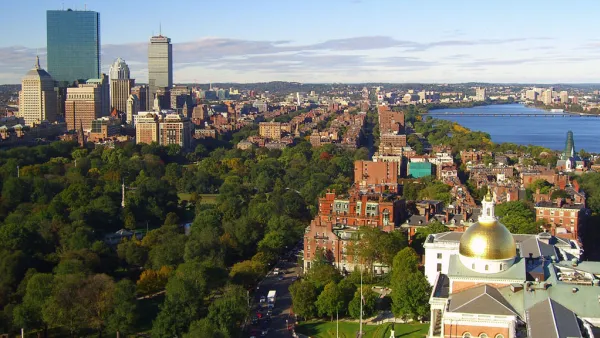
Which U.S. City Gentrified the Most Before the Recession?
A new report from the Federal Reserve Bank of Cleveland quantifies the rate at which America's 55 largest cities gentrified between 2000-2007 based on neighborhood home values. The results may surprise you.
Is Downtown Denver Too Popular?
Some of Denver's leaders are sounding the alarm over rising household income levels and the threat to affordable housing. But in an editorial in The Denver Post, Vincent Carroll argues that an exclusive downtown Denver is better than the alternative.

FREE Course: Walkable City 1: Why Walkability?
After describing his path towards focusing on walkability as the essence of good planning, Jeff Speck marches through his five principal reasons for making more walkable places.
Reinventing Malls: Planning Alchemy—Turning Gray Fields Into Gold
The course focuses on the opportunities and imperatives that shape reinvention of mall sites.

One Hundred Miles
County of Mendocino
planning NEXT
The Architects Foundation
University of Cincinnati Online
Montrose County
Northern Illinois Transit Authority (NITA)
The Pocatello Development Authority









