David Madden laments that our current debate over gentrification, whether bemoaning a loss of authenticity or trumpeting the good that trickles down, "doesn't do justice to everything at stake." He suggests how to reorient the discussion.


"In countless urban districts across the world, affordable housing is on the decline and displacement is on the rise," observes Madden. "This is especially true in New York and London, where observers are straining to find sufficient prefixes (mega, hyper and super have all been aptly applied) to describe the pace at which gentrification is changing the city."
"In an insidious way, the narrative of 'urban renaissance' – the tale of heroic elites redeeming a city that had been lost to the dangerous classes – permeates a lot of contemporary thinking about cities, despite being a condescending and often racist fantasy," he continues.
By framing urban decay as the only alternative to gentrification, the ways in which our cities can be improved to the benefit of all are overlooked.
"It's beyond time that policymakers, planners and urbanites de-gentrified their thinking about cities," Madden urges.
Read the full story: Gentrification doesn't trickle down to help everyone
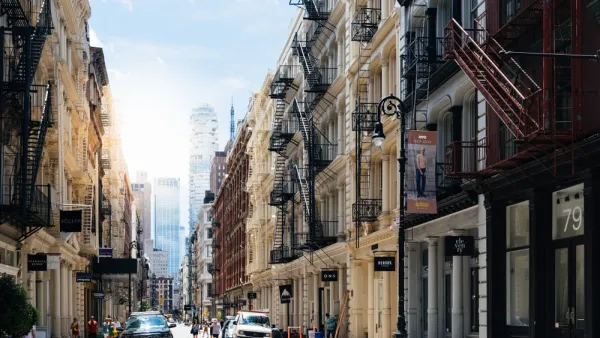
The Growing Urban Inequality Gap, Visualized
Inequality is growing faster in large metropolitan areas, according to a New York Times data visualization.
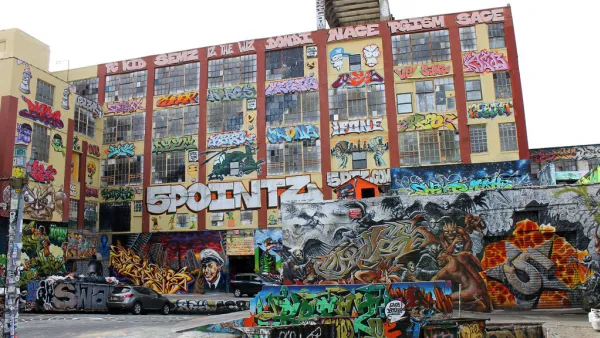
Are Cities Killing Their Creative Edge in the Quest for More Revenue?
As the world's centers of business and politics compete to create ever more lucrative commercial and residential zones, creative spaces are being razed and redeveloped. Is the ability to nurture creativity and diversity being lost in the process?
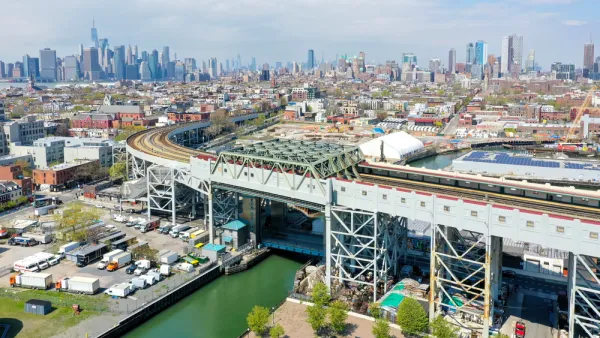
Does Zoning Create a Vicious Circle—Or Can It Fix Itself?
Ideally, planners could balance homeowners' interests in zoning against the public good, liberalizing zoning when prices got too high. But this may be politically impossible.

Washington state to charge fee to drivers with fuel-efficient cars
Revenue from the fee will go towards supporting the state’s highways.

Illinois considers spending $1 billion in taxpayer money on data center
A quantum computing campus and data center are currently under construction in Chicago.

Trump to blast ‘hydrocarbon highway’ through ‘world’s longest art gallery’
Environmental and historic preservation groups are suing to stop the project.

NYC, state sue feds over mixed-immigration-status housing assistance rule
The state’s lawsuit argues that the rule change violates the Administrative Procedure Act.

Michigan to turn neighborhood into virtual power plant
Residents will soon be able to divert their excess energy to the grid in exchange for compensation.

Data center, mining project swarm to long-awaited Alaska railroad line
The state-owned railroad approved final plans for the spur line this week; the project is expected to cost $311 million, mostly funded by the federal government

FREE Course: Walkable City 1: Why Walkability?
After describing his path towards focusing on walkability as the essence of good planning, Jeff Speck marches through his five principal reasons for making more walkable places.
Reinventing Malls: Planning Alchemy—Turning Gray Fields Into Gold
The course focuses on the opportunities and imperatives that shape reinvention of mall sites.

City of Charlotte
City of Rosemead
Rutgers University, Edward J. Bloustein School of Planning and Public Policy
University of Michigan School for Environment and Sustainability (SEAS)
Hunter College, City University of New York (CUNY)
The Architects Foundation
University District Partnership