A new report from the Federal Reserve Bank of Cleveland quantifies the rate at which America's 55 largest cities gentrified between 2000-2007 based on neighborhood home values. The results may surprise you.


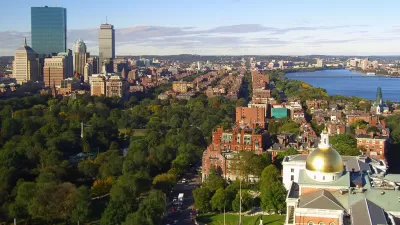
"Daniel Hartley, a research economist at the Federal Reserve Bank of Cleveland, explored the spread of gentrification in America’s 55 largest cities from 2000 to 2007 by analyzing which census tracts were primed for gentrification (those with below median home value) and how the housing prices, rents and income levels changed in those tracts over the seven year period," writes Bill Bradley.
"Boston led the way with 26 percent. Washington, D.C., was hot on its heels with 19 percent and New York City just behind at 18 percent," notes Bradley. "So, East Coast cities were at the forefront of all of this. For once, statistical analysis dovetails with arguments generally had in dive bars. (Here’s an unexpected data point: Tampa had 18 percent of its city gentrified, the same as New York. Lena Dunham is cackling somewhere.)"
Read the full story: More Of Boston Gentrified Than New York City In the Early Aughts
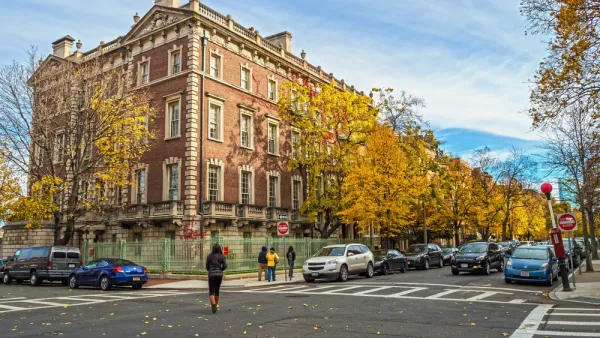
Boston to Require Fair Housing Review for New Developments
The Boston Zoning Code is one of the first in the nation to Affirmatively Furthering Fair Housing.
10 U.S. Cities Launch Anti-Displacement Network
More than half of American tenants are rent-burdened, putting them at risk of displacement. A national collaboration with PolicyLink hopes to help.
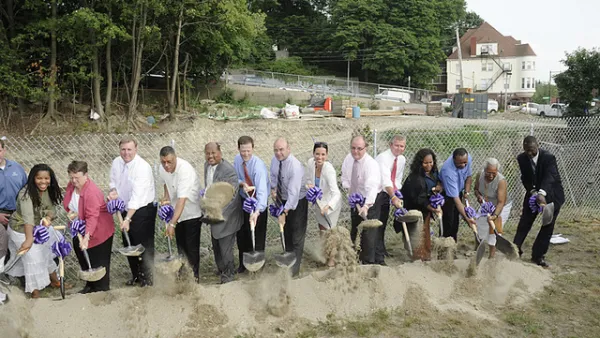
Redevelopment Without Displacement: A Boston Experiment
The city of Boston is trying to establish a model for gentrification mitigation in the Upham's Corner section of Dorchester.

Planetizen Federal Action Tracker
A weekly monitor of how Trump’s orders and actions are impacting planners and planning in America.

California plans to bury El Niño’s downpour
If the state plays its cards right, it may be able to store a billion acre-feet of El Niño’s water in aquifers.

Desperate measures: Advocates weigh draining Lake Powell to fill Colorado River
Draining the reservoir could reduce evaporation losses by a couple hundred thousand acre-feet.

Los Angeles just elected an urban planner as its mayor
Transportation analysts are optimistic that Raman will be more aggressive in addressing transit issues than Bass.

Mamdani’s pied-à-terre tax survives legal challenge
A panel of judges found that the plaintiffs failed to demonstrate injury as a result of New York City's implementation of the tax.

Eastern Nebraska is running out of electricity
Data centers and electrification are straining eastern Nebraska’s grid, throttling economic development.

FREE Course: Walkable City 1: Why Walkability?
After describing his path towards focusing on walkability as the essence of good planning, Jeff Speck marches through his five principal reasons for making more walkable places.
Reinventing Malls: Planning Alchemy—Turning Gray Fields Into Gold
The course focuses on the opportunities and imperatives that shape reinvention of mall sites.

City of Rosemead
Rutgers University, Edward J. Bloustein School of Planning and Public Policy
One Hundred Miles
University of Michigan School for Environment and Sustainability (SEAS)
Hunter College, City University of New York (CUNY)
The Architects Foundation
City of Cambridge
Montrose County
The Pocatello Development Authority