Some of Denver's leaders are sounding the alarm over rising household income levels and the threat to affordable housing. But in an editorial in The Denver Post, Vincent Carroll argues that an exclusive downtown Denver is better than the alternative.


"We have reached the point in the development of downtown Denver when people are complaining — or at least seriously worried — about its successful transformation," writes Carroll.
"Denver really runs the risk of becoming an elitist city," Councilwoman Judy Montero told The Post. "With development and transportation build-out and all of these transit stops, the idea was for this to be mixed income and equitable. ... We have to find a middle. We have to find a balance."
"Good luck locating that middle," answers Carroll. "When neighborhoods gentrify with the sweeping speed that has occurred downtown (as well as in Highland in north Denver, and years ago in Cherry Creek), the pressure on prices can prove irresistible. Preserving or expanding 'affordable housing' in such an environment — meaning residential units that people with median household incomes can afford — becomes an increasingly difficult task."
"Yet why cavil? Many cities would give anything to possess the allure of Denver's downtown — a magnet for educated professionals in their 20s and 30s."
Read the full story: Carroll: Downtown Denver too exclusive? Better than the alternative

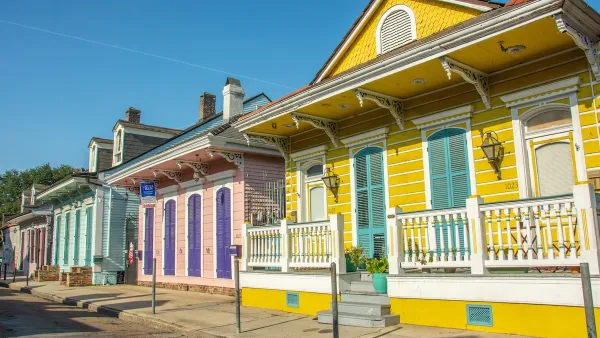
20 Years After Katrina, New Orleans is More Unaffordable Than Ever
The city’s post-hurricane redevelopment has failed to include its most vulnerable residents.
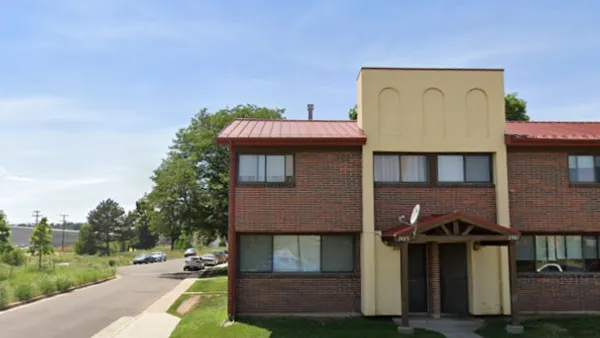
Does Branding Play a Role in Redevelopment?
One Denver neighborhood’s massive redevelopment project includes a branding element. Is it necessary?
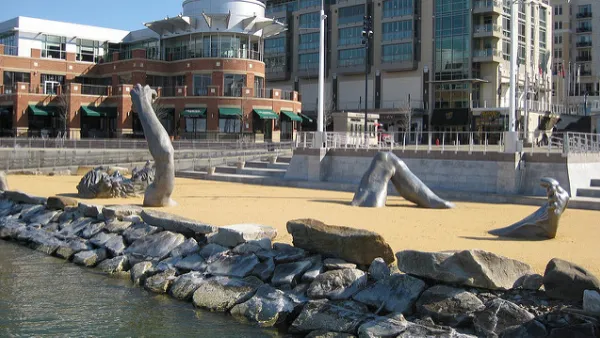
Upzoning Plan Faces Opposition in Prince George's County
A rezoning plan in Prince George's County, Maryland is receiving strong criticism from residents who worry redevelopment without tenant protections will lead to displacement.

Planetizen Federal Action Tracker
A weekly monitor of how Trump’s orders and actions are impacting planners and planning in America.

California plans to bury El Niño’s downpour
If the state plays its cards right, it may be able to store a billion acre-feet of El Niño’s water in aquifers.

Chicago breaks ground on $3 billion megadevelopment
The new neighborhood, titled Foundry Park, will one day host 3,700 residences.

One of Denver’s busiest corridors to gain BRT
The project will span 18 miles and contain 74 bus rapid transit stations.

275,000 bus trips are at stake on Seattle's ballot
If passed, the Seattle Transit Measure would trigger a 0.3% sales tax and raise an average of $138 million per year to maintain and expand Seattle’s bus services.

Texas may pay Israeli company billions to ease water woes
Texas awarded IDE Technologies the contract for its Harbor Island project, which is slated to become the Western Hemisphere's largest desalination plant.

FREE Course: Walkable City 1: Why Walkability?
After describing his path towards focusing on walkability as the essence of good planning, Jeff Speck marches through his five principal reasons for making more walkable places.
Reinventing Malls: Planning Alchemy—Turning Gray Fields Into Gold
The course focuses on the opportunities and imperatives that shape reinvention of mall sites.

City of Rosemead
Rutgers University, Edward J. Bloustein School of Planning and Public Policy
One Hundred Miles
Hunter College, City University of New York (CUNY)
The Architects Foundation
University of Cincinnati Online
City of Cambridge
Montrose County
The Pocatello Development Authority