As cities become increasingly desirable, gentrification becomes increasingly prevalent. The best places moving forward will be those willing to commit the best of themselves in working together.


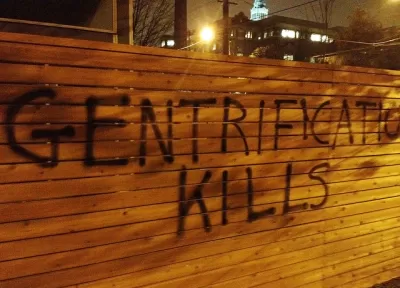
"Almost twenty years ago, just married, my wife and I bought an old house in a friendly but economically depressed old neighborhood. It was, at the time, a predominantly black neighborhood though, like many historic neighborhoods in and around Atlanta that predate our tumultuous, race-driven urban disinvestment of the 60s and 70s, it had also been a predominantly white neighborhood at one point as well."
"Its history is significant and, in the almost two decades since, the process of learning and understanding it has been a meaningful experience. But at the time, all those issues, together with the baggage that accompanies them, simply weren’t on our radar."
"Like most people, our understanding was shaped by the lens of our own circumstance. And that circumstance was that we were relatively broke. Yes, we both had white collar jobs but they were the lowest of entry level and we had a lot of work and dues-paying ahead of us before any sense of expendable income might ever become something real."
Scott Doyon goes on to share some stories not to argue whether or not he and his wife and friend are gentrifiers but as a means of demonstrating that what constitutes gentrification. And whether or not it’s a positive or negative phenomenon.
Read the full story: Gentrification: We’re both the problem and the solution
Mo' Money, Mo' Problems: Community Edition
Do we ever reach a point as a community wherein our problems are behind us? Sorry, but no. If anything, it gets more complicated.
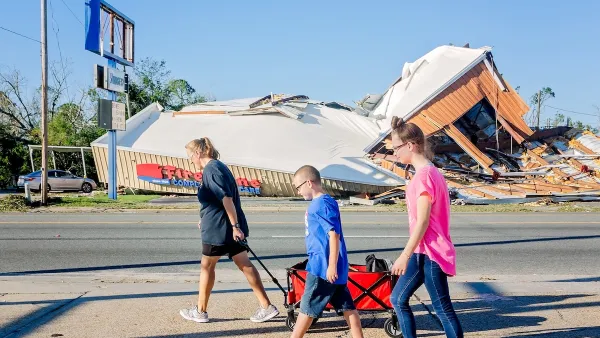
How ‘post-disaster gentrification’ alters neighborhoods after natural calamities
After hurricanes, fires or other calamities, the original residents of a community are often replaced by younger, wealthier residents.
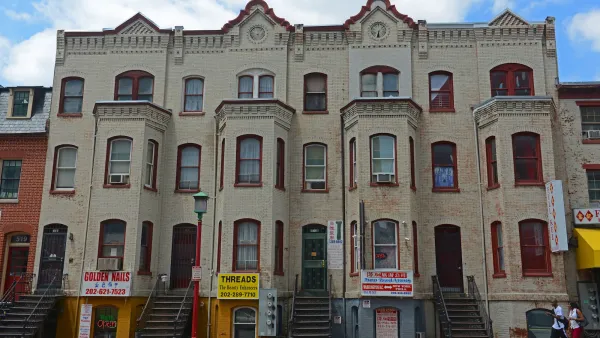
Is this the first wave of de-gentrification?
Valencia, Temescal, H Street and the fickle fortunes of the gentrified neighborhood.

Planetizen Federal Action Tracker
A weekly monitor of how Trump’s orders and actions are impacting planners and planning in America.

California plans to bury El Niño’s downpour
If the state plays its cards right, it may be able to store a billion acre-feet of El Niño’s water in aquifers.

Desperate measures: Advocates weigh draining Lake Powell to fill Colorado River
Draining the reservoir could reduce evaporation losses by a couple hundred thousand acre-feet.

Los Angeles just elected an urban planner as its mayor
Transportation analysts are optimistic that Raman will be more aggressive in addressing transit issues than Bass.

Mamdani’s pied-à-terre tax survives legal challenge
A panel of judges found that the plaintiffs failed to demonstrate injury as a result of New York City's implementation of the tax.

Eastern Nebraska is running out of electricity
Data centers and electrification are straining eastern Nebraska’s grid, throttling economic development.

FREE Course: Walkable City 1: Why Walkability?
After describing his path towards focusing on walkability as the essence of good planning, Jeff Speck marches through his five principal reasons for making more walkable places.
Reinventing Malls: Planning Alchemy—Turning Gray Fields Into Gold
The course focuses on the opportunities and imperatives that shape reinvention of mall sites.

City of Rosemead
Rutgers University, Edward J. Bloustein School of Planning and Public Policy
One Hundred Miles
University of Michigan School for Environment and Sustainability (SEAS)
Hunter College, City University of New York (CUNY)
The Architects Foundation
City of Cambridge
Montrose County
The Pocatello Development Authority