A new report finds that roughly 15 percent of U.S. neighborhoods have been impacted by housing cost increases and displacement.


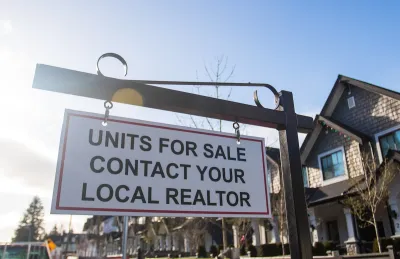
A new report from the National Community Reinvestment Coalition, “Displaced By Design,” highlights the impacts of gentrification on Black neighborhoods.
As Eliana Perozo explains in Next City, “From 1980 to 2020, gentrification impacted more than 1,800 downtown census tracts in major metro areas, with Washington, DC, New York City, Philadelphia, New Orleans, Atlanta and the San Francisco Bay area topping the list.” This amounts to roughly 15 percent of urban U.S. neighborhoods.
According to the report, “Nearly half of mostly-Black neighborhoods that experienced gentrification in 1980 were no longer mostly-Black by 2020; of those, about 29% saw a full racial turnover and became mostly white or Hispanic neighborhoods, and about 23% became racially-mixed.” This raises concern about new patterns of segregation and loss of opportunity and wealth for Black households.
The study’s authors emphasize that the study focused on “developer-driven and urban planning-driven gentrification” rather than displacement caused by individual home flippers, and suggests ways that cities can mitigate the negative impacts on longtime residents of gentrifying areas including “community-led development, affordable housing preservation, homestead exemptions on property taxes.”
FULL STORY: In the Past 50 Years, We’ve Lost More Than 150 Majority-Black Neighborhoods

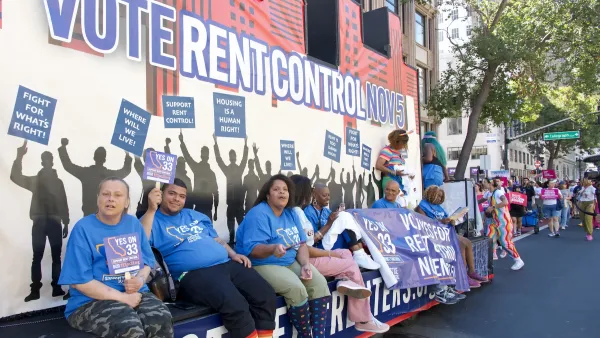
Oakland residents fear AI-fueled gentrification
The new tech boom that's driving up rents in San Francisco could have rippling impacts on East Bay communities.
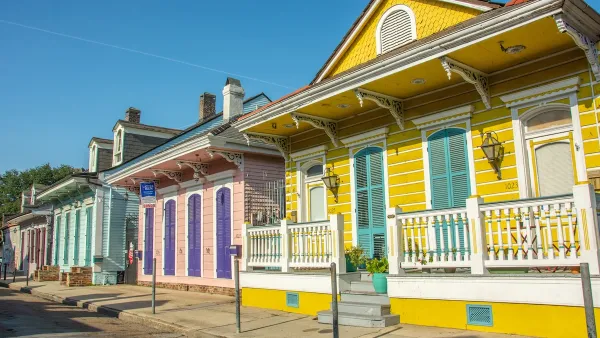
20 Years After Katrina, New Orleans is More Unaffordable Than Ever
The city’s post-hurricane redevelopment has failed to include its most vulnerable residents.

High Housing Costs Driving Down Transit Ridership in LA
When neighborhoods gentrify and displace lower-income residents, transit ridership suffers, new research shows.

The state-sanctioned urbicide of Austin
People don’t kill cities. Freeways do.

US to reduce Colorado River water deliveries to Mexico
A new Colorado Treaty amendment reduces Mexico’s Colorado River water allocation by 250,000 acre feet.

New Jersey’s second-largest city bans standalone data centers
Jersey City will continue to allow co-location facilities, such as those meant for research institutions that store their own data.

Amtrak not solely to blame for New Jersey commuter rail's unreliability, report finds
A new study from the Garden State Initiative found that NJ Transit’s budget grew 20% across a 4 year period, but reliability declined significantly over the same period.

EPA erases limits on planet-warming pollution from power plants
Under Monday’s plan, power plants would still have some limits on how much mercury, arsenic and other contaminants they can emit.

Phoenix announces new on-demand transit service, more frequent RAPID buses
Both new services will launch in October, and are part of Phoenix's Project Effective Access Solutions for Easing Congestion.

FREE Course: Walkable City 1: Why Walkability?
After describing his path towards focusing on walkability as the essence of good planning, Jeff Speck marches through his five principal reasons for making more walkable places.
Reinventing Malls: Planning Alchemy—Turning Gray Fields Into Gold
The course focuses on the opportunities and imperatives that shape reinvention of mall sites.

Eagle County Government
Harvard University Graduate School of Design
Nashville Planning Department
The Architects Foundation
University of Cincinnati Online
The Pocatello Development Authority
The Urban Renewal Agency of the City of Pocatello
Journal of the American Planning Association