Project to map corporate shuttle routes of Silicon Valley giants such as Apple, Google, & Facebook, outlines the forces behind gentrification in San Francisco and reveals a startling pattern of reverse sprawl.


Researchers map the not-so-secret routes of corporate shuttles transporting tech workers from San Francisco to Silicon Valley.
"Whichever side of this issue you’re on, it’s clear that we’re looking at a reversal of the historical norm: The workers that used to live in residential suburbs while commuting to work in the city are now living in the city, while the largest technology companies are based in the suburbs and increasingly draw their labor supply from dense urban neighborhoods."
"...conventional wisdom has it that the routes are a way for companies to respond to the desires of young, hip urbanites who want to experience the frisson of urban life in between their shifts down to soulless suburbia." But tech companies do not have room to build more parking lots so they are using private shuttles for commuting employees.
"For better or worse, we’re looking at a situation where private networks start to supplant public infrastructure."
Read the full story: Mapping Silicon Valley’s Gentrification Problem Through Corporate Shuttle Routes
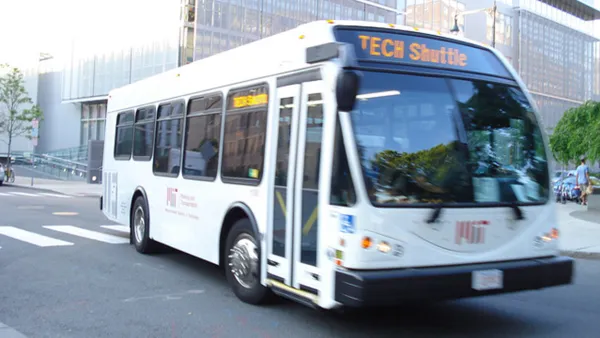
Tech Shuttles: The Bay Area's Seventh Largest Transportation Provider
A new survey has found that every day more than 800 tech buses are traveling on the region's roadways, carrying around 34,000 passengers daily
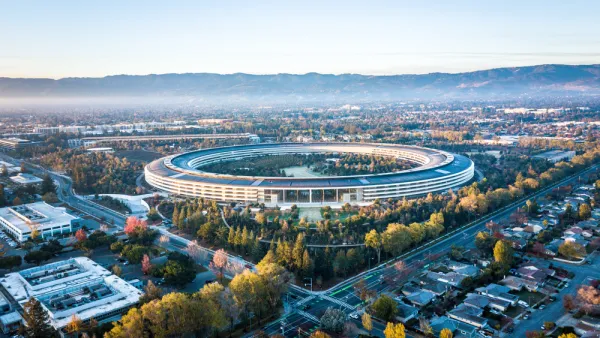
Why Big Tech Billions Won't Dent California's Housing Crisis
New multibillion-dollar affordable housing commitments from leading tech firms may build out thousands of units, but that's nothing next to California's gargantuan housing shortage.
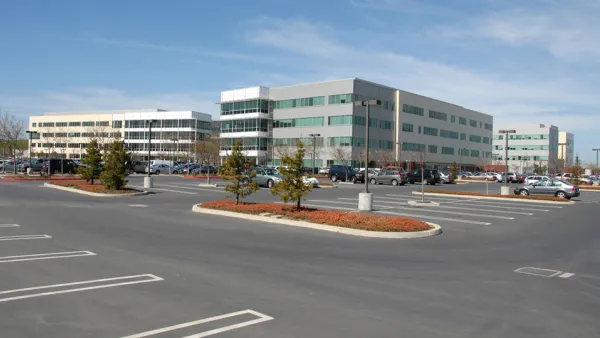
How Office Parks and Corporate Campuses Evolved
The office park has become a suburban given, disliked by some, but once it represented a utopian vision of work away from the city. Here's a look at how the Silicon Valley model developed, and where it might be going.

Planetizen Federal Action Tracker
A weekly monitor of how Trump’s orders and actions are impacting planners and planning in America.

California plans to bury El Niño’s downpour
If the state plays its cards right, it may be able to store a billion acre-feet of El Niño’s water in aquifers.

Desperate measures: Advocates weigh draining Lake Powell to fill Colorado River
Draining the reservoir could reduce evaporation losses by a couple hundred thousand acre-feet.

Chicago voters approve permanent festival grounds, penalty for vacant property owners
Currently, major summer and fall festivals take over public parks for weeks at a time, drawing criticism from nearby residents

NYC votes to cut outdoor dining red tape, speed up permitting
New York City also voted to allow the Department of Transportation to begin work on urgent projects before notifying elected officials.

California appears to reject Prop. 45
The proposition would have expanded the projects that qualify for a streamlined environmental review, effectively paring down the California Environmental Quality Act.

FREE Course: Walkable City 1: Why Walkability?
After describing his path towards focusing on walkability as the essence of good planning, Jeff Speck marches through his five principal reasons for making more walkable places.
Reinventing Malls: Planning Alchemy—Turning Gray Fields Into Gold
The course focuses on the opportunities and imperatives that shape reinvention of mall sites.

City of Rosemead
Rutgers University, Edward J. Bloustein School of Planning and Public Policy
One Hundred Miles
Hunter College, City University of New York (CUNY)
The Architects Foundation
University of Cincinnati Online
City of Cambridge
Montrose County
The Pocatello Development Authority