Congestion Pricing
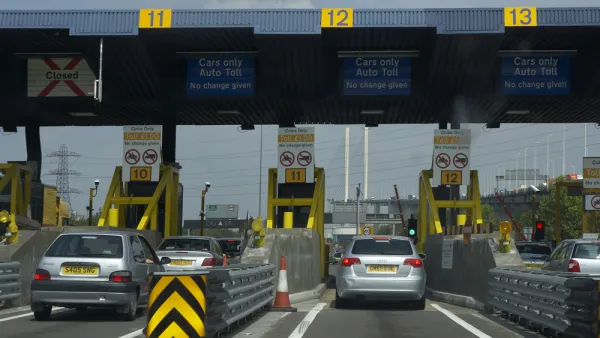
Congestion Pricing Could Be Fairer Than the Status Quo
A timely debate, as New York City debates a congestion pricing scheme proposed by Gov. Andrew Cuomo, and California looks for ways to reduce emissions from transportation.
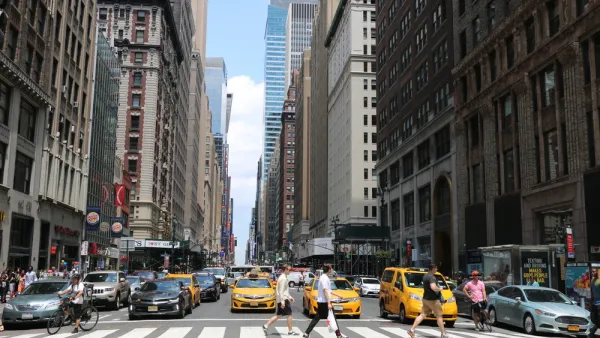
Praise for Gov. Andrew Cuomo from New York Times on Cordon Pricing
Thanks to the governor's support, there is reason for optimism that a plan to charge motorists entering Manhattan below 60th St. and toll the East River bridges will have a better outcome than Mayor Michael Bloomberg's plan did in April 2008.
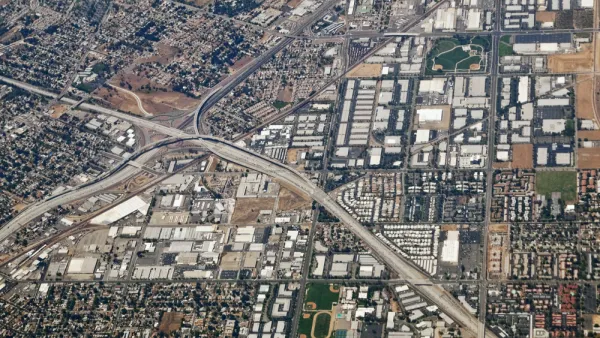
Is the Era of the 'Free' Freeway Coming to an End?
No one's suggesting that freeways will be converted to tollways, but a pattern is emerging that when freeways are widened, express lanes, financed in part by user fees, are being added rather than mixed-flow lanes. Case in point: the Inland Empire.
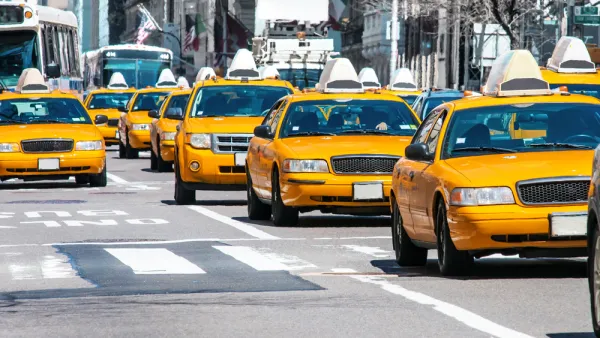
Congestion Pricing Finds New Life in New York City
Eight years ago, a proposal to charge on drivers entering the most congested parts of Manhattan was soundly defeated when it moved from the city to the state. Now the idea is being revisited again, with support from the governor.
Defending Road Pricing from Public Opinion
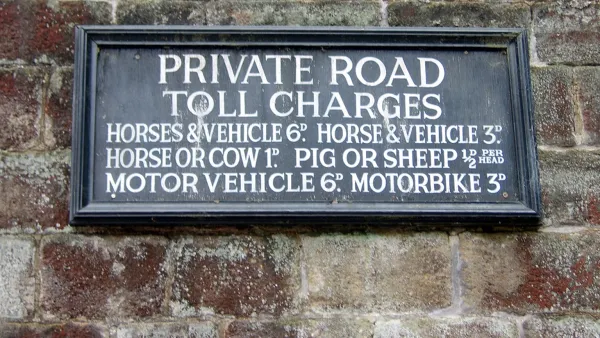
Access Magazine takes a deep dive into congestion management, explaining the reasoning behind a publicly unpopular strategy: road pricing.
Only a Year Old, Bay Area's Newest Express Lanes Rated a Success
A report produced by the county authority that built and operates the I-580 Express Lanes in the Bay Area declares them a success. Operating speeds are faster and congestion is reduced. About 11 percent of the freeway traffic uses the toll lanes.
Bay Area Voters May Be Asked to Hike Bridge Tolls 60 Percent
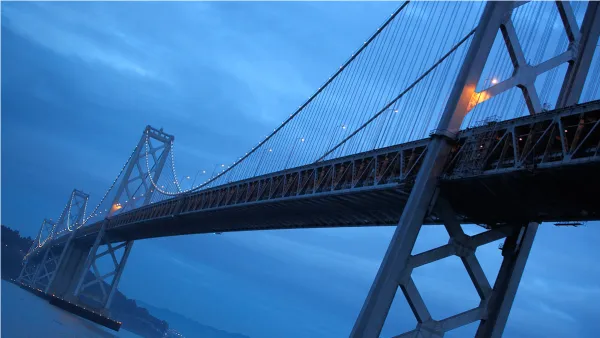
Before the ballot measure would go to voters, state legislation needs to be written, passed, and signed by Gov. Brown. The first step was taken Dec. 14, when the region's planning agency discussed the option. Tolls are $5, last raised $1 in 2010.
Texas Would Need $24 Billion to End Highway Tolls
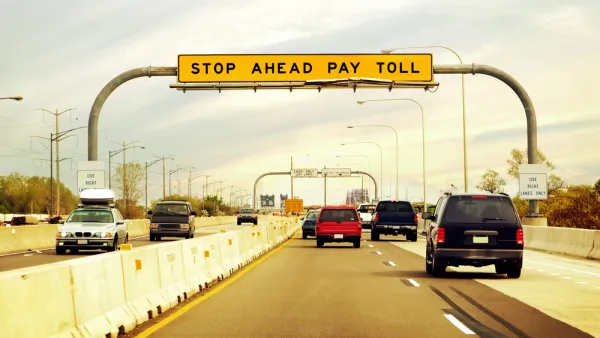
Texas politicians are wondering how much it would cost to remove tolls from hundreds of miles of roads around the state. Though the political cost of tolling is high, the actual cost, it turns out, is higher.

Congestion Pricing Requires a Careful Balance
Congestion pricing is an economic tool for a difficult, complicated problem, and must be calculated carefully to avoid unintended consequences.
State Legislation Would Dramatically Reform Tolling in New York City
It remains to be seen if the ambitious changes in toll pricing around New York City proposed by AO9633 has the support it needs for approval, but at least the tolling agenda proposed by Move NY is now up for consideration by the State Legislature.
Report Supports Road Tolls and VMT Fees over Gas Tax
The Congressional Budget Office takes aim at transportation funding and spending. It notes with alarm a $143 billion federal subsidy since 2008 and recommends charging motorists directly via vehicle-miles-traveled fees and road tolls.
Slow Express Lanes Causes L.A. County Metro to Tinker With Toll Pricing
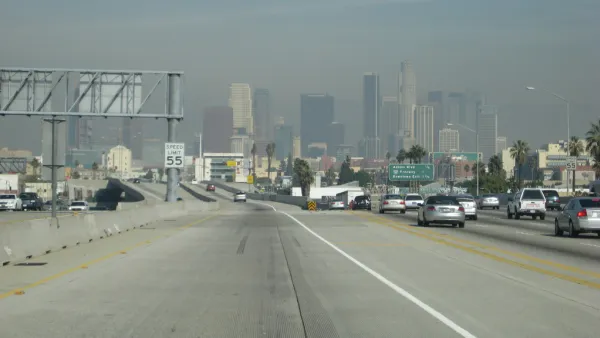
As more solo-commuters have moved into the express pay lanes designed to quickly move traffic on Los Angeles's congested freeway system, speeds have dropped and L.A. Metro officials are looking to pricing disincentives to speed things up again.
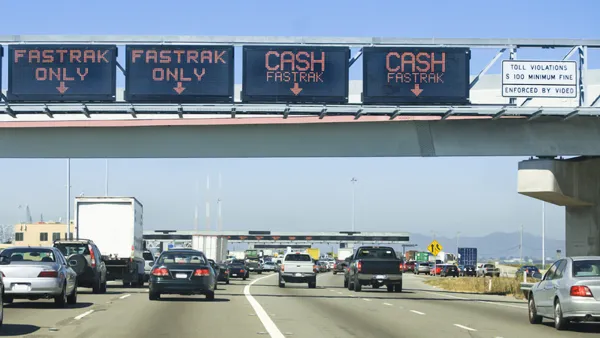
Congestion Pricing as the Missing Piece of Urban Mobility
A new report argues for congestion pricing projects to be implemented in major Canadian cities.
How One Plan Manages Growth in London
While still deeply attached to its history, today London is grappling with rapid population growth. The ensuing need to increase density in appropriate areas and improve connectivity present London with challenges of a quintessentially modern kind.
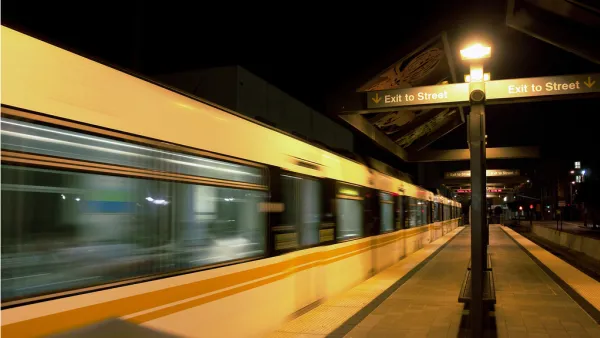
Study: Transit Subsidies Work Best Alone
Research suggests that transit subsidies produce minimal social value when combined with congestion pricing and dedicated bus lanes.
Study: Congestion Pricing Improves Traffic Safety
According to new research, London's congestion pricing program has improved traffic safety both in the cordoned city center and in the free adjacent areas. Although traffic is moving faster, fatalities have been reduced.
Congestion Pricing on Legacy Roadways
What happens when there is no room to widen a congested roadway? One solution is to build above the roadway. Another, suggests an HNTB expert, would be to convert an existing lane into a managed toll lane and fund transit with the revenue.
A New, Flexible System for Congestion Pricing
Researchers at MIT have developed a new, flexible congestion pricing system.
Quantifying the Benefits of Congestion Pricing
In a recent blog post, Michael Brown of Metro Analytics sought to quantify the benefits of congestion pricing.
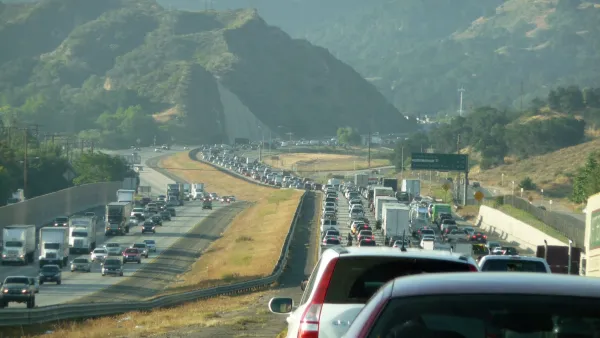
Induced Demand Explained (or Why We Can't Build Our Way Out of Congestion)
In case you need an easy link to reference when encountering arguments in favor of widening roads and freeways as a solution for traffic, Adam Mann provides an accessible and clear explainer article that sums up the limitations of such strategies.

FREE Course: Walkable City 1: Why Walkability?
After describing his path towards focusing on walkability as the essence of good planning, Jeff Speck marches through his five principal reasons for making more walkable places.
Reinventing Malls: Planning Alchemy—Turning Gray Fields Into Gold
The course focuses on the opportunities and imperatives that shape reinvention of mall sites.

City of Rosemead
Rutgers University, Edward J. Bloustein School of Planning and Public Policy
One Hundred Miles
Hunter College, City University of New York (CUNY)
The Architects Foundation
University of Cincinnati Online
City of Cambridge
Montrose County
The Pocatello Development Authority









