The Chicago Metropolitan Agency for Planning (CMAP) has put forth an ambitious congestion-pricing plan for new highway lanes planned on six major roadways across the Chicago metro area in the hopes of building political and public support.


Jon Hilkevitch details CMAP's plans for easing brutal rush hour commutes along key arteries such as the Stevenson Expressway (I-55), Eisenhower Expressway (I-290), and the Jane Addams Memorial Tollway (I-90) by implementing a congestion-pricing plan on "new highway lanes planned on six major existing and future roadways across the six-county area."
"In the proposal, the amount would be 5 cents to 31 cents per mile during rush hours, depending on the specific roadway," says Hilkevitch, and "would generate an estimated $74 million
annually in gross revenue, according to CMAP."
"Officials at the agency
said the money could be used to help fund capacity-expansion projects and improvements to mass transit....CMAP has made congestion pricing a top priority in its 'Go to 2040'
blueprint for improving infrastructure and the quality of life in
northeastern Illinois."
Read the full story: Getting Around: How much are you willing to pay to avoid traffic?

Can Chicago Ride Its Rails to Economic Growth?
Chicago's position as a central hub for manufacturing and shipping helped establish the city as the economic powerhouse of the Midwest. A new report recommends the city update that infrastructure to grow the region's economy.
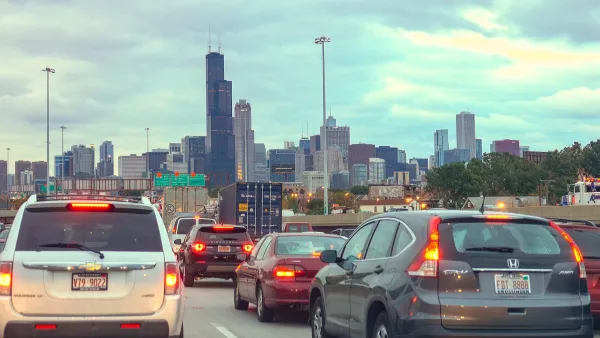
Since NYC Congestion Pricing, Chicago now has Nation’s Worst Traffic
Chicago overtook New York for the worst traffic of any major U.S. city as NYC saw traffic decline after congestion pricing went into effect.
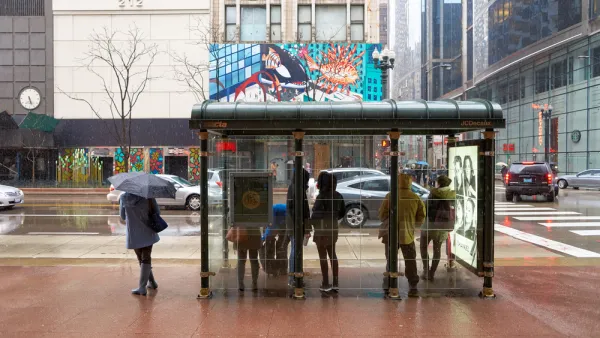
Study: Road Pricing Could Boost Chicago Transit
A combination of road pricing and adjustments to transit service could let the CTA lower fares to ‘next to nothing.’

Planetizen Federal Action Tracker
A weekly monitor of how Trump’s orders and actions are impacting planners and planning in America.

Amtrak, CN end decades-long dispute with eight-year agreement
The new operating agreement establishes an updated framework for the companies to work together, including processes to resolve disputes.
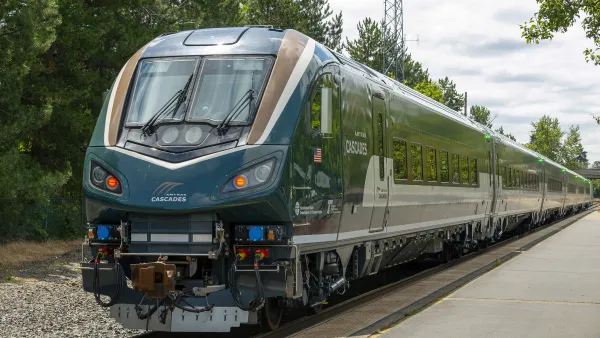
Northwest rail fans eager for Sept. 30 debut of Amtrak’s Airo fleet
Get ready for that new train smell and more seats. But they won’t go faster or run more frequently on the Cascades route in Washington and Oregon.

Brightline Florida files for bankruptcy
The transit company is over $5 billion in debt.

St. Louis Metro to test if single-car trains can reduce operating costs, maintain rider satisfaction
The pilot program will run from October to spring 2027, and begin with one single-car train operating on Metrolink’s Red and Blue lines.

Pennsylvania is building data centers in abandoned mines
Housing data centers in mines provides an alternative to destroying local forests and may spare residents from data centers’ noise and air pollution.

FREE Course: Walkable City 1: Why Walkability?
After describing his path towards focusing on walkability as the essence of good planning, Jeff Speck marches through his five principal reasons for making more walkable places.
Reinventing Malls: Planning Alchemy—Turning Gray Fields Into Gold
The course focuses on the opportunities and imperatives that shape reinvention of mall sites.

City of Thousand Oaks
City of Wisconsin Rapids
Harvard University Graduate School of Design
The Architects Foundation
University of Cincinnati Online
The Pocatello Development Authority
The Urban Renewal Agency of the City of Pocatello