An extended Crenshaw Line would cut north-south through the middle of the Los Angeles basin, connecting three rail transit lines and some of the busiest buses in the county. Some don't want to wait 30 years for the plan to come to fruition.


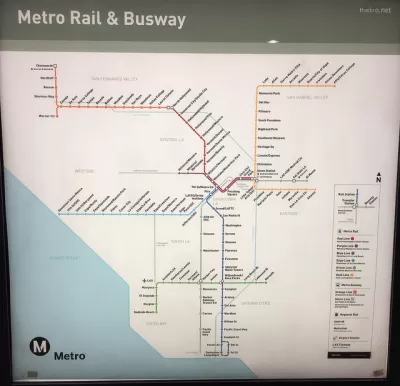
Laura J. Nelson reports on a plan to extend a still-under-construction light rail line that would create a north-south spine connecting three existing light rail and subway lines with new transfer stations.
The Crenshaw Line extension, as the still-speculative project is called, would travel through Hollywood, Beverly Grove, and West Hollywood, connecting to transfer stations on the Expo Line, the Red Line, and the Purple Line (the last of that list is already under construction on a westward expansion). Nelson explains the appeal of the project:
The area studied for the route — a crescent shape that includes West Hollywood, Mid-City, Miracle Mile and Arlington Heights — has a higher population density per square mile than San Francisco, Boston and Chicago.
Six of Metro’s 10 most popular bus lines cross through the area, the agency said. The agency said ridership on the extension could top 90,000 trips per day, which would make it the busiest light-rail line in the United States.
Initial plans for the Crenshaw Line extension targets a delivery date three decades in the future, in 2047, but already has $2 billion in funding allocated from Measure M. Given the high ridership projections for the line, some advocates are pushing for the line to move forward in Metro's priority list, perhaps in time for the 2028 Summer Olympics.
Nelson provides a lot more detail about the many alternatives regarding route and construction method that must still be determined as Metro plans the extension.
Read the full story: Will it take until 2047 to extend the Metro to West Hollywood?

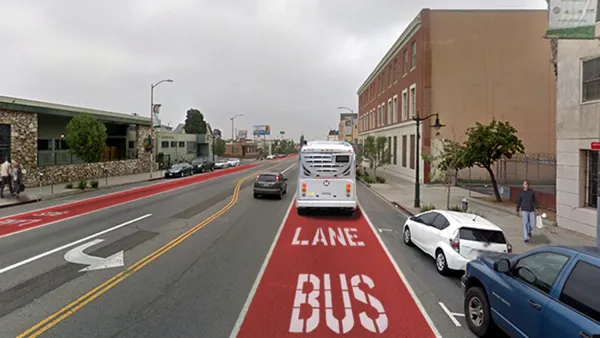
L.A.'s Plan for Vermont Ave: BRT in 2024, Rail in 2067
Anyone hoping for rail transit down one of Los Angeles' busiest transit corridors will have to wait awhile.

Crenshaw Line Light Rail Delayed in Los Angeles
Construction of the Crenshaw Line in Los Angeles will go later than expected. Metro now expects the light rail line to open in 2020.
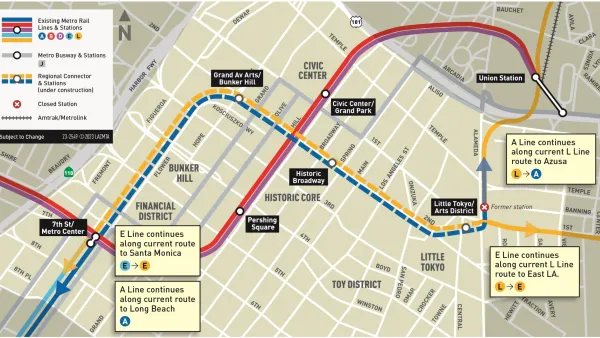
Newly Opened Regional Connector Redefines Light Rail Transit in Los Angeles
Three rail lines have become two rail lines in Los Angeles, providing one-seat rides from four corners of Los Angeles County.

Planetizen Federal Action Tracker
A weekly monitor of how Trump’s orders and actions are impacting planners and planning in America.

California plans to bury El Niño’s downpour
If the state plays its cards right, it may be able to store a billion acre-feet of El Niño’s water in aquifers.

Chicago breaks ground on $3 billion megadevelopment
The new neighborhood, titled Foundry Park, will one day host 3,700 residences.

Satanic Place Names
From streams and lakes to valleys and canyons, I mapped more than 1,000 places named after the Devil.

California High-Speed Rail Authority CEO resigns after $600,000 scandal
Under Ian Choudri, the authority used taxpayer dollars to fund first class flights and trips to nightclubs.

Want to study the Missouri River? Soon, you may need unanimous approval from 10 states
Legislation would require 10 governors’ permission to study or build projects moving water outside the basin.

FREE Course: Walkable City 1: Why Walkability?
After describing his path towards focusing on walkability as the essence of good planning, Jeff Speck marches through his five principal reasons for making more walkable places.
Reinventing Malls: Planning Alchemy—Turning Gray Fields Into Gold
The course focuses on the opportunities and imperatives that shape reinvention of mall sites.

City of Rosemead
Rutgers University, Edward J. Bloustein School of Planning and Public Policy
One Hundred Miles
Hunter College, City University of New York (CUNY)
The Architects Foundation
University of Cincinnati Online
City of Cambridge
Montrose County
The Pocatello Development Authority