All that empty acreage means that these big, rapidly developing cities don’t really have to sprawl.


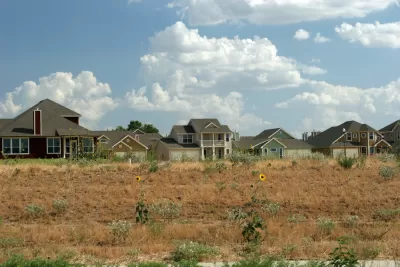
In a recent survey, CommercialCafe attempted to quantify how much undeveloped land remains in the central business districts of a number of U.S. cities; the answer, in short, is a lot, but not where you might expect.
Dallas came in first, with Austin and San Antonio also in the top five (as well as Las Vegas and Phoenix), though it’s worth noting that Dallas developed more than 8.5 million square feet in the last five years, second only to New York.
From the report:
While it is not surprising that these cities have utilized the advantages of spacious geography to expand their boundaries outward, it invites the obvious question: why sprawl, if there is still plenty of potential to reinvest in the city core? The answer to that may be more complex than we can approach in this one article, but what we can do is look at the numbers.
CommercialCafe also asked residents of 25 cities what they’d like to see in their downtowns; the most common answer, of course, was housing.
FULL STORY: Study: What to Do with All the Vacant Land in Major US CBDs?

Water Wars Follow the Race to Solve the Southwest's Drought
An op-ed in the New York Times provides a firsthand account of the growing concern over water in a state that has yet to set limits on its explosive growth.
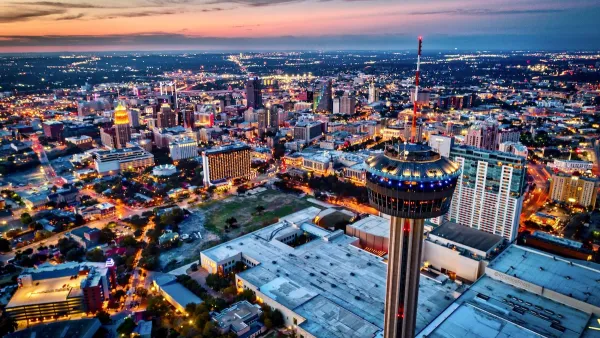
San Antonio and Austin are Fusing Into one Massive Megaregion
The region spanning the two central Texas cities is growing fast, posing challenges for local infrastructure and water supplies.
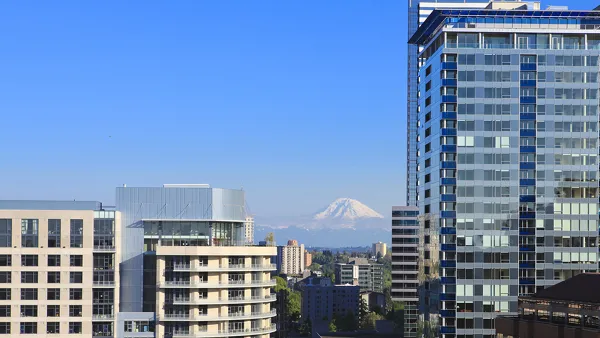
2020 Population Growth Rates for the 50 Biggest U.S. Cities
The Census Bureau released new data on May 27 that includes the first four months of the pandemic. Seattle tops the growth rate at 2.2% from July 1, 2019, to July 1, 2020, while Baltimore and San Francisco land at the bottom with -1.4%.

Planetizen Federal Action Tracker
A weekly monitor of how Trump’s orders and actions are impacting planners and planning in America.

The state-sanctioned urbicide of Austin
People don’t kill cities. Freeways do.

US to reduce Colorado River water deliveries to Mexico
A new Colorado Treaty amendment reduces Mexico’s Colorado River water allocation by 250,000 acre feet.

Mamdani overhauls NYC's Vision Zero plan with 100 new policy goals
The overhaul aims to reduce traffic deaths and make streets safer for pedestrians, cyclists and drivers through lower speed limits, new safety infrastructure and more.

Amtrak not solely to blame for New Jersey commuter rail's unreliability, report finds
A new study from the Garden State Initiative found that NJ Transit’s budget grew 20% across a 4 year period, but reliability declined significantly over the same period.

EPA erases limits on planet-warming pollution from power plants
Under Monday’s plan, power plants would still have some limits on how much mercury, arsenic and other contaminants they can emit.

FREE Course: Walkable City 1: Why Walkability?
After describing his path towards focusing on walkability as the essence of good planning, Jeff Speck marches through his five principal reasons for making more walkable places.
Reinventing Malls: Planning Alchemy—Turning Gray Fields Into Gold
The course focuses on the opportunities and imperatives that shape reinvention of mall sites.

Eagle County Government
Harvard University Graduate School of Design
Nashville Planning Department
The Architects Foundation
University of Cincinnati Online
The Pocatello Development Authority
The Urban Renewal Agency of the City of Pocatello
Journal of the American Planning Association