Chicago continues to lose population from parts of the city, so vacant properties are multiplying. The city's "Large Lots" program aims to return vacant properties back to control by residents of the neighborhoods.


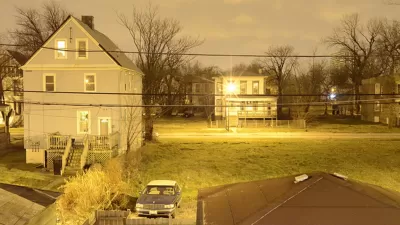
"Chicago is again seeking city residents interested in buying vacant lots in their neighborhoods for $1," reports Samantha Bomkamp.
The city is offering 3,219 empty lots on the South and West sides of the city through the Large Lots program. Earlier iterations of the Large Lots offered similar cheap land to residents in 2016 and 2014.
"The program requires buyers to already own property on the same block, be current on property taxes and have no outstanding debt with the city, like a late water bill or unpaid parking tickets," according to Bomkamp.
The city acquired the properties through property tax and demolition liens. The city now owns 11,500 vacant lots, spread between more than two dozen of the city's 77 community areas. While "Legacy Cities" like Detroit have a reputation for vacant properties, Chicago's regular renewal of the Large Lots program serves as a reminder that the recent trend toward urbanization in the United States hasn't served every neighborhood in even the largest of American cities.
Read the full story: Chicago selling 3,000-plus properties through $1 vacant lot program

More $1 Vacant Lots for Sale in Chicago
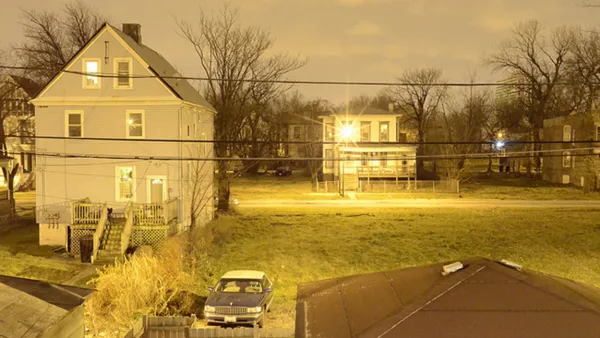
With some 20,000 vacant lots located around the city, Chicago is expanding the Large Lots Program that allows property owners to buy nearby lots for $1.
$1 Large Lot Sales Underway in Chicago
For sale in Chicago for $1: city-owned lots in Southside neighborhoods. The idea, which has been implemented in Chicago before, is to get more land in the hands of neighborhood residents and stakeholders.
Property Taxes Due on Chicago's $1 Large Lots
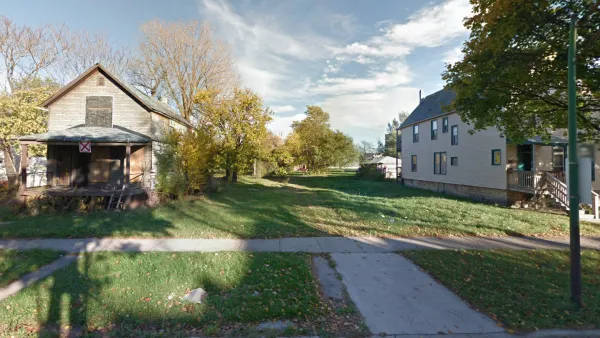
So you bought a lot for $1 under the city of Chicago's Large Lots program. Expect your bills to go up a lot more than that measly sum.

Planetizen Federal Action Tracker
A weekly monitor of how Trump’s orders and actions are impacting planners and planning in America.

California plans to bury El Niño’s downpour
If the state plays its cards right, it may be able to store a billion acre-feet of El Niño’s water in aquifers.

Chicago breaks ground on $3 billion megadevelopment
The new neighborhood, titled Foundry Park, will one day host 3,700 residences.

California High-Speed Rail Authority CEO resigns after $600,000 scandal
Under Ian Choudri, the authority used taxpayer dollars to fund first class flights and trips to nightclubs.

Want to study the Missouri River? Soon, you may need unanimous approval from 10 states
Legislation would require 10 governors’ permission to study or build projects moving water outside the basin.

Desperate measures: Advocates weigh draining Lake Powell to fill Colorado River
Draining the reservoir could reduce evaporation losses by a couple hundred thousand acre-feet.

FREE Course: Walkable City 1: Why Walkability?
After describing his path towards focusing on walkability as the essence of good planning, Jeff Speck marches through his five principal reasons for making more walkable places.
Reinventing Malls: Planning Alchemy—Turning Gray Fields Into Gold
The course focuses on the opportunities and imperatives that shape reinvention of mall sites.

City of Rosemead
Rutgers University, Edward J. Bloustein School of Planning and Public Policy
One Hundred Miles
Hunter College, City University of New York (CUNY)
The Architects Foundation
University of Cincinnati Online
City of Cambridge
Montrose County
The Pocatello Development Authority