In some cities and neighborhoods, the number of vacant properties is the only thing growing.


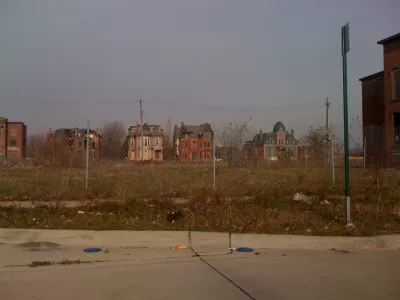
"Despite a drop in numbers across much of the United States since the recession, vacant and abandoned properties continue to dog struggling postindustrial cities, tearing apart neighborhoods with growing intensity," according to a on article sharing a new report from the Lincoln Institute of Land Policy.
Alan Mallach authored the report, titled The Empty House Next Door: Understanding and Reducing Vacancy and Hypervacancy in the United States. The report finds evidence of increasing vacancies in cities like Detroit, St. Louis, and Cleveland. According to the article, "the number of units that are effectively abandoned has increased by 2.1 million units nationally, from 3.7 million in 2005 to 5.8 million in 2016, an increase roughly equal to five times the entire housing stock of San Francisco."
The report not only accounts for the places where vacancies are rising, but also discusses both obstacles to addressing vacancies (like "cumbersome property tax foreclosure processes" and "state laws and bank practices that lead to thousands of properties being stuck in foreclosure limbo). Prescriptions and strategies for addressing the challenges created by vacancies are also discussed.
FULL STORY: Vacant properties plague struggling U.S. cities, according to new report

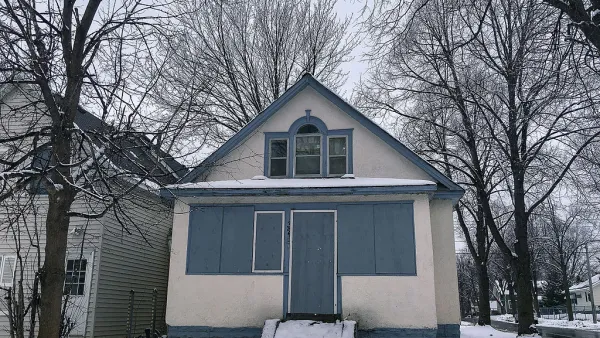
Vacancy Problem Intensifying Milwaukee's Affordable Housing Issues
The city has plans to increase affordable housing, but some areas are seeing more progress than others.
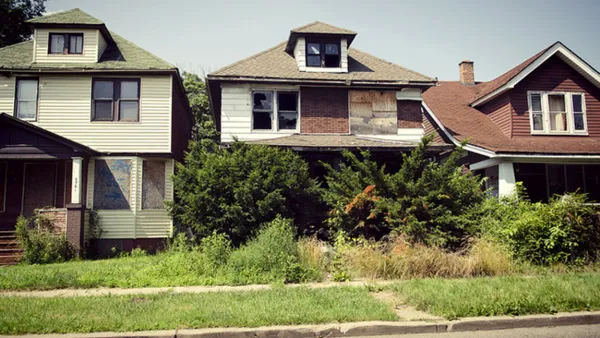
The Vacancy Epidemic
A new report uses terms like epidemic and hyper-vacancy to drive home the point about the effects of vacancies on communities like Cleveland, Gary, Toledo, and Detroit.
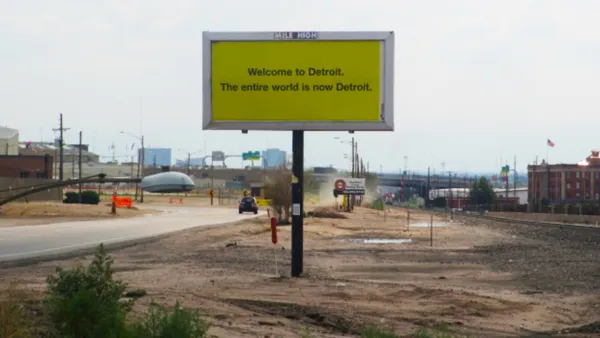
How People Talk About Blight and Vacancies
The kinds of words and arguments people use to describe blight, foreclosure, and eviction reveals a lot of society's biases.

The state-sanctioned urbicide of Austin
People don’t kill cities. Freeways do.

US to reduce Colorado River water deliveries to Mexico
A new Colorado Treaty amendment reduces Mexico’s Colorado River water allocation by 250,000 acre feet.

New Jersey’s second-largest city bans standalone data centers
Jersey City will continue to allow co-location facilities, such as those meant for research institutions that store their own data.

Amtrak not solely to blame for New Jersey commuter rail's unreliability, report finds
A new study from the Garden State Initiative found that NJ Transit’s budget grew 20% across a 4 year period, but reliability declined significantly over the same period.

EPA erases limits on planet-warming pollution from power plants
Under Monday’s plan, power plants would still have some limits on how much mercury, arsenic and other contaminants they can emit.

Phoenix announces new on-demand transit service, more frequent RAPID buses
Both new services will launch in October, and are part of Phoenix's Project Effective Access Solutions for Easing Congestion.

FREE Course: Walkable City 1: Why Walkability?
After describing his path towards focusing on walkability as the essence of good planning, Jeff Speck marches through his five principal reasons for making more walkable places.
Reinventing Malls: Planning Alchemy—Turning Gray Fields Into Gold
The course focuses on the opportunities and imperatives that shape reinvention of mall sites.

Eagle County Government
Harvard University Graduate School of Design
Nashville Planning Department
The Architects Foundation
University of Cincinnati Online
The Pocatello Development Authority
The Urban Renewal Agency of the City of Pocatello
Journal of the American Planning Association