The San Francisco Municipal Transportation Agency ordered high-strength steel to ensure the long-term quality of the under-construction Central Subway. The contractor laid 17,000 linear feet of standard-strength steel anyway.


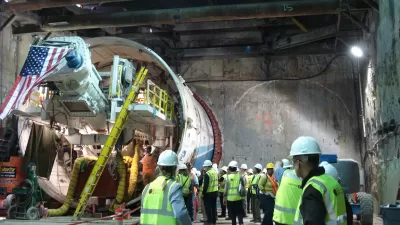
Joe Fitzgerald Rodriguez reports from San Francisco: "Construction contractors on the $1.6 billion Central Subway project laid down 3.2 miles of the wrong kind of steel track, The City is alleging in a letter obtained by the San Francisco Examiner."
The San Francisco Municipal Transportation Agency is alleging that the contractor, Tutor Pellini, "laid down 17,000 linear feet of 'standard strength' steel, allegedly violating a contract with The City calling for 'high strength' steel." The city has since ordered Tutor Pellini to relay the track, but additional delays on the delivery date are expected. The original planned opening date for the Central Subway was the end of 2018. Now the end of 2019 is more likely.
FULL STORY: City says Central Subway contractor laid down 3.2 miles of the wrong kind of track, prompting new delay


A San Francisco bus that serves thousands of students students is getting some upgrades
Students advocated for changes on the #29 bus, which was notorious for its lack of reliability.
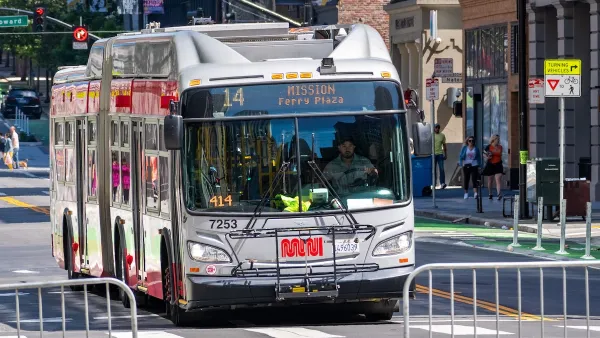
How to Fund SF’s Muni Without Cutting Service
Three solutions for bridging the San Francisco transit agency’s budget gap without reducing service for transit-dependent riders.

San Francisco Muni Raises Fares a Second Time
A 10–cent fare hike for adults is part of the agency’s plan to chip away at a growing budget deficit.

Planetizen Federal Action Tracker
A weekly monitor of how Trump’s orders and actions are impacting planners and planning in America.

The state-sanctioned urbicide of Austin
People don’t kill cities. Freeways do.

US to reduce Colorado River water deliveries to Mexico
A new Colorado Treaty amendment reduces Mexico’s Colorado River water allocation by 250,000 acre feet.

5 New England states march closer to 800 megawatt wind energy project
Securing federal approval for the project may be complicated under the Trump administration, which has historically been hostile towards domestic wind power.

Baltimore to break ground on $50 million Transit Priority Project
The project will bring faster bus trips, safer streets and better bike connections to Baltimore.

Airbnb launches $250 million 'last-dollar financing' housing accelerator, makes first investment in Austin
The company will put $6.4 million towards affordable housing development in Texas’ capital.

FREE Course: Walkable City 1: Why Walkability?
After describing his path towards focusing on walkability as the essence of good planning, Jeff Speck marches through his five principal reasons for making more walkable places.
Reinventing Malls: Planning Alchemy—Turning Gray Fields Into Gold
The course focuses on the opportunities and imperatives that shape reinvention of mall sites.

Eagle County Government
Harvard University Graduate School of Design
Nashville Planning Department
The Architects Foundation
University of Cincinnati Online
The Pocatello Development Authority
The Urban Renewal Agency of the City of Pocatello
Journal of the American Planning Association