In a major blow to former President Obama's restrictions on offshore drilling in sensitive areas, Interior Secretary Ryan Zinke announced that he would open the Outer Continental Shelf in four regions: Pacific, Arctic, Atlantic, and the Gulf Coast.


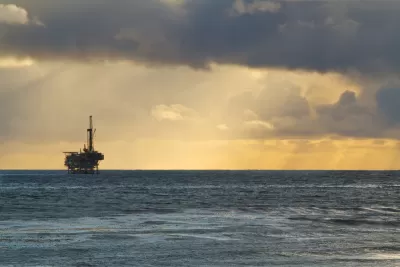
he Washington Post.
He said the Bureau of Ocean and Energy Management [a division of the Interior Department created in 2010] has identified 47 potential areas where industry companies can buy leases between 2019 and 2024, when the proposed period would begin and end.
One reason for the announcement to open the Outer Continental Shelf to drilling is a desire by the Trump Administration to achieve what they call "energy dominance" as opposed to the term that has developed under the Nixon Administration, energy independence.
"Zinke said the proposal is consistent with President Trump’s executive order in April to widen energy exploration," adds Fears. "The 'America-First Offshore Energy Strategy' will make millions of acres of federal waters eligible for oil and gas leasing, just four months after President Barack Obama withdrew these areas from possible development," reported Juliet Eilperin for The Washington Post on April 28 2017.
Opposition
The action "is opposed by governors from New Jersey to Florida [both Republican], nearly a dozen attorneys general, more than 100 U.S. lawmakers and the Defense Department," reports Fears.
"California officeholders were also quick to criticize the plan," reports Kurtis Alexander for the San Francisco Chronicle.
Gov. Jerry Brown as well as Democratic Sens. Dianne Feinstein and Kamala Harris called it short-sighted and not in the interest of West Coast residents, including the tourism and fishing sectors. State Attorney General Xavier Becerra said he would look into legal options to halt new oil operations.
Brown joined with his two West Coast counterparts, Oregon Governor Kate Brown and Washington Governor Jay Inslee, to issue a joint statement to condemn Zinke's action.
Support
“This announcement could help California increase our domestic energy production,” said Catherine Reheis-Boyd, president of the Western States Petroleum Association, an industry group, adds Alexander.
“Currently, we import over 1 million barrels of oil in supertankers from overseas locations each and every day,” a practice that she noted poses ecological hazards of its own.
Good for conservation?
"Responsibly developing our energy resources on the Outer Continental Shelf in a safe and well-regulated way is important to our economy and energy security, and it provides billions of dollars to fund the conservation of our coastlines, public lands and parks," said Secretary Zinke in the Interior Department's press release on Jan. 4.
"The important thing is we strike the right balance to protect our coasts and people while still powering America and achieving American Energy Dominance," he added.
By proposing to open up nearly the entire OCS for potential oil and gas exploration, the United States can advance the goal of moving from aspiring for energy independence to attaining energy dominance,” said Vincent DeVito, Counselor for Energy Policy at Interior. “This decision could bring unprecedented access to America’s extensive offshore oil and gas resources and allows us to better compete with other oil-rich nations.”
As posted here Saturday, the U.S. is already on track to break the 1970 oil production record of 10 million barrels per day this year, if it hasn't already.
Process forward (per Interior Department announcement)
Public meetings will be held around the country starting on January 16, 2018, to receive comments on the Draft Proposed Program and to inform the Draft Programmatic EIS. Specific dates, times, and venues will be posted on BOEM’s website at https://www.boem.gov/National-Program/.
Online commenting begins on Monday, January 8, 2018.
FULL STORY: Trump administration plan would widely expand drilling in U.S. continental waters

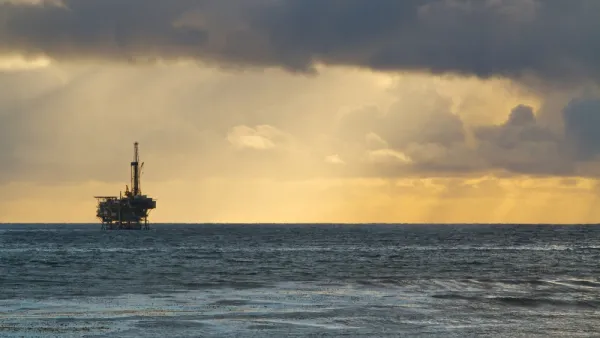
President Trump Signs Executive Order to Reverse Obama's Coastal Drilling Ban
So much for that so-called "permanent" ban that President Obama enacted by President Obama in December to end oil and gas drilling in the Arctic Ocean and off the central-northern Atlantic coast.
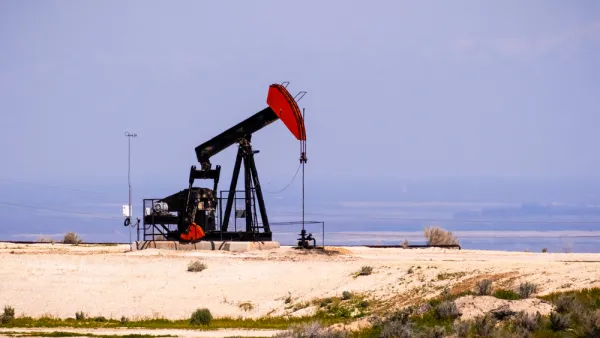
Department of Interior Plans to Open 1 Million Acres in California to Fracking
The Bakersfield Office of the Bureau of Land Management released an environmental study that is the basis for undoing a 2013 de facto moratorium on fracking on federal lands in California. The Supplemental EIS triggers a 45-day public comment period.
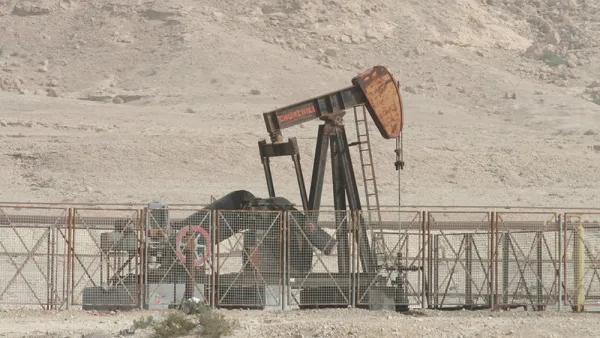
Interior Secretary Issues Order to Expedite Drilling on Public Lands
Secretary Zinke's order is part of the "energy dominance" agenda of the Trump Administration to make the U.S. a major energy exporter. The order will reduce the time needed by the Bureau of Land Management to process permitting for new wells.

Planetizen Federal Action Tracker
A weekly monitor of how Trump’s orders and actions are impacting planners and planning in America.

The state-sanctioned urbicide of Austin
People don’t kill cities. Freeways do.

US to reduce Colorado River water deliveries to Mexico
A new Colorado Treaty amendment reduces Mexico’s Colorado River water allocation by 250,000 acre feet.

5 New England states march closer to 800 megawatt wind energy project
Securing federal approval for the project may be complicated under the Trump administration, which has historically been hostile towards domestic wind power.

Baltimore to break ground on $50 million Transit Priority Project
The project will bring faster bus trips, safer streets and better bike connections to Baltimore.

Airbnb launches $250 million 'last-dollar financing' housing accelerator, makes first investment in Austin
The company will put $6.4 million towards affordable housing development in Texas’ capital.

FREE Course: Walkable City 1: Why Walkability?
After describing his path towards focusing on walkability as the essence of good planning, Jeff Speck marches through his five principal reasons for making more walkable places.
Reinventing Malls: Planning Alchemy—Turning Gray Fields Into Gold
The course focuses on the opportunities and imperatives that shape reinvention of mall sites.

Eagle County Government
Harvard University Graduate School of Design
Nashville Planning Department
The Architects Foundation
University of Cincinnati Online
The Pocatello Development Authority
The Urban Renewal Agency of the City of Pocatello
Journal of the American Planning Association