Environmental justice advocates have been able to do in court what oil companies unsuccessfully attempted at the polls in November: deal a severe blow, if only temporarily, to CA's landmark climate law AB 32 by challenging the cap & trade provision.


The ruling by the San Francisco Superior Court highlights, indirectly, the difference between local, conventional air pollutants that affect public health in the vicinity of major emitters from global greenhouse gas emissions. A carbon tax may need to be reviewed as an alternative to cap and trade as a consequence.
While the ruling "does not prohibit the state Air Resources Board (ARB) from adopting cap and trade or explicitly require that officials delay its scheduled implementation next year. But Goldsmith said the board must first analyze other options, such as a tax on carbon emissions, and explain why it did not choose them."
"The board will appeal, said spokesman Stanley Young. He expressed dismay at the scope of the ruling, which requires the board to conduct an environmental review and invite public comment before taking further steps to implement the law."
Listen to California Report's Climate Watch report on the topic of the litigation - interviews with Environmental Defense Fund, Communities for a Better Environment, and The Center on Race, Poverty & the Environment.
In Nov., 2010, two oil companies attempted to put AB 32 on hold through Proposition 23 but it was defeated.
Read the full story: Calif. cap-and-trade plan suffers legal setback
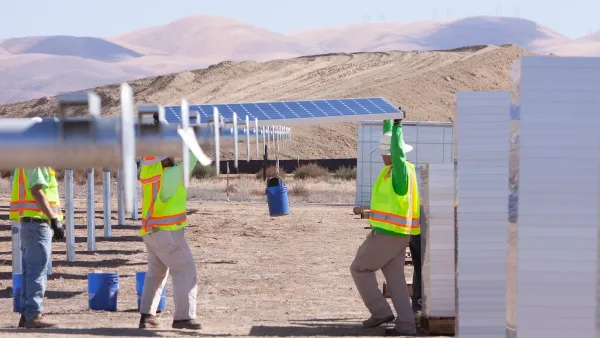
21 Climate Resilience Projects Cancelled by the EPA
The federal government has pulled funding for at least 21 projects related to farming, food systems, and environmental justice to comply with one of Trump’s early executive orders.
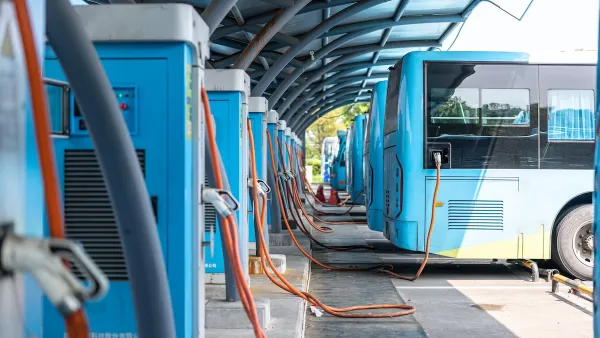
USDOT Launches Climate Adaptation Plan
The plan outlines the department’s key priorities in building resilient infrastructure and ensuring environmental justice in historically disinvested communities.
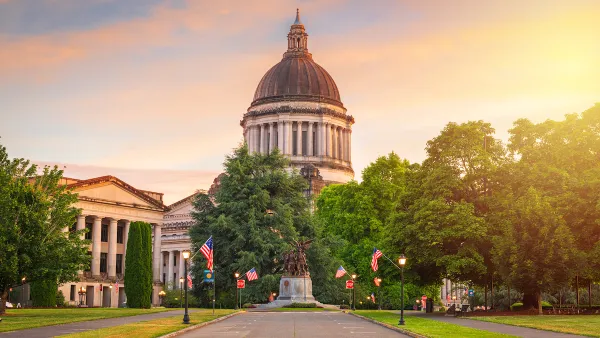
Washington Voters Keep Carbon Tax
An initiative that would have ended the state’s “cap and invest” program failed, leaving the program in place.

Planetizen Federal Action Tracker
A weekly monitor of how Trump’s orders and actions are impacting planners and planning in America.

Washington state to charge fee to drivers with fuel-efficient cars
Revenue from the fee will go towards supporting the state’s highways.

Trump to blast ‘hydrocarbon highway’ through ‘world’s longest art gallery’
Environmental and historic preservation groups are suing to stop the project.

A data center developer is going back on its promises to nearby residents
Data center developer HostDime originally promised free at-home Wi-Fi to residents of Eatonville, Florida.

Trump administration takes another swing at Solar for All
Since the Environmental Protection Agency announced its intent to end Solar for All in August 2025, two federal judges have ruled in favor of protecting it.

The MTA wants to entice international bus manufacturers to set up shop in America
The MTA hopes to create more competition for better bus options while still "buying American."

FREE Course: Walkable City 1: Why Walkability?
After describing his path towards focusing on walkability as the essence of good planning, Jeff Speck marches through his five principal reasons for making more walkable places.
Reinventing Malls: Planning Alchemy—Turning Gray Fields Into Gold
The course focuses on the opportunities and imperatives that shape reinvention of mall sites.

City of Charlotte
City of Rosemead
Rutgers University, Edward J. Bloustein School of Planning and Public Policy
University of Michigan School for Environment and Sustainability (SEAS)
Hunter College, City University of New York (CUNY)
The Architects Foundation
University District Partnership