An initiative that would have ended the state’s “cap and invest” program failed, leaving the program in place.



Washington state voters rejected an effort that would have ended the state’s carbon tax trading program, reports Carl Smith in Governing.
The 2021 Washington Climate Commitment Act created a “cap and invest” program that taxed certain businesses per ton of carbon emissions and capped the total emissions allowed for the state. “Washington is the second state, after California, to cap emissions and require businesses that release large amounts of carbon to pay for the right to do so. Since its program was implemented in January 2023, it has brought more than $2 billion to the state — money used to fund clean energy, transportation, conservation and tribal-led projects.”
Washington Governor Jay Inslee calls the initiative’s defeat “a bugle call to action” for other states and could lead to more collaboration between states and provinces, which would stabilize the carbon market, according to Inslee.
Read the full story: Washington Voters Say 'Yes' to Taxing Carbon Emissions

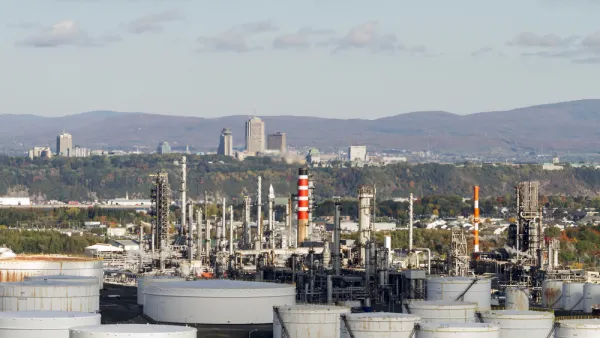
Canadian Supreme Court Upholds Carbon Tax
A historic ruling in Canada allows the federal government to supersede the efforts of provinces in fighting the causes of climate change.
FTA Kills ‘Social Cost of Carbon’ in Transit Grant Criteria
The Capital Investments Grant program will no longer factor in the future impacts of carbon emissions.

Driving Equity and Clean Air: California Invests in Greener School Transportation
California has awarded $500 million to fund 1,000 zero-emission school buses and chargers for educational agencies as part of its effort to reduce pollution, improve student health, and accelerate the transition to clean transportation.

Planetizen Federal Action Tracker
A weekly monitor of how Trump’s orders and actions are impacting planners and planning in America.

California plans to bury El Niño’s downpour
If the state plays its cards right, it may be able to store a billion acre-feet of El Niño’s water in aquifers.

Chicago breaks ground on $3 billion megadevelopment
The new neighborhood, titled Foundry Park, will one day host 3,700 residences.

California High-Speed Rail Authority CEO resigns after $600,000 scandal
Under Ian Choudri, the authority used taxpayer dollars to fund first class flights and trips to nightclubs.

Want to study the Missouri River? Soon, you may need unanimous approval from 10 states
Legislation would require 10 governors’ permission to study or build projects moving water outside the basin.

Desperate measures: Advocates weigh draining Lake Powell to fill Colorado River
Draining the reservoir could reduce evaporation losses by a couple hundred thousand acre-feet.

FREE Course: Walkable City 1: Why Walkability?
After describing his path towards focusing on walkability as the essence of good planning, Jeff Speck marches through his five principal reasons for making more walkable places.
Reinventing Malls: Planning Alchemy—Turning Gray Fields Into Gold
The course focuses on the opportunities and imperatives that shape reinvention of mall sites.

City of Rosemead
Rutgers University, Edward J. Bloustein School of Planning and Public Policy
One Hundred Miles
Hunter College, City University of New York (CUNY)
The Architects Foundation
University of Cincinnati Online
City of Cambridge
Montrose County
The Pocatello Development Authority