The Golden State has received almost $150 million from the U.S. Department of Transportation to build over 9,200 EV charging ports, bolstering the state’s efforts to expand zero-emission vehicle infrastructure and reduce greenhouse gas emissions.


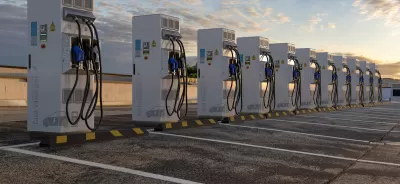
California has been awarded nearly $150 million by the U.S. Department of Transportation to support the construction of over 9,200 electric vehicle (EV) charging ports across the state, a crucial step in addressing "range anxiety" and making zero-emission vehicles more appealing to a broader range of drivers. As reported by Colleen Shalby for the LA Times, this funding is part of a larger $521-million infrastructure package distributed to various states, tribes, and the District of Columbia, with the goal of reducing greenhouse gas emissions and promoting sustainable transportation. The bulk of the funds allocated to California will go to the State Department of Transportation, which will use $102 million to build charging and hydrogen fueling stations along key freight corridors, benefiting both passenger vehicles and trucks.
Additional funds include $15 million for Los Angeles County, the City of Los Angeles, and the Los Angeles County Metropolitan Transportation Authority to construct over 1,250 EV charging stations, particularly in underserved communities, and $15.1 million for the Fort Independence Indian Community to establish an EV charging hub along U.S. Route 395. Other significant allocations include $14 million for Bay Area Rapid Transit (BART) to install charging ports at parking facilities and $3.2 million for the Shingle Springs Band of Miwok Indians to build 70 charging stations along U.S. Route 50 between Sacramento and South Lake Tahoe. The federal government's initiative aims to provide reliable infrastructure that supports the transition to EVs and addresses the challenges of limited charging availability.
This announcement is part of a broader effort by the Biden-Harris Administration to lead the EV revolution and ensure that all drivers have access to convenient and reliable charging options. The funds will not only support the EV infrastructure but also pave the way for future investments in sustainable construction materials. As California moves toward its goal of banning the sale of new gasoline- and diesel-powered vehicles by 2035, this investment in charging infrastructure is seen as vital to ensuring that the EV market can grow and that the associated environmental, health, and economic benefits can be realized.
FULL STORY: California receives $150 million for thousands of EV charging ports


Five Key Transportation Funding Proposals in Trump’s Budget
The President’s proposed 2026 budget would keep spending roughly the same for transit and rail and eliminate over $5 billion in funding for EV charging infrastructure.
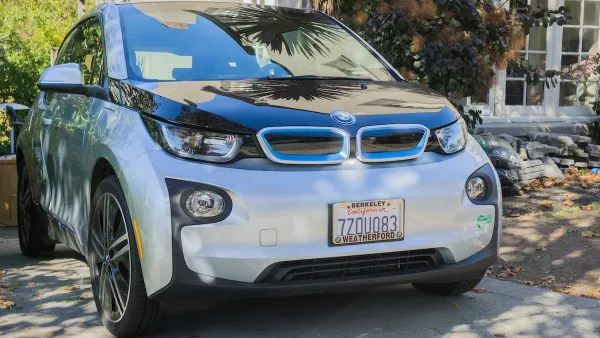
Oakland to Add 244 New EV Chargers
Oakland plans to launch its new charging network at eight locations by the end of 2025.
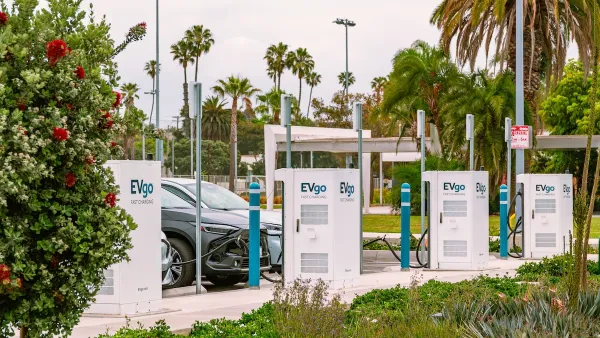
EV Chargers Now Outnumber Gas Pumps by Nearly 50% in California
Fast chargers still lag behind amidst rapid growth.

Planetizen Federal Action Tracker
A weekly monitor of how Trump’s orders and actions are impacting planners and planning in America.

The state-sanctioned urbicide of Austin
People don’t kill cities. Freeways do.

US to reduce Colorado River water deliveries to Mexico
A new Colorado Treaty amendment reduces Mexico’s Colorado River water allocation by 250,000 acre feet.

Brightline West’s future may rely on $6 billion federal loan
The company has until Nov. 2 to make a $400 million equity investment into its proposed high-speed rail line.

LA Metro’s ultimatum: no extra buses for LA28 if federal funding isn’t imminently secured
If Metro does not provide additional buses, LA28 organizers will have to find a new way to manage Olympic traffic. LA28’s budget does not include a line item for transit.

Colorado’s Largest Data Center Could Rise Next to Homes — Without a Public Hearing
The proposed campus would consume 11 times the power of Denver International Airport; as it has across the country, opposition mounts.

FREE Course: Walkable City 1: Why Walkability?
After describing his path towards focusing on walkability as the essence of good planning, Jeff Speck marches through his five principal reasons for making more walkable places.
Reinventing Malls: Planning Alchemy—Turning Gray Fields Into Gold
The course focuses on the opportunities and imperatives that shape reinvention of mall sites.

Eagle County Government
Harvard University Graduate School of Design
Nashville Planning Department
The Architects Foundation
University of Cincinnati Online
The Pocatello Development Authority
The Urban Renewal Agency of the City of Pocatello
Journal of the American Planning Association