Fast chargers still lag behind amidst rapid growth.


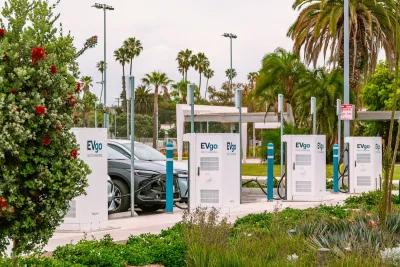
There are now 48 percent more EV charging stations than there are gas pumps in the state of California according to a news release from governor Gavin Newsom’s office, reported by Inside EVs. The release says that the California Energy Commission estimates that the state has about 120,000 gas nozzles compared to 178,000 public and shared private chargers. Much of that growth is very recent: the number of chargers doubled in 2024 alone.
In the report for Inside EVs, Patrick George notes that the utility of the chargers differs from the nozzles due to the specifics:
“Officials with the governor's office say that the vast majority of chargers—162,000 out of 178,000—are slower Level 2 chargers. Only about 17,000 are DC public fast chargers, which are the closest analog to a gas station in the EV world. However, as we've reported at InsideEVs previously, DC fast-charging is most ideal for road trips, range-boosts during longer driving stints or for folks without easy home charging access. Across the U.S., the vast majority of EV drivers charge at home.”
FULL STORY: California Now Has More EV Chargers Than Gas Pumps

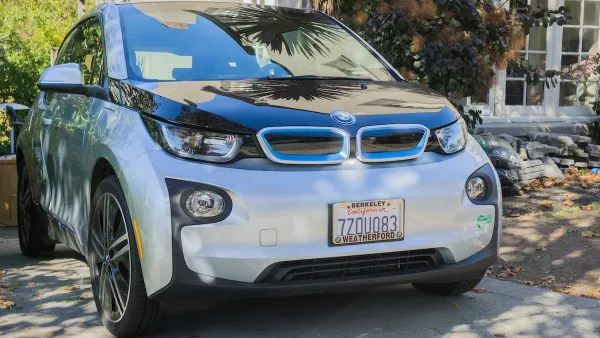
Oakland to Add 244 New EV Chargers
Oakland plans to launch its new charging network at eight locations by the end of 2025.

Making The Switch To EVs Requires Robust Charging Infrastructure
With more states outlawing the sales of gas-powered vehicles and the federal government setting ambitious electrification goals, now is the time to invest in critical charging infrastructure.
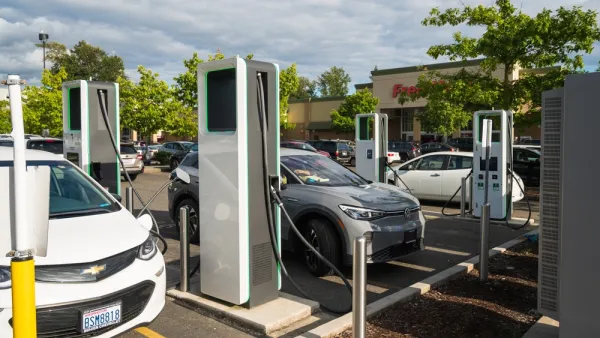
Electric Grid Capacity Could Hamstring EV Growth
Industry leaders say the U.S. electric grid is unprepared for the increased demand for power created by electric cars, data centers, and electric homes.

Planetizen Federal Action Tracker
A weekly monitor of how Trump’s orders and actions are impacting planners and planning in America.

The state-sanctioned urbicide of Austin
People don’t kill cities. Freeways do.

US to reduce Colorado River water deliveries to Mexico
A new Colorado Treaty amendment reduces Mexico’s Colorado River water allocation by 250,000 acre feet.

Baltimore to break ground on $50 million Transit Priority Project
The project will bring faster bus trips, safer streets and better bike connections to Baltimore.

Airbnb launches $250 million 'last-dollar financing' housing accelerator, makes first investment in Austin
The company will put $6.4 million towards affordable housing development in Texas’ capital.

Guerilla urbanists are building DIY bus stop benches in Chicago
A before-and-after of one of the bus stops with a new bench. The new benches are not officially sanctioned or permitted, but the residents who placed them hope they will be the start of a network of DIY benches across the city.

FREE Course: Walkable City 1: Why Walkability?
After describing his path towards focusing on walkability as the essence of good planning, Jeff Speck marches through his five principal reasons for making more walkable places.
Reinventing Malls: Planning Alchemy—Turning Gray Fields Into Gold
The course focuses on the opportunities and imperatives that shape reinvention of mall sites.

Eagle County Government
Harvard University Graduate School of Design
Nashville Planning Department
The Architects Foundation
University of Cincinnati Online
The Pocatello Development Authority
The Urban Renewal Agency of the City of Pocatello
Journal of the American Planning Association