After thousands of motorists spent over a day on a snowbound Virginia highway, experts are warning that auto-centric sprawl will worsen the impacts of extreme weather events.


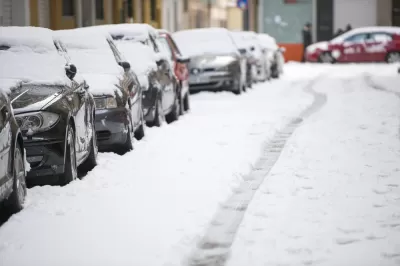
The snowstorm that stranded thousands of drivers in Virginia for over a day has prompted a reevaluation of the auto-centric policies that led so many to become trapped on Interstate 95. "Local advocates say the region’s failure to invest even more broadly in multimodal options than it already has may have set up the area for its current disaster — especially in the most far-flung suburbs, where many of D.C.’s workers live," writes Kea Wilson.
Dan Malouff, a transportation planner based in northern Virginia, points to the potential for breakdown when suburban commuter traffic gets funneled into just one major corridor. According to Malouff, "multimodal networks with multiple modes and paths to choose from are inherently more resilient than putting all of civilization’s eggs in one basket."
Experts warn that a lack of walkability and access to reliable public transit will exacerbate the effects of extreme weather in other ways, too, writes Wilson. "In so much of the DMV suburbs right now, people are finding that they can’t even get groceries the moment that vehicular infrastructure starts to break down, to say nothing of commuting into work," says M. Nolan Gray, author of the forthcoming book, Arbitrary Lines: How Zoning Broke the American City and How to Fix It. Gray recommends promoting more "resilient, mixed-use neighborhoods" that will be better equipped to deal with extreme weather events.
FULL STORY: Virginia Snowstorm Nightmare Highlights Need For Better Transportation Policy

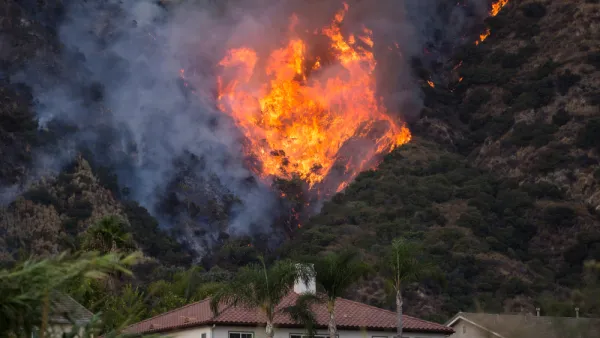
Can Insurance Woes Finally End Sprawl?
Environmental risks are becoming too much for the home insurance industry to bear. Could this be the first signs of the collapse and reversal of sprawling land use patterns?
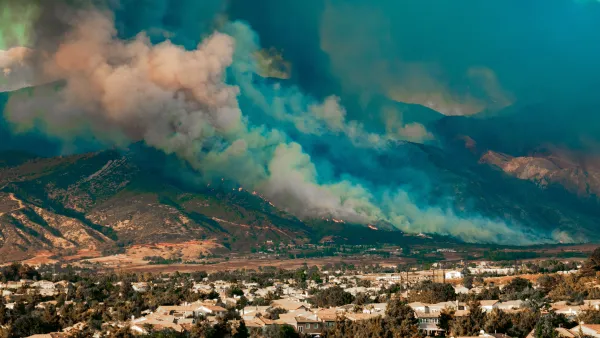
Home Insurers Are Fleeing California
Homeowners in the state are finding it increasingly difficult to secure insurance policies thanks to the growing risks of wildfire, drought, and other climate threats.

Report: D.C. Housing Too Decentralized
Over the last three decades, the D.C. region has seen the most development in far-flung exurbs disconnected from area jobs and transit networks.

The state-sanctioned urbicide of Austin
People don’t kill cities. Freeways do.

US to reduce Colorado River water deliveries to Mexico
A new Colorado Treaty amendment reduces Mexico’s Colorado River water allocation by 250,000 acre feet.

New Jersey’s second-largest city bans standalone data centers
Jersey City will continue to allow co-location facilities, such as those meant for research institutions that store their own data.

Amtrak not solely to blame for New Jersey commuter rail's unreliability, report finds
A new study from the Garden State Initiative found that NJ Transit’s budget grew 20% across a 4 year period, but reliability declined significantly over the same period.

EPA erases limits on planet-warming pollution from power plants
Under Monday’s plan, power plants would still have some limits on how much mercury, arsenic and other contaminants they can emit.

Phoenix announces new on-demand transit service, more frequent RAPID buses
Both new services will launch in October, and are part of Phoenix's Project Effective Access Solutions for Easing Congestion.

FREE Course: Walkable City 1: Why Walkability?
After describing his path towards focusing on walkability as the essence of good planning, Jeff Speck marches through his five principal reasons for making more walkable places.
Reinventing Malls: Planning Alchemy—Turning Gray Fields Into Gold
The course focuses on the opportunities and imperatives that shape reinvention of mall sites.

Eagle County Government
Harvard University Graduate School of Design
Nashville Planning Department
The Architects Foundation
University of Cincinnati Online
The Pocatello Development Authority
The Urban Renewal Agency of the City of Pocatello
Journal of the American Planning Association