Auto-Centric Planning
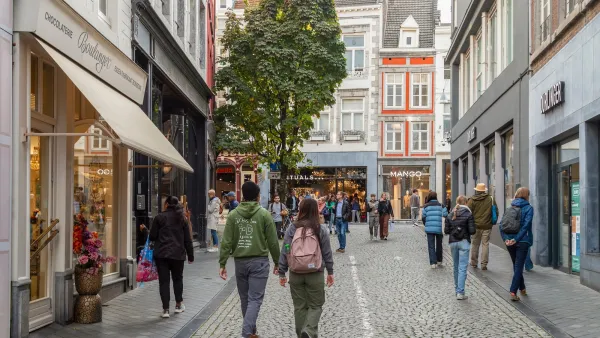
Planning for Love, Part 3: Enhancing human connection through walkability
In the third and final installment of this series, author Hannah Kosoff examines what her research findings say about modern dating and urban form.
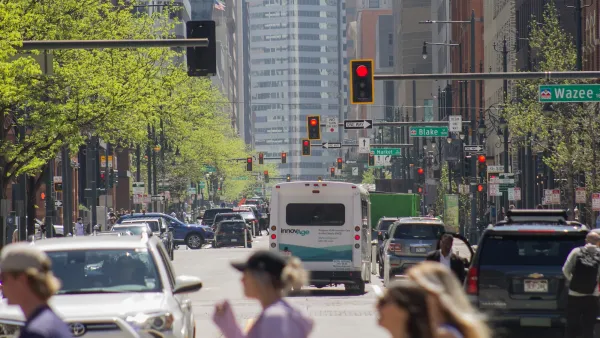
Congestion Costing Reality Check, Part 1: Congestion evaluation best practices
Widely cited studies claim that traffic congestion is a huge and growing problem. They exaggerate. Let’s examine how to correctly calculate congestion costs and roadway expansion benefits.
Study: Automobile Dependency Reduces Life Satisfaction
Automobile dependency has negative implications for wellbeing. This academic study finds that relying on a car for more than 50 percent of out-of-home travel is associated with significant reductions in life satisfaction.
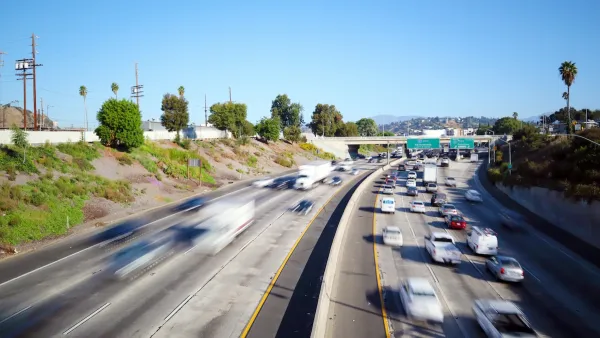
Opinion: LA Should Reject ‘Misguided’ Car-Centric Policies
Even as the city highlights clean energy and transportation for the 2028 Olympics, Metro and Caltrans move forward with plans to expand highways.
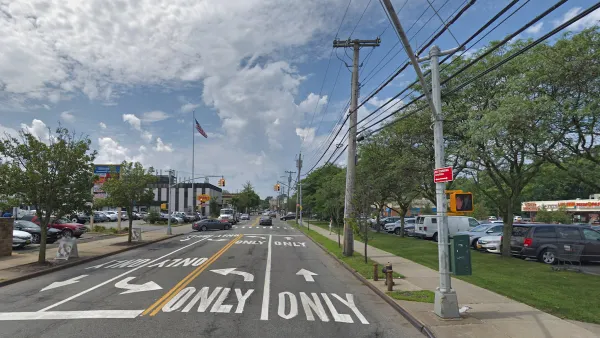
Staten Island Road Widening Project Moves Forward
New York’s Department of Transportation plans to double the width of a Staten Island street to accommodate more vehicular traffic.
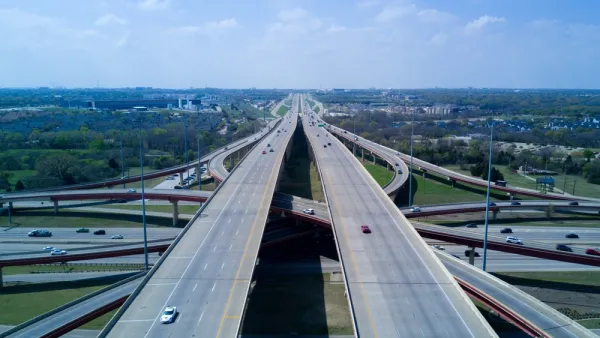
How Car-Oriented Infrastructure Harms Public Health
A new documentary shows the ways that infrastructure designed for cars and not people is making us ill.

What Is Car-Centric Planning?
'Car-centric planning' refers to urban planning that privileges the private automobile as a primary transportation mode, often to the exclusion of people who walk, bike, or use public transit.

Snowstorm That Stranded Thousands Prompts Questions About Auto-Centric Development
After thousands of motorists spent over a day on a snowbound Virginia highway, experts are warning that auto-centric sprawl will worsen the impacts of extreme weather events.

How an Urban Grid Becomes a Maze
Many rational, open grids can seem like a labyrinth to users. The labyrinth has emerged as an unplanned consequence of the evolution of cities, but solutions like GPS navigation and autonomous vehicles could mean relief.

FREE Course: Walkable City 1: Why Walkability?
After describing his path towards focusing on walkability as the essence of good planning, Jeff Speck marches through his five principal reasons for making more walkable places.
Reinventing Malls: Planning Alchemy—Turning Gray Fields Into Gold
The course focuses on the opportunities and imperatives that shape reinvention of mall sites.

City of Rosemead
Rutgers University, Edward J. Bloustein School of Planning and Public Policy
One Hundred Miles
Hunter College, City University of New York (CUNY)
The Architects Foundation
University of Cincinnati Online
City of Cambridge
Montrose County
The Pocatello Development Authority









