In the third and final installment of this series, author Hannah Kosoff examines what her research findings say about modern dating and urban form.


This is the final installment in a three-part series on the relationship between urban design and romance that explores how the way we build cities and mobility infrastructure affects modern dating. Read Part 1 and Part 2.
On paper, this should be the golden age of dating.
We have more freedom to choose our partners, greater social acceptance, larger dating pools and technology that makes meeting people easier. So why does modern dating feel so difficult? For decades, explanations for modern dating have centered on culture and technology, but one factor is rarely considered: the built environment.
This is the final installment in a three-part series exploring a question rarely asked in discussions of modern dating: does car dependency make it harder to meet a romantic partner? First we dipped into the history of dating and urban form. Then I introduced my Columbia University master's thesis, Planning for Love, for which I surveyed 152 adults in Miami to examine how car-dependent and walkable environments shape the dating experience. Today we’ll dig into the details of that study, summarizing my thesis findings in a few key bullet points.
The findings
People in higher Walk Score environments are more likely to:
-
Meet potential partners in public spaces
-
Find it easy to get to places where they can meet people
-
Have enough community events to meet new people
-
Feel their neighborhood's design encourages social interaction
As for transportation mode, compared to drivers, non-drivers:
-
Experience chance encounters slightly above their desired level, closely aligning with their preferences (drivers experience fewer)
-
Use social media for dating as much as they'd ideally like (drivers over-rely)
-
Meet partners through friends and family as often as they'd ideally like
-
Use online dating as much as they'd ideally like (drivers over-rely)
-
Take part in shared activities as much as they'd ideally like
-
Are more likely to report that they never use dating apps or social media for dating
-
Feel less pressure to seek partners online
-
Feel less confident meeting potential partners nearby
-
Feel less desire to approach — or be approached by — others in person
The two measures tell different stories: Walk Score captures opportunity: how well a neighborhood supports social interaction. Transportation mode captures experience: how people actually navigate and act on that opportunity. Hence a few surprising plot twists.

Data plot twists
As I analyzed the results, two findings stood out as especially surprising, for which I have developed the following potential explanations.
-
Friends and family matter less for dating for non-drivers: Because walkable neighborhoods are linked to stronger social capital, you'd expect them to produce more introductions through friends and family. Instead, the opposite appears to be true. Research shows that 44% of young adults knew their partner as a friend first, compared to just 21% of seniors — a sign that meeting strangers is becoming less common. This suggests that walkable environments may reduce the need for friends and family to play matchmaker by creating more opportunities for spontaneous encounters.
-
Drivers feel more confident dating: Although drivers felt they were approaching and being approached by potential partners less than they would like, they still reported greater confidence with dating. One possible explanation can be found in research by Kruger and Dunning (2009), which suggests that when individuals lack competence in a domain, their incompetence also robs them of the metacognitive ability to recognize that shortcoming. Applied here, this suggests that drivers report higher confidence due to having fewer social encounters and less practice navigating the nuances of dating. Conversely, non-drivers gain more frequent, hands-on experience in public spaces, leading to a more realistic — and humbled — assessment of their dating prospects.
The bigger picture
To make a long story short, people who experience greater car dependency tend to have a harder time dating — but where does this leave us in relation to everything else researchers have found? Dating has become difficult for many reasons.
Choice overload
One theory is choice overload. In The Paradox of Choice, psychologist Barry Schwartz argues that modern society inherently assumes more choice automatically leads to greater satisfaction. Schwartz argues the opposite: too many options make us less satisfied with whatever we choose. For instance in A Million First Dates, Dan Slater argues that online dating's endless pool of options encourages people to keep searching rather than commit.
This theory may connect to my thesis findings: drivers reported relying on dating apps and social media more than they'd prefer and felt more environmental pressure to seek partners online — potentially exposing them to this same paradox of choice.
The people who'd rather not
Another theory is that fewer people are dating because fewer people actually want to. Shifting gender norms and greater personal freedom have led more people — especially women — to prioritize consent and personal boundaries, making them less willing to tolerate unwanted advances or settle for relationships they don't truly want. A 2019 YouGov survey found that millennials are significantly more likely than Gen X or baby boomers to classify gestures like a hand on the lower back, a wink or an invitation for a drink as sexual harassment. This reflects decades of feminist progress — more people would rather stay single than settle for unwanted dating experiences that don't meet their expectations.
This is a meaningful shift, but it raises a separate question. For those who want to date, how much does the physical environment shape whether doing so feels safe and comfortable? Jane Jacobs observed that dense, walkable neighborhoods create natural "eyes on the street," making public spaces genuinely safer. Walkable environments might shift the dynamic, perhaps creating spaces where people feel secure enough that spontaneous connection feels welcome rather than something to be guarded against.
Not enough practice
A third explanation is that people aren't dating because they never really got the chance to learn how.
This can be observed early on. An analysis found that the share of 12th graders who said they have dated fell from around 85 percent in 1980 to just 46 percent in 2024.
A 2014 study found that college students were not having more sexual partners or more sex than their parents did — and that Gen Xers were actually more likely to have sex weekly or more frequently compared with millennials.
In Kids These Days, Malcolm Harris argues that the explanation is structural: teenagers have lost their free time. Intimacy tends to grow out of unstructured, spontaneous moments, and today's adolescents don't have many of those left.
Helicopter parenting has intensified to the point where it has become a legal issue. Parents have been reported to authorities and accused of neglect for everyday acts of childhood independence that were completely normal a generation ago, like letting kids walk to school or run an errand. The organization Let Grow was founded specifically in response to this, pushing for laws that protect parents who allow their kids more independence.
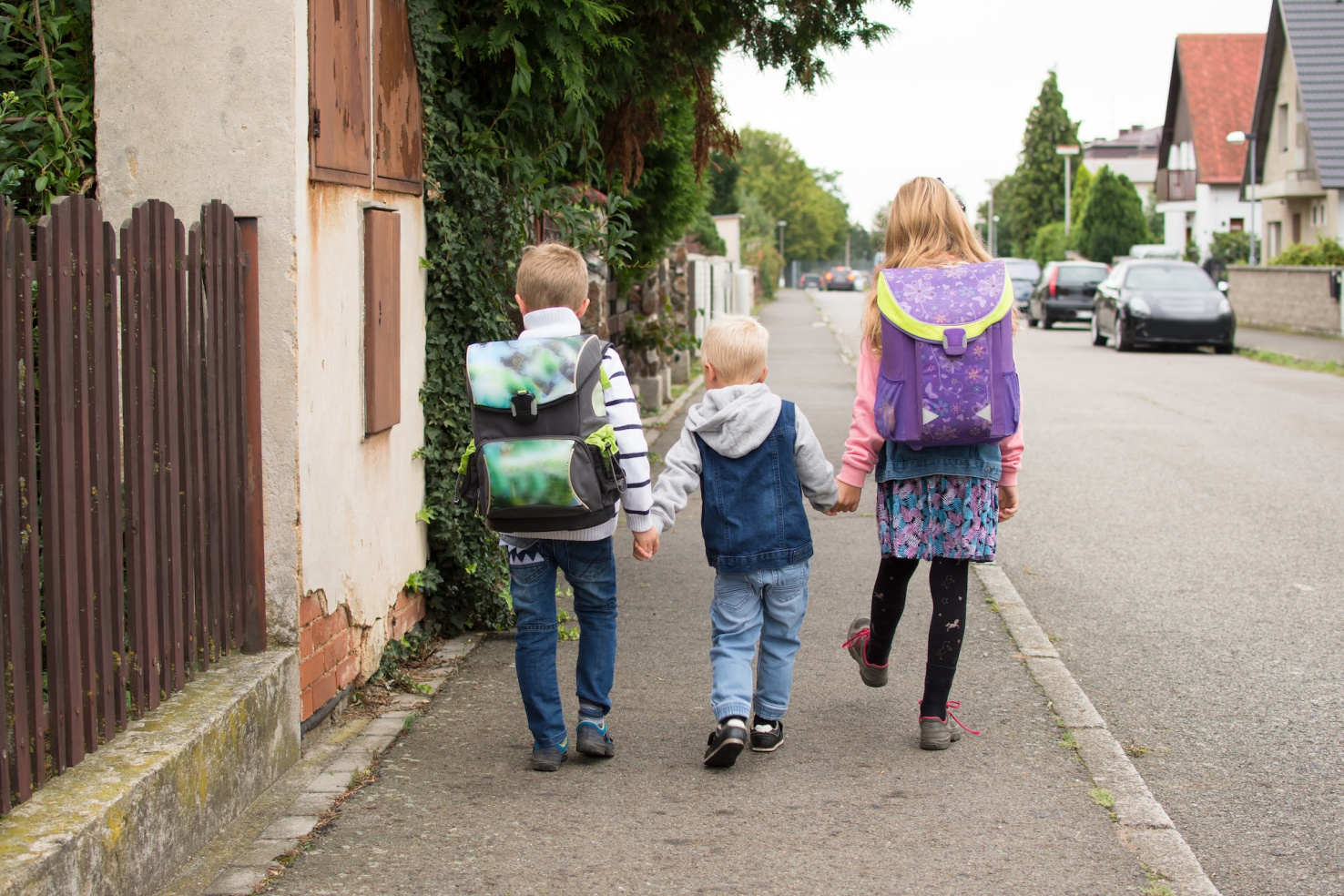
Car dependency relates to this in two ways. First, it makes unsupervised walking more dangerous — not because of strangers (only about 100 out of 72 million children are kidnapped by strangers each year) but because of traffic, which is the leading cause of death for children ages 0–19.
Second, car-centric design may have quietly shaped helicopter parenting culture itself. In suburbs built around cars, every trip requires an adult. It's no coincidence that the "soccer mom" is a suburban phenomenon. As suburbia became the blueprint for American family life, its culture of constant oversight may have spread, leaving little room for the unsupervised experiences where dating skills tend to develop.
Designing for love?
With those broader theories as context, here is what the data from this research specifically points toward — and what it suggests we do next.
The goal isn't to design cities for dating specifically, it's to create places where human connection can flourish. The places we often think of as the most romantic weren't planned with dating as their primary objective. Instead, their priority was creating vibrant public life, walkability and shared spaces. Drawing on Jan Gehl's Cities for People, six design principles stand out.
-
Prioritize proximity — shorter distances between destinations increase walking and chance encounters.
-
Increase land use diversity so people share spaces throughout the day.
-
Design streets for people, not cars — slower streets invite lingering and interaction.
-
Encourage people to stay, not just pass through, with seating, shade and lighting.
-
Treat ground-floor design as social infrastructure — active frontages slow movement and invite interaction.
-
Design for visibility and low-intensity contact, since most connection begins simply by seeing and being seen.
Why it matters
You can’t build a culture around individualism and expect love to flourish. Over the past decades we have made decisions — from how we measure human worth, to how we raise our children, to how we design our streets — that have consistently chosen individualism over love, and love has paid the price.
Plato saw love as the driving force behind all human striving. Viktor Frankl, writing from the aftermath of the Holocaust, called it even more plainly: "the salvation of man is through love and in love."
If love, in all the forms it takes, is what makes life worth living, perhaps the most important thing we can do is build a world that makes it a little easier to find.
–
Hannah Kosoff is an urban planner and researcher interested in how urbanism shapes the human experience, particularly in the context of suburban sprawl. She explores these questions through filmmaking, design and research, with a focus on how the built environment influences social connection, well-being and everyday life. Read her thesis, “Planning for Love” here.


Planning for Love, Part 2: What happens to dating in a car-centric world?
A survey of over 150 adults about their dating lives reveals stark differences based on their neighborhood's walkability.
Midtown Atlanta Plaza Replaces Parking With Public Seating, Art
The formerly car-centric block was redesigned to include wider sidewalks, public seating, and enhanced landscaping in lieu of on-street parking.
The Pitfalls of the 15-Minute City
The concept, touted as "hyper-local," can fail to take into account local conditions and historical inequities in American cities.

Planetizen Federal Action Tracker
A weekly monitor of how Trump’s orders and actions are impacting planners and planning in America.

Data reveals that NYC’s bet on congestion pricing has paid off
After almost two years of the program, reports show positive impacts on traffic and air quality and no disruptions to parking.

Denver is solving homelessness. Why aren't the rest of us?
Since 2023, Denver's street homeless population has decreased by 64%, proving that effective tools exist to support those in need of housing.

CA city to shut down airport, transform it into utopian park
The western side of the 200-acre park will feature a dog park, nature education center and arboretum.

NYC to vote on supporting outdoor dining, streamlining bus and bike lane creation
The city has five proposed amendments to its municipal constitution on the ballot this November.

Chicago breaks ground on $3 billion megadevelopment
The new neighborhood, titled Foundry Park, will one day host 3,700 residences.

FREE Course: Walkable City 1: Why Walkability?
After describing his path towards focusing on walkability as the essence of good planning, Jeff Speck marches through his five principal reasons for making more walkable places.
Reinventing Malls: Planning Alchemy—Turning Gray Fields Into Gold
The course focuses on the opportunities and imperatives that shape reinvention of mall sites.

City of Rosemead
Rutgers University, Edward J. Bloustein School of Planning and Public Policy
One Hundred Miles
The Architects Foundation
University of Cincinnati Online
Montrose County
Northern Illinois Transit Authority (NITA)
The Pocatello Development Authority

