Since 2023, Denver's street homeless population has decreased by 64%, proving that effective tools exist to support those in need of housing.


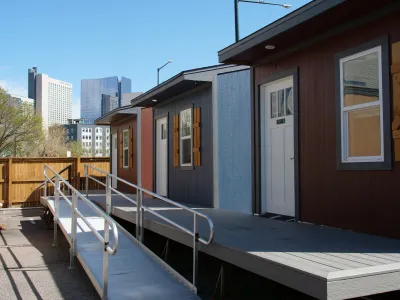
In 2025, Denver, Colorado's rate of street homelessness dropped 13 times faster than the rest of the country. Since 2023, their unsheltered population is down 64 percent. “What they’re doing is working,” Samantha Batko, a senior fellow at the Urban Institute told the New York Times. So what is stopping the rest of the country?
That is the subject of an in-depth op-ed feature in the NYT this week, detailing the intricacies of the policies and programs that have led to Denver's success today.
"Since Mayor Mike Johnston of Denver took office in 2023, he has focused on getting unsheltered homelessness to zero. He has done so by using some fairly standard ideas. Police officers break up homeless encampments, warning that repeated violations could lead to arrest. With the help of social workers, the city connects those people to services and shelters. Crucially, it has expanded those services to ensure that officers and social workers have something to connect people to," writes German Lopez in the NYT.
"By successfully combining enforcement and social services, Denver demonstrates that cities don’t need to choose between those binaries. They should do both."
Read the full story: We Know How to Fix Homelessness. Why Don’t More Cities Do It?
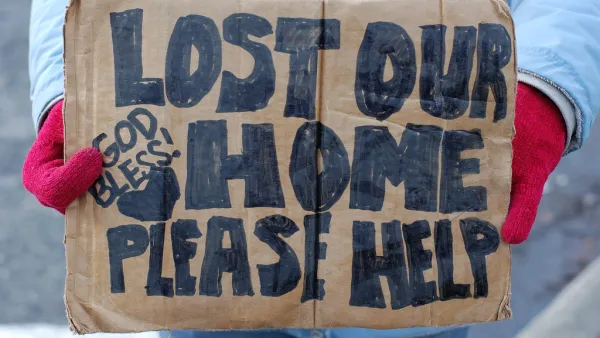
Cities Still Sweeping Away Homeless Camps, Despite Legal Challenges
Denver and Los Angeles kicked the new year off by committing to the enforcement of a sleeping ban and sweeping away a large homeless encampment, respectively.
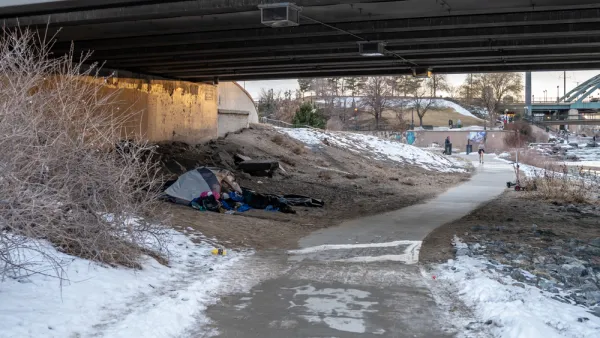
'Right to Survive' Homeless Initiative Fails With Denver Voters
Denver's "Right to Survive" initiative highlights just how troubling and problematic policy approaches to homelessness can be.
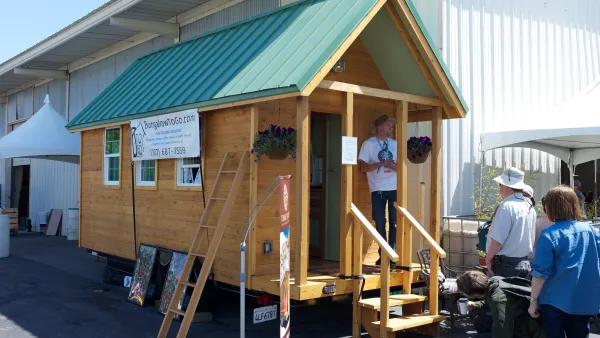
Tiny House Communities Popping Up to Shelter Homeless
Villages of tiny homes are being prepared in Portland and Denver to help individuals transition out of homelessness

Planetizen Federal Action Tracker
A weekly monitor of how Trump’s orders and actions are impacting planners and planning in America.

Washington state to charge fee to drivers with fuel-efficient cars
Revenue from the fee will go towards supporting the state’s highways.

Trump to blast ‘hydrocarbon highway’ through ‘world’s longest art gallery’
Environmental and historic preservation groups are suing to stop the project.

Data centers need power – lower income, rural residents pay the price
In 2025, data centers paid only 38% of the energy infrastructure costs linked to their growth, with households, especially rural and low-income residents, bearing the remaining burden.

MBTA Green Line project moved to next phrase of CIG program
The modernization effort will cost $4.08 billion.

22-mile pedestrian and bike path to encircle Atlanta by 2030
The project will also support affordable housing.

FREE Course: Walkable City 1: Why Walkability?
After describing his path towards focusing on walkability as the essence of good planning, Jeff Speck marches through his five principal reasons for making more walkable places.
Reinventing Malls: Planning Alchemy—Turning Gray Fields Into Gold
The course focuses on the opportunities and imperatives that shape reinvention of mall sites.

City of Charlotte
City of Rosemead
Rutgers University, Edward J. Bloustein School of Planning and Public Policy
University of Michigan School for Environment and Sustainability (SEAS)
Hunter College, City University of New York (CUNY)
The Architects Foundation
University District Partnership