The proposed expansion would affect smaller multi-family developments and include incentives for reducing travel during peak hours and encouraging transit, walking, and biking.


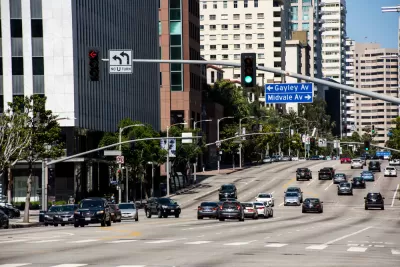
The Los Angeles Department of City Planning has proposed an ordinance that "would effectuate changes to the city's Transportation Demand Management (TDM) Program, which attempts to reduce the number of new car trips generated by large developments." As reported by Steven Sharp for Urbanize Los Angeles, the program would "would expand the TDM program's application to most multi-family residential developments with 16 or more residential units" and require developers to "choose from a menu of pre-approved TDM strategies which include including incentives for transit use, cycling, carpooling, and car sharing." The plan promotes "alternate modes of transportation, including cycling and transit, as well as steps to redistribute trips outside of peak hours."
According to Los Angeles Planning Director Vince Bertoni, "This program puts people first. It recognizes Angelenos' diverse transportation needs, invests in walkable, bike-friendly, transit-rich communities, and incentivizes the creation of walkable activity centers." Transportation Demand Management (TDM) defines a broad set of strategies and incentives designed to push developers to reduce or redistribute travel demand, reduce congestion, and promote walking, biking, and public transit as viable transportation options.
"[T]he Planning Department and LADOT are holding virtual workshops and public hearings prior to consideration by the City Planning Commission and City Council."
FULL STORY: City of L.A. to expand transportation demand management ordinance


The Commute of the Future: Congested Mess, or Massive Mode Shift?
Researchers around the world are trying to get an idea about how increased automobile trips, fewer shared modes, and high unemployment will alter long-term trends in transportation.
Southern California Freeway Expansion Plans Scrapped
After more than a decade of planning, Caltrans has officially dropped the I-710 Corridor Project, a plan to widen Interstate 710 for a long stretch of the freeway near the ports of Los Angeles and Long Beach.

Planning for Congestion Relief
The third and final installment of Planetizen's examination of the role of the planning profession in both perpetuating and solving traffic congestion.

Planetizen Federal Action Tracker
A weekly monitor of how Trump’s orders and actions are impacting planners and planning in America.

The state-sanctioned urbicide of Austin
People don’t kill cities. Freeways do.

US to reduce Colorado River water deliveries to Mexico
A new Colorado Treaty amendment reduces Mexico’s Colorado River water allocation by 250,000 acre feet.

5 New England states march closer to 800 megawatt wind energy project
Securing federal approval for the project may be complicated under the Trump administration, which has historically been hostile towards domestic wind power.

Baltimore to break ground on $50 million Transit Priority Project
The project will bring faster bus trips, safer streets and better bike connections to Baltimore.

Airbnb launches $250 million 'last-dollar financing' housing accelerator, makes first investment in Austin
The company will put $6.4 million towards affordable housing development in Texas’ capital.

FREE Course: Walkable City 1: Why Walkability?
After describing his path towards focusing on walkability as the essence of good planning, Jeff Speck marches through his five principal reasons for making more walkable places.
Reinventing Malls: Planning Alchemy—Turning Gray Fields Into Gold
The course focuses on the opportunities and imperatives that shape reinvention of mall sites.

Eagle County Government
Harvard University Graduate School of Design
Nashville Planning Department
The Architects Foundation
University of Cincinnati Online
The Pocatello Development Authority
The Urban Renewal Agency of the City of Pocatello
Journal of the American Planning Association