High housing costs in city centers and the new-found flexibility offered by remote work are pushing more renters to suburban areas.


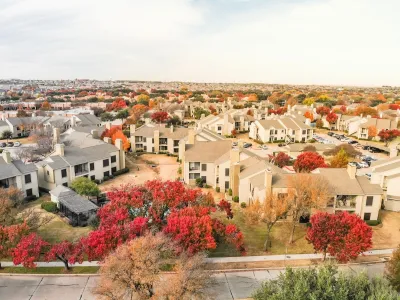
Renters outnumber homeowners in over 200 U.S. suburbs, according to a new report that reveals a shift in the suburban housing market. Andra Hopulele outlines the findings for Point2Home, noting that the number of renters in suburbs has not taken a linear path: “Case in point, the number of renter-dominated suburbs has fallen compared to 2018, when a total of 233 suburbs were renter-majority. But, it remains high given that, traditionally, the suburbs were oases of homeownership away from the renter-majority urban spaces.” In sheer numbers, there are roughly 231,000 more renter households in the suburbs now than in 2018.
According to the report, “Between 2018 and 2023, the number of renter households increased faster in the suburbs than the main city in five of the 20 largest U.S. metros. Dallas was chief among them, with one more metro (Miami) seeing its share of renter households expand at quite similar rates in both the city and its suburbs.” Four of the top five suburbs with the most renter households added were in Texas.
The change is driven by shifts in work patterns, housing affordability (or lack thereof), and a greater availability of rental options in suburban areas. According to Hopulele, “The rise of the renter suburb is not a blip. It’s a fundamental shift in how Americans live and think about housing.”
FULL STORY: The Renter Suburb: Renters Outnumber Owners in 203 Suburbs in Largest U.S. Metros

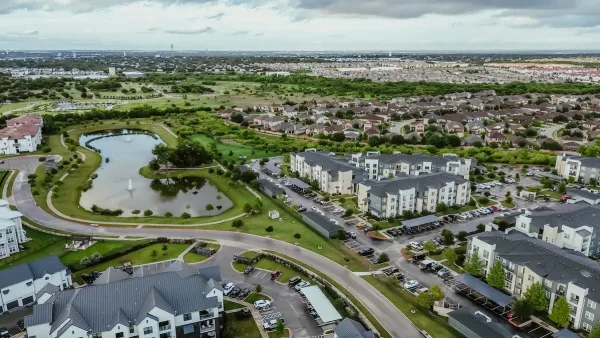
Rents Rose Between December and January
After dropping to a three-year low, U.S. rent costs grew in many major cities.
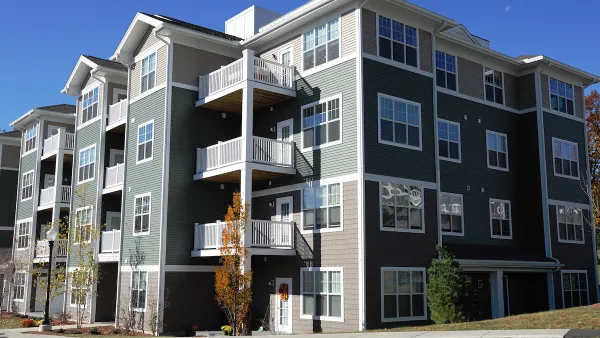
Rent Costs Rising Faster in Suburbs Than Urban Cores
In a majority of U.S. metro areas, suburban rent hikes are outpacing urban rent increases.
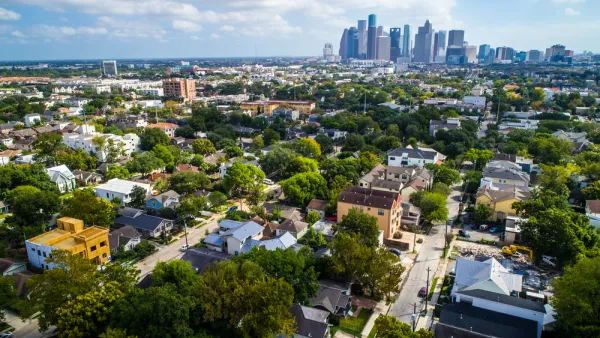
Report: More Than Half of Harris County Households Cost-Burdened
Using a measurement that takes into account more factors in addition to housing costs, a new report from the Kinder Institute for Urban Research sheds light on the true crisis facing Houston-area renters.

Planetizen Federal Action Tracker
A weekly monitor of how Trump’s orders and actions are impacting planners and planning in America.

The state-sanctioned urbicide of Austin
People don’t kill cities. Freeways do.

US to reduce Colorado River water deliveries to Mexico
A new Colorado Treaty amendment reduces Mexico’s Colorado River water allocation by 250,000 acre feet.

5 New England states march closer to 800 megawatt wind energy project
Securing federal approval for the project may be complicated under the Trump administration, which has historically been hostile towards domestic wind power.

Baltimore to break ground on $50 million Transit Priority Project
The project will bring faster bus trips, safer streets and better bike connections to Baltimore.

Airbnb launches $250 million 'last-dollar financing' housing accelerator, makes first investment in Austin
The company will put $6.4 million towards affordable housing development in Texas’ capital.

FREE Course: Walkable City 1: Why Walkability?
After describing his path towards focusing on walkability as the essence of good planning, Jeff Speck marches through his five principal reasons for making more walkable places.
Reinventing Malls: Planning Alchemy—Turning Gray Fields Into Gold
The course focuses on the opportunities and imperatives that shape reinvention of mall sites.

Eagle County Government
Harvard University Graduate School of Design
Nashville Planning Department
The Architects Foundation
University of Cincinnati Online
The Pocatello Development Authority
The Urban Renewal Agency of the City of Pocatello
Journal of the American Planning Association