Metro ridership data reveal how the ICE raids sweeping Los Angeles are disrupting daily life and impacting how people move around the city.


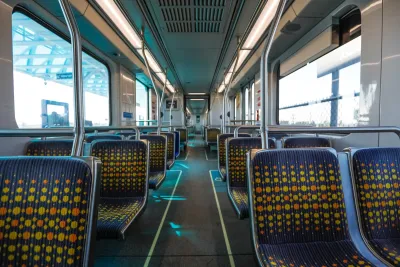
In the wake of violent immigration raids and widespread fear among immigrant communities, transit ridership in Los Angeles dropped in June, reports Joe Linton in Streetsblog LA.
Some ICE kidnappings have taken place on transit - at bus stops, at stations, on buses. Some bus operators have resisted ICE to protect riders, and advocates are pressing transit agencies to formally step this up. But a transit trip never starts and ends on transit. Most bus and rail riders start their trip on foot - traveling L.A. sidewalks exposed to ICE attack.
Notably, Metro’s ridership grew for the 30 months before that. “In June 2025, Metro saw 877,008 average weekday boardings, a 6.6 percent drop from last June's 939,615.”
Metro’s newly expanded K Line saw its highest ridership month in June, but much of this was riders shifting from other lines. According to Linton, “Even with the new connectivity and LAX station - and the highest ridership month in the three years the K Line has been open - ICE's dehumanizing raids significantly depressed ridership across the Metro system.”
FULL STORY: ICE Terror Depressed Overall Metro Ridership in June

LA Bus Ridership Keeps Dropping as ICE Raids Continue
Bus boardings fell for a second month amid fears of immigration raids.
New Jersey AG Says Governor Can’t Bar ICE From Transit
An executive order prohibits ICE from using state-owned property, but the AG says it doesn’t apply to public spaces like train stations.
LA Transit Ridership Plummets Amidst ICE Raids
LA Metro’s bus and rail lines are seeing up to 15 percent lower ridership in the wake of violent immigration arrests.

Planetizen Federal Action Tracker
A weekly monitor of how Trump’s orders and actions are impacting planners and planning in America.

The state-sanctioned urbicide of Austin
People don’t kill cities. Freeways do.

US to reduce Colorado River water deliveries to Mexico
A new Colorado Treaty amendment reduces Mexico’s Colorado River water allocation by 250,000 acre feet.

5 New England states march closer to 800 megawatt wind energy project
Securing federal approval for the project may be complicated under the Trump administration, which has historically been hostile towards domestic wind power.

Baltimore to break ground on $50 million Transit Priority Project
The project will bring faster bus trips, safer streets and better bike connections to Baltimore.

Airbnb launches $250 million 'last-dollar financing' housing accelerator, makes first investment in Austin
The company will put $6.4 million towards affordable housing development in Texas’ capital.

FREE Course: Walkable City 1: Why Walkability?
After describing his path towards focusing on walkability as the essence of good planning, Jeff Speck marches through his five principal reasons for making more walkable places.
Reinventing Malls: Planning Alchemy—Turning Gray Fields Into Gold
The course focuses on the opportunities and imperatives that shape reinvention of mall sites.

Eagle County Government
Harvard University Graduate School of Design
Nashville Planning Department
The Architects Foundation
University of Cincinnati Online
The Pocatello Development Authority
The Urban Renewal Agency of the City of Pocatello
Journal of the American Planning Association