The announcement this week that the state of New York's employee pension fund would divest from fossil fuel industries sent shockwaves through the industry and the environmentalism movement this week.


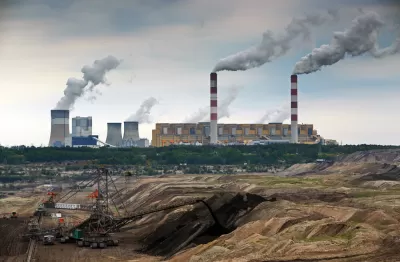
Bill McKibben, founder of the climate advocacy group 350.org, shares news and insights about a historic decision by the state of New York's employee pension fund would divest $12 billion from gas and oil companies, "if they can’t come up with a legitimate business plan within four years that is aligned with the goals of the Paris climate accord."
"The entire portfolio will be decarbonized over the next two decades," according to McKibben. The total value of the employee pension fund for the state of New York totals $226 billion.
Here's how McKibben summarizes the significance of the news:
It’s a huge win, obviously, for the activists who have fought for eight years to get Albany to divest from fossil fuel companies and for the global divestment campaign. Endowments and portfolios worth more than than $14 trillion have joined the fight. This new move is the largest by a pension fund in the United States, edging the New York City pension funds under Comptroller Scott Stringer, who announced in 2018 that the fund would seek to divest $5 billion in fossil fuel investments from its nearly $200 billion pension fund over five years.
The news also suggests to McKibben that the "once-dominant fossil fuel industry has reached a low in financial and political power." To make the case, McKibben lists a series of capitulations that show the waning influence of the fossil fuel industry, and gives credit to New York State Comptroller Thomas DiNapoli, who announced the divestment this week, for standing up to the industry.
Read the full story: New York State Sends a Blunt Message to Big Oil

Countries Underreport Greenhouse Gas Emissions
A Washington Post investigation found major discrepancies between actual emissions and the levels reported to the United Nations.
Report: How The U.S. Could Meet Its 2030 Climate Goals
If policymakers don't take clear, immediate action, emissions reductions will fall short of the 50-52 percent goal set in Paris.

Sustainable Real Estate Investments Are No Longer Optional
Greenwashing won't cut it anymore, and investors are increasingly demanding that all real estate developments and existing assets be assessed in the most holistic way possible.

Planetizen Federal Action Tracker
A weekly monitor of how Trump’s orders and actions are impacting planners and planning in America.

California plans to bury El Niño’s downpour
If the state plays its cards right, it may be able to store a billion acre-feet of El Niño’s water in aquifers.

Desperate measures: Advocates weigh draining Lake Powell to fill Colorado River
Draining the reservoir could reduce evaporation losses by a couple hundred thousand acre-feet.

In Texas, data centers are swallowing promised parkland
Residents who moved to Taylor, Texas for a rural community now have to contend with three data centers in their backyard.

How a Chicago-sized wind farm beat the odds and powered on
The project spanned five presidential administrations and a standoff with a U.S. military base.

MTA gives itself 30 days to transform pit into basketball court
The site has been under construction since 2022; the city originally estimated it would finish the court in 2024.

FREE Course: Walkable City 1: Why Walkability?
After describing his path towards focusing on walkability as the essence of good planning, Jeff Speck marches through his five principal reasons for making more walkable places.
Reinventing Malls: Planning Alchemy—Turning Gray Fields Into Gold
The course focuses on the opportunities and imperatives that shape reinvention of mall sites.

City of Rosemead
Rutgers University, Edward J. Bloustein School of Planning and Public Policy
One Hundred Miles
Hunter College, City University of New York (CUNY)
The Architects Foundation
University of Cincinnati Online
City of Cambridge
Montrose County
The Pocatello Development Authority