North America has experienced a 5% jump in rates of cycling since the U.S. started staying home. As electric bikes enjoy impressive sales increases, cities around the world consider making the shift permanent by planning bike-friendly infrastructure.


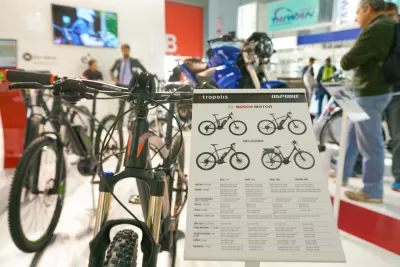
Electric bike sales are booming worldwide as more travelers opt for alternatives to cars and public transportation. Thomas Ricker and Andrew J. Hawkins, as well as many public officials and community members, urge that this trend should be made permanent. Cities around the world, they say, need to provide bike-friendly infrastructure to make possible a considerably less car-reliant future.
"It’s a remarkable transformation, but it could all be undone if cities aren’t bold in how they reimagine their streetscapes," warn Ricker and Hawkins. In Paris, plans are being made to convert a city-spanning thoroughfare into a bike highway.
Some other cities, unfortunately, aren't following the lead. In many cases, "the COVID-19-era transportation measures being rolled out by cities are being done so timidly, often behind the guise of temporary change," according to Ricker and Hawkins, attributing the hesitancy to an assumption that a return to business as normal necessitates car-reliance. Calls to action resonate with those who see new transportation trends as an opportunity to restructure and reprioritize the way people travel through cities.
"If not now, when?" question Ricker and Hawkins.
FULL STORY: CITIES ARE TRANSFORMING AS ELECTRIC BIKE SALES SKYROCKET

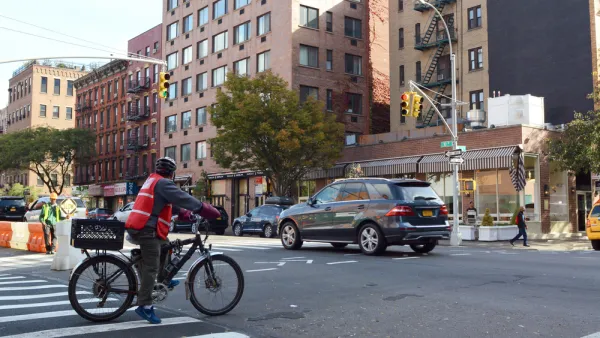
How Electric Bikes Help in Battling COVID-19
For the last six months, the world has been on a stand-still. As government-imposed lockdowns spread across the country in the midst of the COVID-19 pandemic, people have been looking left and right for alternatives to cope with the “new normal.”
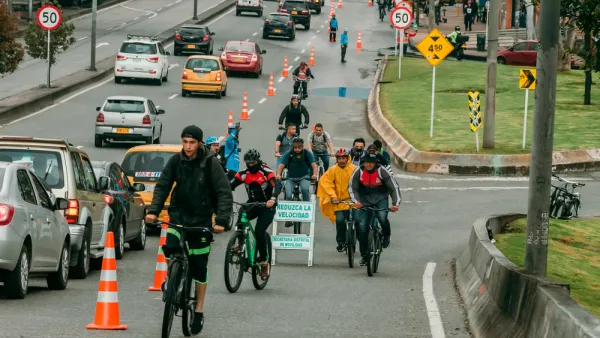
Bogotá Commits to the Bicycle
Colombia's capital city, the birthplace of the Ciclovía, is devoting public space to bikes during lockdown. To reduce traffic, the city plans to allocate even more public space to bike infrastructure and sustainable mobility moving forward.
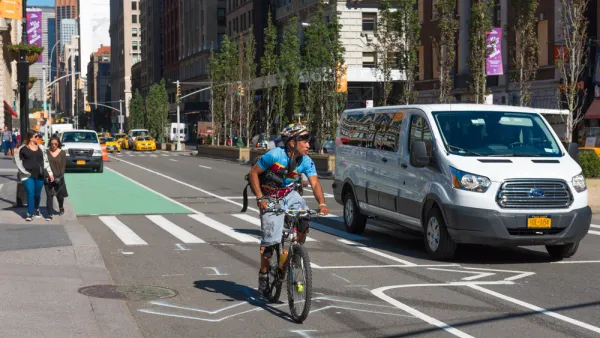
New York Poised to Become a Biking City
Could the pandemic be a tipping point for a century of car-centric planning in New York City's to give way to a more bike-friendly city?

Planetizen Federal Action Tracker
A weekly monitor of how Trump’s orders and actions are impacting planners and planning in America.

The state-sanctioned urbicide of Austin
People don’t kill cities. Freeways do.

US to reduce Colorado River water deliveries to Mexico
A new Colorado Treaty amendment reduces Mexico’s Colorado River water allocation by 250,000 acre feet.

Mamdani overhauls NYC's Vision Zero plan with 100 new policy goals
The overhaul aims to reduce traffic deaths and make streets safer for pedestrians, cyclists and drivers through lower speed limits, new safety infrastructure and more.

Amtrak not solely to blame for New Jersey commuter rail's unreliability, report finds
A new study from the Garden State Initiative found that NJ Transit’s budget grew 20% across a 4 year period, but reliability declined significantly over the same period.

EPA erases limits on planet-warming pollution from power plants
Under Monday’s plan, power plants would still have some limits on how much mercury, arsenic and other contaminants they can emit.

FREE Course: Walkable City 1: Why Walkability?
After describing his path towards focusing on walkability as the essence of good planning, Jeff Speck marches through his five principal reasons for making more walkable places.
Reinventing Malls: Planning Alchemy—Turning Gray Fields Into Gold
The course focuses on the opportunities and imperatives that shape reinvention of mall sites.

Eagle County Government
Harvard University Graduate School of Design
Nashville Planning Department
The Architects Foundation
University of Cincinnati Online
The Pocatello Development Authority
The Urban Renewal Agency of the City of Pocatello
Journal of the American Planning Association