New York City might need some courage to go through with its idea sto charge drivers to enter parts of Manhattan. Luckily there are International models of success to choose from.


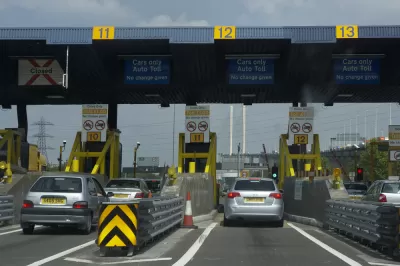
Eillie Anzilotti lists five lessons in congestion pricing from cities that have implemented schemes similar to those in the works New York City, and considered much more speculatively in Los Angeles as well.
Anzilotti begins by noting that New York City has gone further with congestion pricing than any other city in the United States, despite several international examples. The slow progress of the idea is telling, and cautionary:
Car dependency’s relatively strong hold in the U.S.–even in the city where proportionally, the fewest people drive–posed a significant hurdle in the push for a fee on driving in New York City, which has been years in the making. Now that the policy is set to be introduced, some transportation analysts have expressed concern that in trying too much to appease the car lobby, New York’s policy might get too watered down to meaningfully address the city’s traffic and subway budget needs.
So to inform a realistic discussion of the idea, Anzilotti lists the following lessons, with more detail provided in the source article:
- Make the fee as broad as possible.
- Be ready with alternate options.
- Don't think of the policy as set in stone.
- Focus on the benefits.
- Just do it.
Read the full story: 5 lessons for New York’s congestion pricing from cities that have made it work
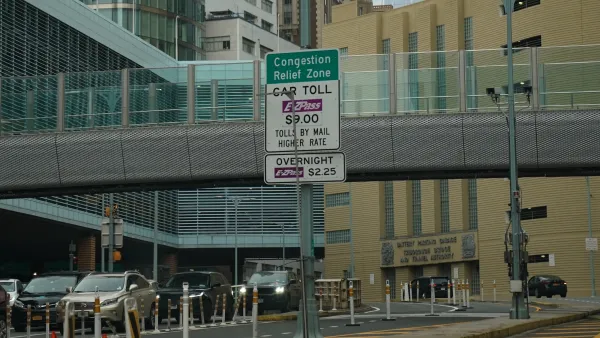
Judge Rules to Keep NYC Congestion Pricing, Ending Trump's Legal Challenge
The decision likely deals a fatal blow to efforts to end the program, but the Trump administration says it will explore other avenues for reversing the congestion pricing scheme.
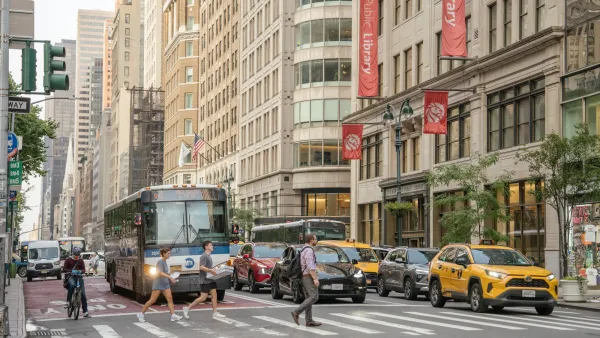
One-Year Numbers Show Clear Win for NYC Congestion Pricing
While the Trump administration continues trying to kill the program, data one year out shows that the new toll dramatically decreased traffic and improved transit travel times.
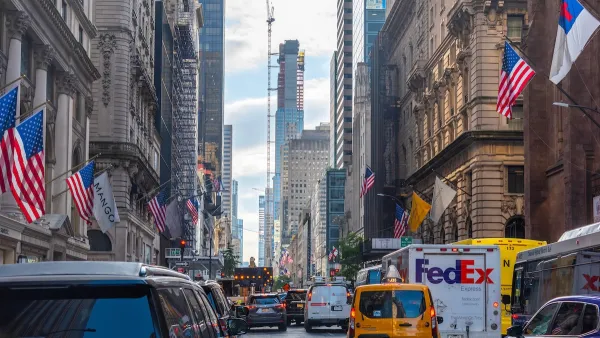
NYC Congestion Pricing: Still Working
10 million fewer vehicles entered the congestion pricing zone in the first six months of the program than last year, while pedestrian fatalities are at ‘historic lows.’

Desperate measures: Advocates weigh draining Lake Powell to fill Colorado River
Draining the reservoir could reduce evaporation losses by a couple hundred thousand acre-feet.

Eastern Nebraska is running out of electricity
Data centers and electrification are straining eastern Nebraska’s grid, throttling economic development.

Move over, LA: St. Louis gears up for Olympics, invests millions in downtown redevelopment
The Missouri city will host the 2028 Olympic soccer group stage and knockout matches.

Mass. votes against statewide minimum lot size for single-family homes
Over 2 million residents voted on Question 7; it was decided by just over 30,000 votes.

Maryland’s $15 billion bridge project gains key approval
The Maryland Transit Authority said the project will create over 60,000 jobs and add $23 billion to the local economy.

‘No clear next steps’ for Chicago's permanent festival grounds
Eleventh Ward Ald. Nicole Lee has suggested Soldier Field as a possible location for the permanent event space.

FREE Course: Walkable City 1: Why Walkability?
After describing his path towards focusing on walkability as the essence of good planning, Jeff Speck marches through his five principal reasons for making more walkable places.
Reinventing Malls: Planning Alchemy—Turning Gray Fields Into Gold
The course focuses on the opportunities and imperatives that shape reinvention of mall sites.

City of Rosemead
Rutgers University, Edward J. Bloustein School of Planning and Public Policy
One Hundred Miles
University of Michigan School for Environment and Sustainability (SEAS)
Hunter College, City University of New York (CUNY)
The Architects Foundation
City of Cambridge
Montrose County
The Pocatello Development Authority