The eight-cents-per-gallon gas tax increase is one of several measures in the Democrat governor's first budget that marks a major departure from the the tenure of former Republican Gov. Scott Walker.


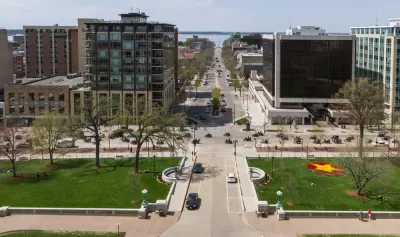
Eight cents a gallon is a far cry from what defeated incumbent Gov. Scott Walker warned voters during the campaign Evers would do if elected: hike the gas tax by "up to a $1 a gallon."
The current 32.9-cents per gallon total state gas tax has been unchanged since 2006, when the legislature abolished the practice of automatically adjusting its gas tax for inflation. Walker, as late as January 2015, had supported hiking the gas tax and user fees, but dropped the pay-as-you-go approach in favor of bond financing as he was emerging as a candidate for the Republican presidential primary in 2016.
"Evers' $83.4 billion, two-year spending plan would also index the gas tax to allow for automatic increases in the future, legalize medical marijuana, restore government funding to Planned Parenthood and take power away from state legislators to draw their own district lines," report Shawn Johnson and Laurel White for Wisconsin Public Radio on Feb. 28.
Johnson reported in 2017 how automatically adjusting the gas tax for inflation went from a bipartisan idea in 1985 to bipartisan unraveling in 2006 when then-Democratic Gov. Jim Doyle signed Republican legislation that would cause the state's chronic transportation funding crisis.
Gov. Evers' office "said it would offset the gas tax increase by eliminating Wisconsin's minimum markup law for gasoline purchases," add Johnson and White.
Also known as the Unfair Sales Act, the law prevents big retailers from selling gasoline below cost.
Evers would also increase a registration fee for heavy trucks by 27 percent.
The increase in the two user fees sets up a potential conflict with the Republican-controlled legislature that prefers to toll federal highways, notwithstanding the fact that it is a timely process that requires applying to the U.S. Department of Transportation for a waiver from the tolling prohibition.
"All told, the Evers administration said changes would increase transportation funding by more than $600 million over the two-year budget," add Johnson and White. In addition to reducing the level of borrowing for transportation spending, the new revenues would go towards:
- Finishing construction on Milwaukee's Zoo Interchange project, which was put on hold in Walker's last budget.
- Pay for the expansion of Interstate 43 from two lanes to three in Milwaukee and Ozaukee counties.
The reporters note that legislators haven't taken a vote to increase the gas tax in more than two decades.
- Wisconsin Republicans Unite to Support Road Tolling Over Gas Tax Hike, February 11, 2019
- Gas Tax Politics at Play in Wisconsin Gubernatorial Race, October 15, 2018
-
The Vital Role of Gas Tax Indexing, July 18, 2017
Hat tip to IBTTA Smart Brief.
FULL STORY: Gov. Tony Evers Calls For Gas Tax Increase In First Budget

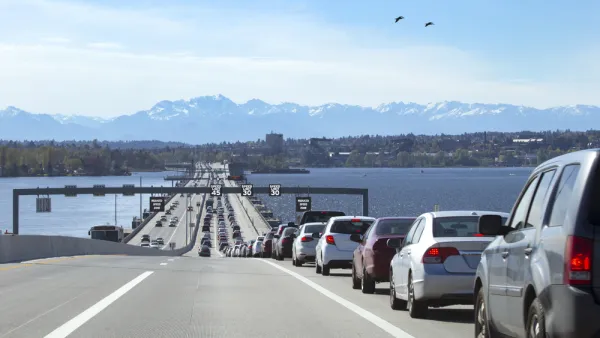
Washington State to Decide on Transition From Gas Tax to Road Usage Charge
Having completed a pilot program last year, the Washington State Transportation Commission will hear a report in October and vote in December on phasing out its 49.4 cents per gallon gas tax, fourth highest in the nation but not indexed to inflation.
ICYMI: 12 States Hiked Gas Taxes on Monday
On July 1, Illinois and Ohio increased gas taxes by double digits: 19 cents per gallon and 10.5 CPG, respectively, followed by California at 5.6 CPG, all due to legislation passed this year or in 2017. Diesel tax hikes were even higher.
A Small but Significant Fuel Tax Hike for Arkansas
The 3 cent gas tax and 6 cent diesel tax increases are among the lowest of any states that have hiked fuel taxes since 2013, but combined with other revenue sources in the legislation, plus an upcoming sales tax ballot measure, it's historic.

Planetizen Federal Action Tracker
A weekly monitor of how Trump’s orders and actions are impacting planners and planning in America.

The state-sanctioned urbicide of Austin
People don’t kill cities. Freeways do.

US to reduce Colorado River water deliveries to Mexico
A new Colorado Treaty amendment reduces Mexico’s Colorado River water allocation by 250,000 acre feet.

Mamdani overhauls NYC's Vision Zero plan with 100 new policy goals
The overhaul aims to reduce traffic deaths and make streets safer for pedestrians, cyclists and drivers through lower speed limits, new safety infrastructure and more.

Amtrak not solely to blame for New Jersey commuter rail's unreliability, report finds
A new study from the Garden State Initiative found that NJ Transit’s budget grew 20% across a 4 year period, but reliability declined significantly over the same period.

EPA erases limits on planet-warming pollution from power plants
Under Monday’s plan, power plants would still have some limits on how much mercury, arsenic and other contaminants they can emit.

FREE Course: Walkable City 1: Why Walkability?
After describing his path towards focusing on walkability as the essence of good planning, Jeff Speck marches through his five principal reasons for making more walkable places.
Reinventing Malls: Planning Alchemy—Turning Gray Fields Into Gold
The course focuses on the opportunities and imperatives that shape reinvention of mall sites.

Eagle County Government
Harvard University Graduate School of Design
Nashville Planning Department
The Architects Foundation
University of Cincinnati Online
The Pocatello Development Authority
The Urban Renewal Agency of the City of Pocatello
Journal of the American Planning Association