California’s new daylighting law bans parking within 20 feet of crosswalks. How can cities best use this space?


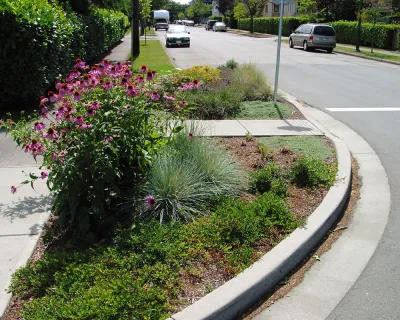
What can you do with an extra 20 feet of curb space? Thanks to California’s new daylighting law, which prohibits parking within 20 feet of most crosswalks, gives cities an opportunity to figure that out.
With a little creativity, communities can activate this space, adding beauty or utility to our shared spaces while making it impossible for vehicles to occupy the daylighting zone.
In a piece for CalBike, Kendra Ramsey offers nine suggestions for how to fill daylight space, improving safety and transforming curb space into a “civic asset.” The suggestions include:
- Bollards or posts: Bollards can be a simple, effective tool for keeping cars out.
- Bike parking corral: On-street bike parking can save valuable sidewalk space while maintaining visibility.
- Bike or scooter share dock: Intersections offer a convenient, highly visible spot for shared mobility.
- Benches: “Places to sit are crucial amenities, especially for older adults, people with mobility limitations, and, honestly, a lot of the rest of us at least some of the time. Adding benches to public spaces makes it possible for people to walk farther, knowing they’ll be able to rest when they need to.”
- Public art: Painted asphalt has been shown to calm traffic and can make it clearer to drivers that they should not park there.
See the source article for the full list.
FULL STORY: Nine Uses for Daylighting Space

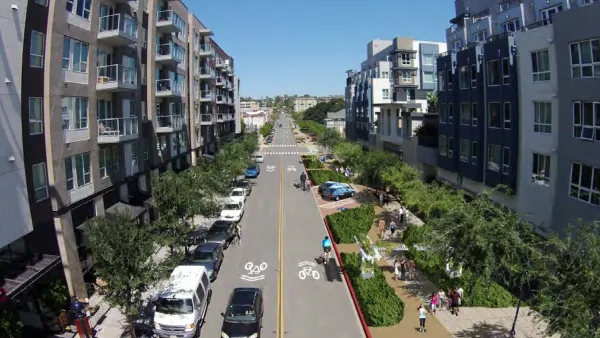
San Diego Swaps Parking Lane for Kid-Friendly Mini Park
The block-long greenway will feature interactive play equipment and landscaping.
How Well Will San Francisco’s Daylighting Program Work?
Unlike other efforts to prevent cars from parking near intersections to improve visibility and road safety, San Francisco has no plans to install physical infrastructure to keep vehicles out of danger zones.
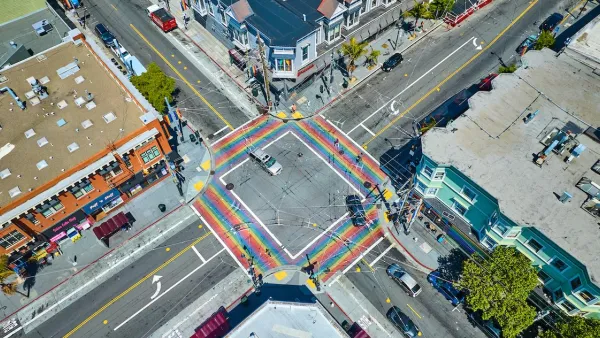
San Francisco Implements ‘Daylighting’ at Intersections
Vehicles are prohibited from parking within 20 feet of a crosswalk as part of the city’s Vision Zero efforts to eliminate traffic deaths and make roads safer.

The state-sanctioned urbicide of Austin
People don’t kill cities. Freeways do.

US to reduce Colorado River water deliveries to Mexico
A new Colorado Treaty amendment reduces Mexico’s Colorado River water allocation by 250,000 acre feet.

New Jersey’s second-largest city bans standalone data centers
Jersey City will continue to allow co-location facilities, such as those meant for research institutions that store their own data.

Amtrak not solely to blame for New Jersey commuter rail's unreliability, report finds
A new study from the Garden State Initiative found that NJ Transit’s budget grew 20% across a 4 year period, but reliability declined significantly over the same period.

EPA erases limits on planet-warming pollution from power plants
Under Monday’s plan, power plants would still have some limits on how much mercury, arsenic and other contaminants they can emit.

Phoenix announces new on-demand transit service, more frequent RAPID buses
Both new services will launch in October, and are part of Phoenix's Project Effective Access Solutions for Easing Congestion.

FREE Course: Walkable City 1: Why Walkability?
After describing his path towards focusing on walkability as the essence of good planning, Jeff Speck marches through his five principal reasons for making more walkable places.
Reinventing Malls: Planning Alchemy—Turning Gray Fields Into Gold
The course focuses on the opportunities and imperatives that shape reinvention of mall sites.


Eagle County Government
Harvard University Graduate School of Design
Nashville Planning Department
The Architects Foundation
University of Cincinnati Online
The Pocatello Development Authority
The Urban Renewal Agency of the City of Pocatello
Journal of the American Planning Association