The sweeping city council decision removes set parking requirements from developments downtown, near transit, small businesses and more.


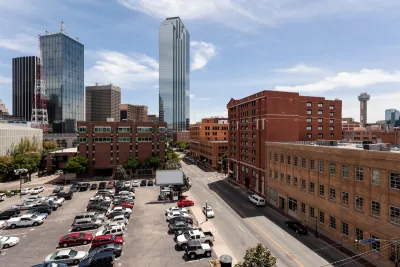
The Dallas City Council voted to reduce minimum parking requirements in many parts of the city, including areas near transit. Writing in the Strong Towns blog, Asia Mieleszko explains how the new rules could help ease the city’s housing crisis and support small businesses.
The new rules completely eliminate parking minimums for residential developments with less than 200 units and bars and restaurants under 2,500 square feet, as well as many other office and retail spaces. “If a structure is officially designated as historic, parking mandates are gone—removing one of the biggest obstacles to restoring or reusing older buildings.”
Dallas follows other cities and states in reforming parking requirements, which impose arbitrary mandates that often drive up the cost of housing or make starting a business impossible. “By removing these outdated mandates, Dallas is giving builders more flexibility to use land and resources for actual homes instead of storage space for cars. This could lower barriers to entry for small developers and help diversify the city’s housing stock—especially in areas where parking requirements previously made infill development infeasible.”
FULL STORY: Dallas Just Ditched Its Outdated Parking Rules—Here’s What That Means

Dallas Considers Nixing Parking Requirements
According to one local official, Dallas projects routinely build 20 to 30 percent more parking than they need, driving up the cost of housing and leading to unsustainable land use patterns.
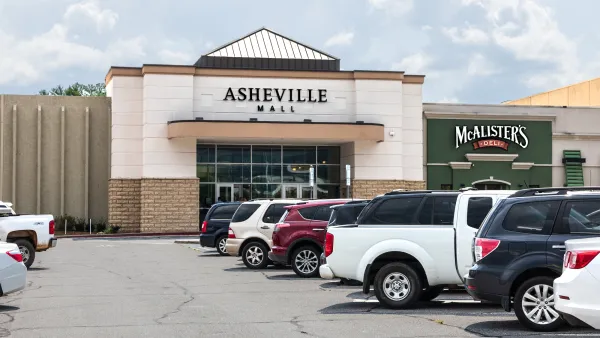
Asheville reconsiders parking minimums as surface parking eats up over a third of downtown real estate
Housing advocates say parking requirements are unnecessary and induce sprawl.
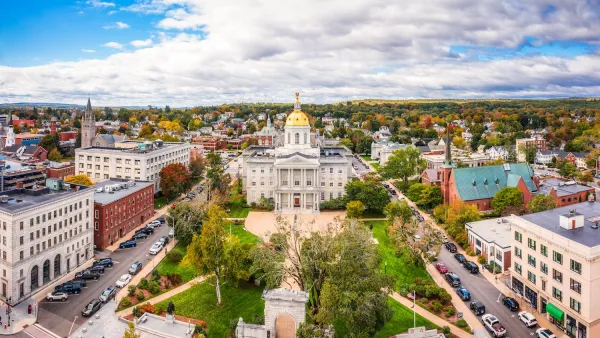
New Hampshire House Passes Parking Reform Bill
The revised bill, which caps parking requirements at one spot per residential unit and eliminates exemptions, will go back to the Senate for a new vote.

The state-sanctioned urbicide of Austin
People don’t kill cities. Freeways do.

US to reduce Colorado River water deliveries to Mexico
A new Colorado Treaty amendment reduces Mexico’s Colorado River water allocation by 250,000 acre feet.

New Jersey’s second-largest city bans standalone data centers
Jersey City will continue to allow co-location facilities, such as those meant for research institutions that store their own data.

Amtrak not solely to blame for New Jersey commuter rail's unreliability, report finds
A new study from the Garden State Initiative found that NJ Transit’s budget grew 20% across a 4 year period, but reliability declined significantly over the same period.

EPA erases limits on planet-warming pollution from power plants
Under Monday’s plan, power plants would still have some limits on how much mercury, arsenic and other contaminants they can emit.

Phoenix announces new on-demand transit service, more frequent RAPID buses
Both new services will launch in October, and are part of Phoenix's Project Effective Access Solutions for Easing Congestion.

FREE Course: Walkable City 1: Why Walkability?
After describing his path towards focusing on walkability as the essence of good planning, Jeff Speck marches through his five principal reasons for making more walkable places.
Reinventing Malls: Planning Alchemy—Turning Gray Fields Into Gold
The course focuses on the opportunities and imperatives that shape reinvention of mall sites.

Eagle County Government
Harvard University Graduate School of Design
Nashville Planning Department
The Architects Foundation
University of Cincinnati Online
The Pocatello Development Authority
The Urban Renewal Agency of the City of Pocatello
Journal of the American Planning Association