A bill before the Montana state senate would bar cities from requiring more than one parking spot per new housing unit.


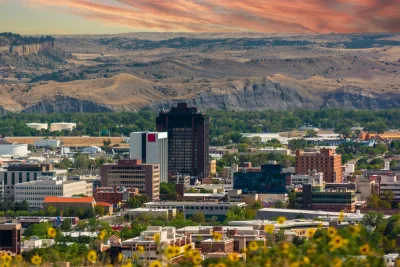
A proposed Montana state bill would limit how much parking cities can require for new residential developments, reports Eric Dietrich in the Montana Free Press, only allowing cities to mandate one parking space per housing unit. “It would also ban parking requirements entirely for existing buildings undergoing renovations, licensed child care facilities and projects with housing units smaller than 1,200 square feet.”
The measure, which passed the state House and is headed to the Senate, is designed to reduce the cost of housing construction and housing costs. “Limiting urban parking requirements was named last year as a possible housing affordability strategy by Gov. Greg Gianforte’s housing task force, which wrote at the time that surface parking stalls typically add $5,000 apiece to development costs.”
Critics of the bill say Montana cities don’t have the public transit networks that make parking reform possible in other places. “Emma Bode, a Bozeman city commissioner, also argued the bill would undermine an existing Bozeman program that relaxes the city parking requirements for developers who commit to offering below-market-rate rents.”
FULL STORY: Bill would restrict city parking requirements in effort to reduce cost of new housing

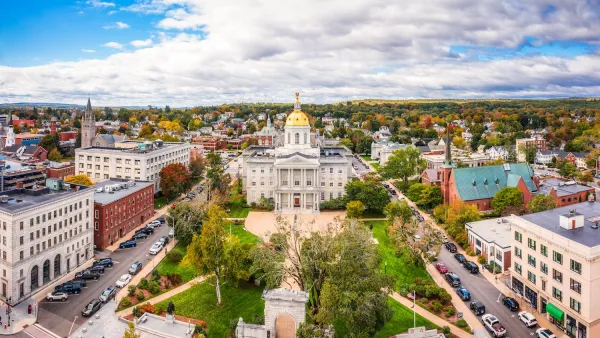
New Hampshire House Passes Parking Reform Bill
The revised bill, which caps parking requirements at one spot per residential unit and eliminates exemptions, will go back to the Senate for a new vote.
Parking Reform Yields New Housing
As more cities eliminate or reduce their minimum parking requirements, the impact on housing supply is coming into focus.
Parking Reform Pays Off With Lower Rent Costs
Research continues to show that adjusting parking requirements to align with demand can lower the cost of housing.

Planetizen Federal Action Tracker
A weekly monitor of how Trump’s orders and actions are impacting planners and planning in America.

The state-sanctioned urbicide of Austin
People don’t kill cities. Freeways do.

US to reduce Colorado River water deliveries to Mexico
A new Colorado Treaty amendment reduces Mexico’s Colorado River water allocation by 250,000 acre feet.

5 New England states march closer to 800 megawatt wind energy project
Securing federal approval for the project may be complicated under the Trump administration, which has historically been hostile towards domestic wind power.

Baltimore to break ground on $50 million Transit Priority Project
The project will bring faster bus trips, safer streets and better bike connections to Baltimore.

Airbnb launches $250 million 'last-dollar financing' housing accelerator, makes first investment in Austin
The company will put $6.4 million towards affordable housing development in Texas’ capital.

FREE Course: Walkable City 1: Why Walkability?
After describing his path towards focusing on walkability as the essence of good planning, Jeff Speck marches through his five principal reasons for making more walkable places.
Reinventing Malls: Planning Alchemy—Turning Gray Fields Into Gold
The course focuses on the opportunities and imperatives that shape reinvention of mall sites.

Eagle County Government
Harvard University Graduate School of Design
Nashville Planning Department
The Architects Foundation
University of Cincinnati Online
The Pocatello Development Authority
The Urban Renewal Agency of the City of Pocatello
Journal of the American Planning Association