Portland will implement dynamic meter pricing and parking districts, making it the leader in progressive parking policies in the Pacific Northwest, according to this article.


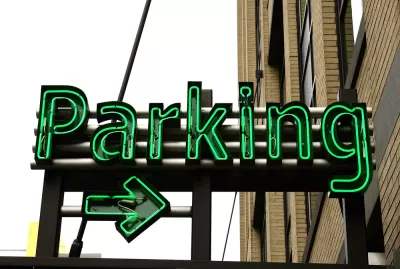
"We’re going to call it: No city in the Northwest, and few cities in North America, are doing parking policy better than Portland," writes Michael Andersen.
According to Andersen, the city earned this distinction by recently implementing two key pieces of parking policy. The first is a plan to change the price of parking at meters around the city depending on how much demand there is for the parking. The price will fluctuate with the goal of maintaining 65 to 85 percent occupancy rate. It's a move straight out of the Donald Shoup playbook.
"Second, Portland enshrined a longtime practice into official policy [pdf]: at least half the net revenue from new meter districts will be earmarked for reinvestment in that district," reports Andersen. "Specifically, the money will go to public transit discounts, sidewalk improvements, bike infrastructure and other ways to reduce the need to drive in that district." This is another move straight out of the Donald Shoup playbook.
The city of Portland has already ended parking requirements for all Portland developments within 500 feet of a quality transit route.
FULL STORY: Portland Now Has the Smartest Parking Policies in the Northwest


Dynamic Parking Prices Coming to Milwaukee
One of the key elements of progressive parking policy, as recommended by Donald Shoup, is on the way to the on-street parking meters in the city of Milwaukee.

Dynamic Parking Prices Lack Political Will, Local Support Near Wrigley Field
Setting the example for the rest of city was too tough a pill to swallow for businesses located near Wrigley Field.
The Golden State of Disabled Drivers
"Something is wrong," proclaimed Los Angeles Assemblyman Mike Gatto (D), "when one in eight California drivers claims a disability." Gatto has introduced two bills: one to address disabled parking, the other could promote variable pricing of parking.

Planetizen Federal Action Tracker
A weekly monitor of how Trump’s orders and actions are impacting planners and planning in America.

The state-sanctioned urbicide of Austin
People don’t kill cities. Freeways do.

US to reduce Colorado River water deliveries to Mexico
A new Colorado Treaty amendment reduces Mexico’s Colorado River water allocation by 250,000 acre feet.

5 New England states march closer to 800 megawatt wind energy project
Securing federal approval for the project may be complicated under the Trump administration, which has historically been hostile towards domestic wind power.

Baltimore to break ground on $50 million Transit Priority Project
The project will bring faster bus trips, safer streets and better bike connections to Baltimore.

Airbnb launches $250 million 'last-dollar financing' housing accelerator, makes first investment in Austin
The company will put $6.4 million towards affordable housing development in Texas’ capital.

FREE Course: Walkable City 1: Why Walkability?
After describing his path towards focusing on walkability as the essence of good planning, Jeff Speck marches through his five principal reasons for making more walkable places.
Reinventing Malls: Planning Alchemy—Turning Gray Fields Into Gold
The course focuses on the opportunities and imperatives that shape reinvention of mall sites.

Eagle County Government
Harvard University Graduate School of Design
Nashville Planning Department
The Architects Foundation
University of Cincinnati Online
The Pocatello Development Authority
The Urban Renewal Agency of the City of Pocatello
Journal of the American Planning Association