One of the key elements of progressive parking policy, as recommended by Donald Shoup, is on the way to the on-street parking meters in the city of Milwaukee.



"The City of Milwaukee is poised to drastically change its metered parking policy in a move that will net the revenue-constrained city at least $2 million annually. It should also lead to cheaper parking in low-demand areas, and higher rates for in-demand spaces — and make it a little easier to find a parking space," reports Jeramey Jannene.
"The Common Council has already approved new meters and the city has begun installing them. Now, the Department of Public Works, which administers the city’s 7,076 metered spaces, is recommending a three-tier change to the city’s approach to metered parking," adds Jannene.
The article heads off potential public ire about paying more at parking rates by citing the research of Donald Shoup in the High Cost of Free Parking, the experience of other cities that have already adopted dynamic parking prices, and Milwaukee's own analysis of the idea.
FULL STORY: Demand-Based Street Parking Coming

Two New Parking Policies Put Portland in the Lead on Parking
Portland will implement dynamic meter pricing and parking districts, making it the leader in progressive parking policies in the Pacific Northwest, according to this article.
Opinion: Chicago Needs an Office of Parking Management
The city of Chicago needs a local agency empowered to planning, studying, or managing parking, according to a recent opinion piece published by Streetsblog Chicago.
Dynamic Parking Prices Lack Political Will, Local Support Near Wrigley Field
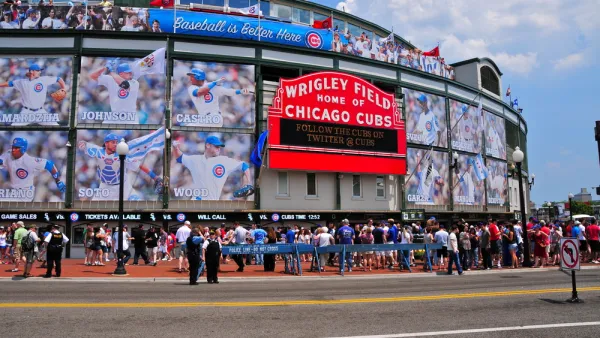
Setting the example for the rest of city was too tough a pill to swallow for businesses located near Wrigley Field.

Planetizen Federal Action Tracker
A weekly monitor of how Trump’s orders and actions are impacting planners and planning in America.

The state-sanctioned urbicide of Austin
People don’t kill cities. Freeways do.

US to reduce Colorado River water deliveries to Mexico
A new Colorado Treaty amendment reduces Mexico’s Colorado River water allocation by 250,000 acre feet.

Baltimore to break ground on $50 million Transit Priority Project
The project will bring faster bus trips, safer streets and better bike connections to Baltimore.

Airbnb launches $250 million 'last-dollar financing' housing accelerator, makes first investment in Austin
The company will put $6.4 million towards affordable housing development in Texas’ capital.

Guerilla urbanists are building DIY bus stop benches in Chicago
A before-and-after of one of the bus stops with a new bench. The new benches are not officially sanctioned or permitted, but the residents who placed them hope they will be the start of a network of DIY benches across the city.

FREE Course: Walkable City 1: Why Walkability?
After describing his path towards focusing on walkability as the essence of good planning, Jeff Speck marches through his five principal reasons for making more walkable places.
Reinventing Malls: Planning Alchemy—Turning Gray Fields Into Gold
The course focuses on the opportunities and imperatives that shape reinvention of mall sites.

Eagle County Government
Harvard University Graduate School of Design
Nashville Planning Department
The Architects Foundation
University of Cincinnati Online
The Pocatello Development Authority
The Urban Renewal Agency of the City of Pocatello
Journal of the American Planning Association