Repeal proponents have already planned a sequel for Proposition 6, regardless of whether the measure passes, resulting in the loss of over $5 billion annually from new transportation user fees, including a 12-cents per gallon gas tax increase.


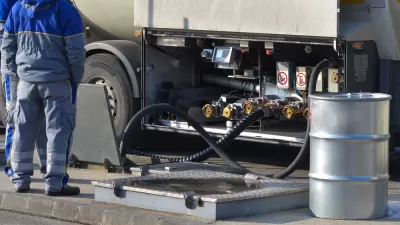
Shortly after voting on Proposition 6, "Voter Approval for Future Gas and Vehicle Taxes and 2017 Tax Repeal Initiative," voters will be asked to sign petitions for an initiative for the 2020 ballot "that would ensure fuel taxes, car sales taxes and truck weight fees are spent on transportation projects," reports Alexei Koseff for The Sacramento Bee on July 31.
The proposal expands on Republican arguments that the gas tax increase, passed last year by Gov. Jerry Brown and Democratic lawmakers, was unnecessary because the state already has plenty of money to pay for a backlog of road repairs and maintenance.
Unlike the taxes and fees in Senate Bill 1, the Road Repair and Accountability Act of 2017, the new initiative, which appears to be the brainchild of Carl DeMaio, who funded the current repeal initiative, brings in no new revenue. Instead, it diverts existing funds from the state's general fund to transportation, a trend seen elsewhere, particularly in states that are reluctant to hike transportation user fees like Texas.
For example, state legislation passed in 2011 requires that truck weight fees, about $1.1 billion according to Koseff, is used to pay debt service on Proposition 1B, the $19.9 billion transportation bond passed in November 2006. A much larger diversion would come from motor vehicle sales taxes.
The largest chunk of new funding for the plan comes from reallocating the sales taxes on automobiles to local transportation officials. According to a study [pdf] by the Center for Automotive Research, California sales taxes for new cars, used cars, parts and services totaled $6.5 billion in 2013.
There already is a "transportation lockbox" for fuel tax revenue, known as Article 19 in the state constitution, although it does allow revenue to be spent on transit guideways. In June, voters overwhelmingly passed Proposition 69 that provided lockbox protection for two SB 1 fees.
Koseff describes other aspects of the measure, including savings attained by outsourcing to the private sector. He also wrote a comprehensive description of Proposition 6 for those who are interested.
FULL STORY: Fix California roads without the new gas taxes? Here’s what it would take

Winners and Losers of the California Primary
With national media focused on individual candidates, propositions that dealt with park and water bonds, transportation spending, cap-and-trade, and rainwater may have been overlooked. Plus, a measure to increase bridge tolls in the Bay Area.
Californians Vote to Maintain Roads and Transit by Rejecting Gas Tax Repeal
In potentially the most important transportation ballot measure in the state since 1990, the last time residents voted on the gas tax, Californians were deciding whether to repeal fuel taxes and vehicle registration fees approved last year.
Voters in Four States to Decide on Transportation Sales and Fuel Taxes
Californians will determine whether to repeal recent fuel tax and user fee increases; Missourians to vote on a 10-cent gas tax hike over 4 years; Coloradans whether to hike the sales tax, and the most interesting measure will be decided in Utah.

The state-sanctioned urbicide of Austin
People don’t kill cities. Freeways do.

US to reduce Colorado River water deliveries to Mexico
A new Colorado Treaty amendment reduces Mexico’s Colorado River water allocation by 250,000 acre feet.

New Jersey’s second-largest city bans standalone data centers
Jersey City will continue to allow co-location facilities, such as those meant for research institutions that store their own data.

Amtrak not solely to blame for New Jersey commuter rail's unreliability, report finds
A new study from the Garden State Initiative found that NJ Transit’s budget grew 20% across a 4 year period, but reliability declined significantly over the same period.

EPA erases limits on planet-warming pollution from power plants
Under Monday’s plan, power plants would still have some limits on how much mercury, arsenic and other contaminants they can emit.

Phoenix announces new on-demand transit service, more frequent RAPID buses
Both new services will launch in October, and are part of Phoenix's Project Effective Access Solutions for Easing Congestion.

FREE Course: Walkable City 1: Why Walkability?
After describing his path towards focusing on walkability as the essence of good planning, Jeff Speck marches through his five principal reasons for making more walkable places.
Reinventing Malls: Planning Alchemy—Turning Gray Fields Into Gold
The course focuses on the opportunities and imperatives that shape reinvention of mall sites.

Eagle County Government
Harvard University Graduate School of Design
Nashville Planning Department
The Architects Foundation
University of Cincinnati Online
The Pocatello Development Authority
The Urban Renewal Agency of the City of Pocatello
Journal of the American Planning Association