Three new bike lanes will help connect the region's bikeway system and improve safety on the city's roads and bridges.


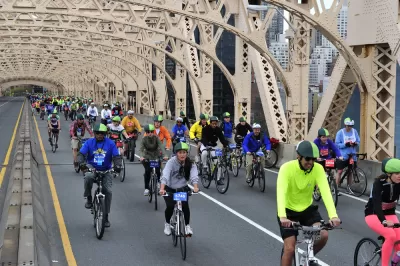
After years of calls from advocates to improve bike safety in Long Island City, New York's Department of Transportation will install bike lanes on three busy corridors, reports Julianne Cuba.
Department of Transportation officials on Tuesday night unveiled their plans for the new safety infrastructure on 44th Drive, 11th Street, and Jackson Avenue, amid a citywide bike boom that’s echoing particularly loudly in Long Island City. Cyclists are now taking more than 6,400 trips across the Queensboro Bridge — which experienced the highest jump of daily riders across the four East River spans — and more than 2,000 trips per day across the Pulaski Bridge, according to DOT.
According to the article, "The work is part of former Mayor de Blasio ‘s Green Wave plan that was announced during the summer of 2019, a year when a total of 29 cyclists were killed on city streets."
"Left out of the proposal are improvements to Borden Avenue and the intersection at the foot of the Pulaski Bridge, which Shepard says is treacherous for cyclists and pedestrians alike. DOT did not address that issue of that intersection, where there have been 68 crashes since March, 2017, injuring six cyclists and 11 motorists, according to city stats."
FULL STORY: Long Island City Getting Some Protected Bike Lanes

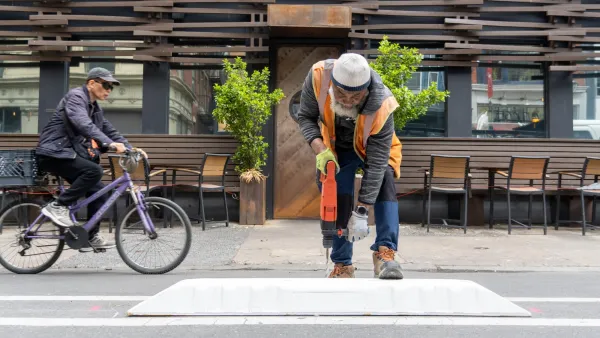
Philadelphia adds new safety measures to 13th Street bike lane
The city is piloting plastic, modular bike lane separators that buffer cyclists from the adjacent vehicle lane.
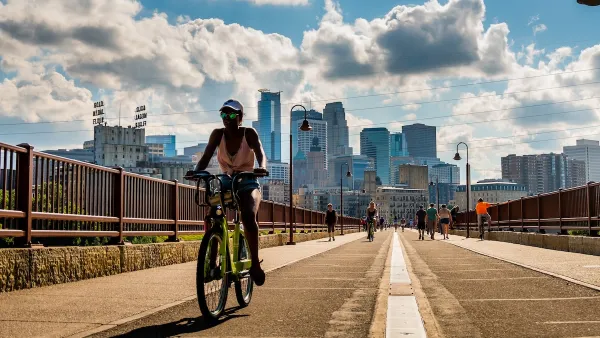
The 5 Safest Cities for Cyclists in America — and What They Have in Common
Cities with low fatality rates for people on bikes have made strong commitments to building safe, protected bike networks and supporting Complete Streets.
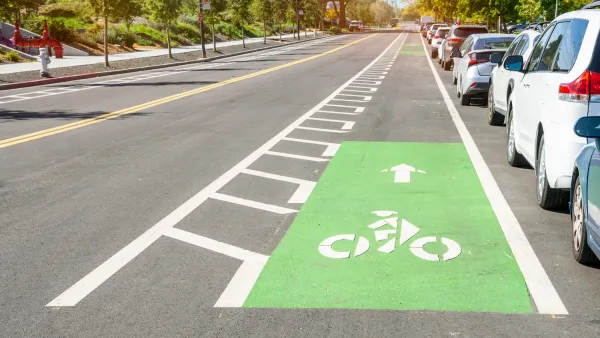
Why Bike Lanes Are Good: An Explainer for the US Transportation Secretary
Sean Duffy says there’s no evidence that bike lanes have benefits. Streetsblog — and federal agencies’ own data — beg to differ.

Planetizen Federal Action Tracker
A weekly monitor of how Trump’s orders and actions are impacting planners and planning in America.

The state-sanctioned urbicide of Austin
People don’t kill cities. Freeways do.

US to reduce Colorado River water deliveries to Mexico
A new Colorado Treaty amendment reduces Mexico’s Colorado River water allocation by 250,000 acre feet.

Baltimore to break ground on $50 million Transit Priority Project
The project will bring faster bus trips, safer streets and better bike connections to Baltimore.

Airbnb launches $250 million 'last-dollar financing' housing accelerator, makes first investment in Austin
The company will put $6.4 million towards affordable housing development in Texas’ capital.

Guerilla urbanists are building DIY bus stop benches in Chicago
A before-and-after of one of the bus stops with a new bench. The new benches are not officially sanctioned or permitted, but the residents who placed them hope they will be the start of a network of DIY benches across the city.

FREE Course: Walkable City 1: Why Walkability?
After describing his path towards focusing on walkability as the essence of good planning, Jeff Speck marches through his five principal reasons for making more walkable places.
Reinventing Malls: Planning Alchemy—Turning Gray Fields Into Gold
The course focuses on the opportunities and imperatives that shape reinvention of mall sites.

Eagle County Government
Harvard University Graduate School of Design
Nashville Planning Department
The Architects Foundation
University of Cincinnati Online
The Pocatello Development Authority
The Urban Renewal Agency of the City of Pocatello
Journal of the American Planning Association