Critics of pedestrian crosswalk buttons say the devices, meant to help improve bus speeds, give pedestrians the 'absolute lowest priority' on city streets.


Pedestrian advocates are unhappy with AC Transit's decision to install more crosswalk push buttons in East Bay cities, reports Roger Rudick.
Also known as 'beg buttons,' the devices let pedestrians push a button when they come to an intersection, signaling their need to cross, but critics argue that the buttons "give pedestrians the absolute lowest priority, sometimes forcing them to wait through entire signal cycles before they can cross legally." The agency did not conduct any public outreach regarding the buttons, writes Rudick, which they see as simple 'signal improvements' to improve traffic flow for buses.
But that doesn’t mean pedestrians should be given short shrift by making them push a button and wait through an entire cycle of the light before they are forced to dash across every intersection whether or not a bus is approaching.
According to Rudick and Streetsblog, "this is exactly the kind of implementation that flies in the face of equity," prioritizing people in cars over pedestrians and cyclists.
FULL STORY: East Bay Cities Sneak in Beg Buttons

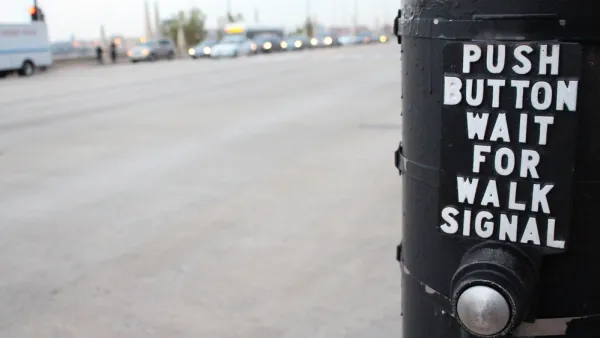
What Walk Buttons Do (and Don't Do)
Are pedestrian walk buttons effective, or do they only give us the illusion of control? It can vary.
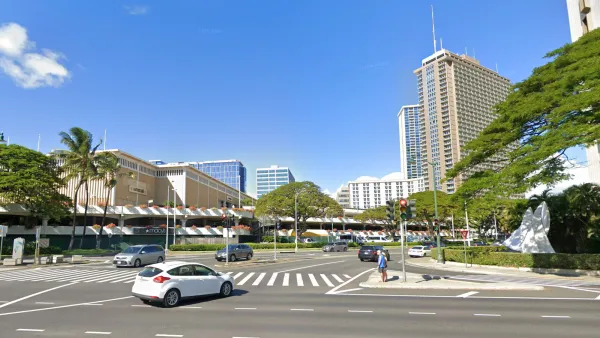
Hawaii DOT takes action after reporters call attention to dangerous crosswalk
The state made changes to a treacherous intersection after reporting revealed that traffic light timing was posting a threat to pedestrians.

Crosswalks Near NYC Schools More Dangerous Than Average
A child and a crossing guard were killed in school crosswalks within one week as the NYPD cuts crossing guard jobs.

Planetizen Federal Action Tracker
A weekly monitor of how Trump’s orders and actions are impacting planners and planning in America.

The state-sanctioned urbicide of Austin
People don’t kill cities. Freeways do.

US to reduce Colorado River water deliveries to Mexico
A new Colorado Treaty amendment reduces Mexico’s Colorado River water allocation by 250,000 acre feet.

5 New England states march closer to 800 megawatt wind energy project
Securing federal approval for the project may be complicated under the Trump administration, which has historically been hostile towards domestic wind power.

Baltimore to break ground on $50 million Transit Priority Project
The project will bring faster bus trips, safer streets and better bike connections to Baltimore.

Airbnb launches $250 million 'last-dollar financing' housing accelerator, makes first investment in Austin
The company will put $6.4 million towards affordable housing development in Texas’ capital.

FREE Course: Walkable City 1: Why Walkability?
After describing his path towards focusing on walkability as the essence of good planning, Jeff Speck marches through his five principal reasons for making more walkable places.
Reinventing Malls: Planning Alchemy—Turning Gray Fields Into Gold
The course focuses on the opportunities and imperatives that shape reinvention of mall sites.

Eagle County Government
Harvard University Graduate School of Design
Nashville Planning Department
The Architects Foundation
University of Cincinnati Online
The Pocatello Development Authority
The Urban Renewal Agency of the City of Pocatello
Journal of the American Planning Association