A recent round of thunderstorms brought public transit operations in Philadelphia to a screeching halt.


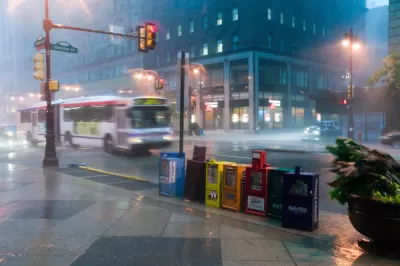
"Thousands of SEPTA riders were stranded during Wednesday’s powerful thunderstorms. The storm triggered flash flooding and sent trees careening into catenary wires. Buses were diverted," reports Ryan Briggs.
SEPTA General Manager Jeff Kneuppel is quoted in the article saying the storms ranked in the "top five or ten" worst storms he'd encountered in 30 years at the transit agency.
Kneuppel also thinks storms are getting worse, a view shared by Franco Montalto, a Drexel engineering professor. "Most scientists concur that climate change is causing more severe and more frequent storms –– and transit agencies are struggling to keep up," writes Briggs.
The article includes details of SEPTA's work to make the transit system more resilient. "The agency is upgrading rain signals and placing them on stilts to enhance flood resistance. The agency is also moving away from its reliance on commercial power generation to minimize outages. Prepping rescue buses ahead of weather events is now a standard practice, and the agency is working to improve customer service to better notify customers of delays," according to Briggs.
FULL STORY: Climate change is messing with your commute, SEPTA says after storms halt trains

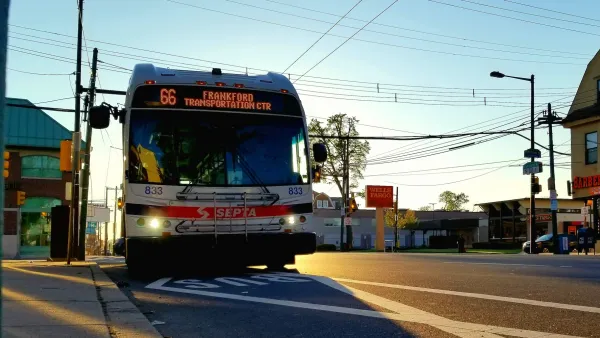
SEPTA's bus-mounted lane enforcement cameras cut travel times by up to 6%
The AI-assisted cameras have issued nearly 200,000 citations to drivers blocking bus lanes.
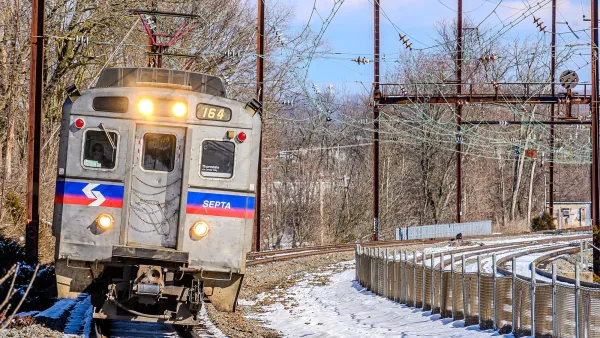
SEPTA Borrows Maryland's Rail Cars to Replace Fleet That Kept Catching Fire
The agency’s efforts to repair its Silverliner fleet is being hampered by supply chain delays.
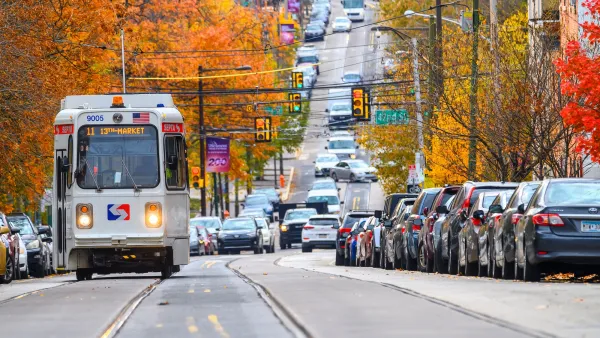
SEPTA Narrowly Avoids Strike, Walkout Still Possible
Negotiations continue this week between SEPTA officials and union leaders.

The state-sanctioned urbicide of Austin
People don’t kill cities. Freeways do.

US to reduce Colorado River water deliveries to Mexico
A new Colorado Treaty amendment reduces Mexico’s Colorado River water allocation by 250,000 acre feet.

New Jersey’s second-largest city bans standalone data centers
Jersey City will continue to allow co-location facilities, such as those meant for research institutions that store their own data.

Amtrak not solely to blame for New Jersey commuter rail's unreliability, report finds
A new study from the Garden State Initiative found that NJ Transit’s budget grew 20% across a 4 year period, but reliability declined significantly over the same period.

EPA erases limits on planet-warming pollution from power plants
Under Monday’s plan, power plants would still have some limits on how much mercury, arsenic and other contaminants they can emit.

Phoenix announces new on-demand transit service, more frequent RAPID buses
Both new services will launch in October, and are part of Phoenix's Project Effective Access Solutions for Easing Congestion.

FREE Course: Walkable City 1: Why Walkability?
After describing his path towards focusing on walkability as the essence of good planning, Jeff Speck marches through his five principal reasons for making more walkable places.
Reinventing Malls: Planning Alchemy—Turning Gray Fields Into Gold
The course focuses on the opportunities and imperatives that shape reinvention of mall sites.

Eagle County Government
Harvard University Graduate School of Design
Nashville Planning Department
The Architects Foundation
University of Cincinnati Online
The Pocatello Development Authority
The Urban Renewal Agency of the City of Pocatello
Journal of the American Planning Association