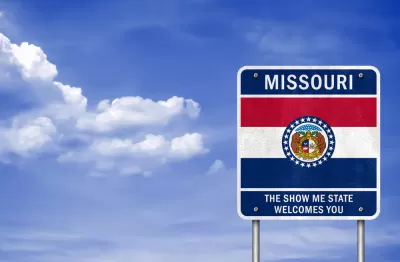
California voters will likely decide on whether to repeal a 12-cents gas tax increase while Missouri voters will decide whether to increase the state's 17-cents per gallon gas tax, fourth lowest in the nation, by 10-cents per gallon over four years.


Gas taxes played a prominent role in California's June primary, helping propel Republican John Cox into the number two slot to face Lieutenant Gov. Gavin Newsom (D) on Nov. 6, and recall state Senator Josh Newman (D-Fullerton).
On Nov. 6, Californians will likely decide on the Voter Approval for Gas and Vehicle Taxes Initiative, an initiated constitutional amendment that will not only repeal November's 12-cents per gallon tax increase, but all the other taxes and fees in Senate Bill 1, the Road Repair and Accountability Act of 2017 that produces over $5 billion annually to address the backlog of $130 billion in road, highway and bridge repairs throughout California.
Furthermore, it will mean that the legislature will be prevented from directly increasing the gas tax but will have to let the voters decide, which is just what will voters in Missouri will do on Election Day.
Lieutenant Gov. Mike Parson (R-Mo.) became governor on June 1 following the resignation of Gov. Eric Greitens (R) on May 29. On June 5, Parson "offered his initial support for raising the state’s gasoline tax to help rebuild roads and bridges across Missouri," reports Kurt Erickson for the St. Louis Post-Dispatch.
Unlike California and almost all other states that have increased gas taxes in recent years, the Missouri legislature chose not to outrightly increase the gas tax, last raised in 1996, but to leave it to the electorate.
In one of their final acts before adjourning for the spring, Missouri lawmakers agreed to place a question on the general election ballot calling for a phased-in 10-cent increase in the state’s 17-cent per gallon motor fuel tax.
If approved, the state’s fuel tax for gas and diesel would rise 2.5-cents per year beginning in 2019, topping out at 27 cents in 2022. The proposal also would raise taxes on alternative fuels, including natural gas and propane.
A Planetizen post in February indicated that then-Gov. Eric Greitens (R) was opposed to raising the gas tax, frustrating some legislators. However, according to Tessa Weinberg of the Kansas City Star, his approval was not needed.
The bill passed the House 88-60 on the last day of the session [May 18]. House communications director Trevor Fox said the governor's signature is not needed for the measure to go before voters.
Rep. Jean Evans, R-Manchester, the sponsor of the bill that includes the measure, said the tax would generate at least $288 million annually for the Highway Patrol and $123 million annually to local governments for road construction.
In August 2014, Missourians rejected, with 59 percent of the vote, a 10-year, three-quarter cent sales tax measure for transportation.
Hat tip to Jim Rhodes.
FULL STORY: Missouri governor signals support for gas tax boost

Missouri Voters Rejects Legislative Gas Tax Increase
Missouri legislators approved a bill at the end of the legislative session to place a 10-cents per gallon gas tax increase on the ballot to fund road repair. It had the support of Gov. Mike Parson but was rejected by nearly 54 percent of voters.
Voters in Four States to Decide on Transportation Sales and Fuel Taxes
Californians will determine whether to repeal recent fuel tax and user fee increases; Missourians to vote on a 10-cent gas tax hike over 4 years; Coloradans whether to hike the sales tax, and the most interesting measure will be decided in Utah.
A Small but Significant Fuel Tax Hike for Arkansas
The 3 cent gas tax and 6 cent diesel tax increases are among the lowest of any states that have hiked fuel taxes since 2013, but combined with other revenue sources in the legislation, plus an upcoming sales tax ballot measure, it's historic.

The state-sanctioned urbicide of Austin
People don’t kill cities. Freeways do.

US to reduce Colorado River water deliveries to Mexico
A new Colorado Treaty amendment reduces Mexico’s Colorado River water allocation by 250,000 acre feet.

New Jersey’s second-largest city bans standalone data centers
Jersey City will continue to allow co-location facilities, such as those meant for research institutions that store their own data.

Amtrak not solely to blame for New Jersey commuter rail's unreliability, report finds
A new study from the Garden State Initiative found that NJ Transit’s budget grew 20% across a 4 year period, but reliability declined significantly over the same period.

EPA erases limits on planet-warming pollution from power plants
Under Monday’s plan, power plants would still have some limits on how much mercury, arsenic and other contaminants they can emit.

Phoenix announces new on-demand transit service, more frequent RAPID buses
Both new services will launch in October, and are part of Phoenix's Project Effective Access Solutions for Easing Congestion.

FREE Course: Walkable City 1: Why Walkability?
After describing his path towards focusing on walkability as the essence of good planning, Jeff Speck marches through his five principal reasons for making more walkable places.
Reinventing Malls: Planning Alchemy—Turning Gray Fields Into Gold
The course focuses on the opportunities and imperatives that shape reinvention of mall sites.

Eagle County Government
Harvard University Graduate School of Design
Nashville Planning Department
The Architects Foundation
University of Cincinnati Online
The Pocatello Development Authority
The Urban Renewal Agency of the City of Pocatello
Journal of the American Planning Association