It's not looking good for transportation advocates who want to retain over $5 billion in annual transportation funding made possible the passage of a bill last year that enabled the first gas tax increase in California since 1994.


As gas prices surge in California, the findings of a new USC Dornsife/Los Angeles Times statewide poll asking registered voters in the state if they would vote to retain or repeal Senate Bill 1, the transportation funding bill approved by the legislature last year that hiked gas taxes on November 1 by 12-cents per gallon, as well as added new vehicle registration fees, should not have been surprising.
On April 30, Republican organizers turned-in more than 940,000 signatures, 355,000 more than needed to place a ballot measure to repeal all the taxes and fees included in SB 1, the Road Repair and Accountability Act of 2017
The California Voter Approval for Gas and Vehicle Taxes Initiative will likely appear on the November 6, 2018 ballot as an initiated constitutional amendment.
The poll found that repeal was favored by 51% of voters while 38% supported keeping the higher taxes; 9% hadn't heard enough to say either way and 2% said they wouldn't vote on the measure, reports Patrick McGreevy for the Los Angeles Times on May 24. This is the third post (see below for prior two) on polls taken since November on the repeal initiative(s). The needle hasn't moved.
The results bode well for a measure that Republican members of Congress hope to place on the November statewide ballot that could boost turnout of GOP voters by offering the chance to repeal the gas tax increase, said Bob Shrum, director of the Jesse M. Unruh Institute of Politics at USC.
If it qualifies for the ballot it will be, I suspect, very hard to sustain it," Shrum said of the tax. "It's almost dead."
Shrum then qualified that prediction:
The governor and other supporters of the tax "might have a chance" to succeed, Shrum said, if they make the question about safe bridges, fixing the state's crumbling roads and boosting the economy. That is the tactic that seems to be emerging.
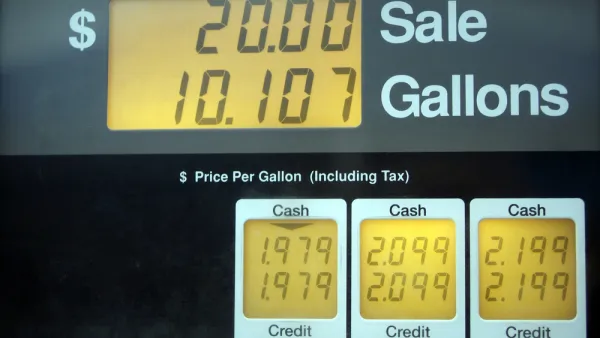
However, gas prices are projected by some experts to top $4 per gallon this summer in California, which won't help opponents of the repeal.
According to McGreevy, "the California Transportation Commission has so far allocated $9.2 billion for transportation projects throughout California as a result of SB 1." Last month, funding for projects totaling $4.3 billion, financed with revenues from SB 1 and the state's cap-and-trade fund, was announced by the California State Transportation Agency and other state officials.
A campaign has been launched to fight the repeal. The "Fix Our Roads" coalition is also supporting a "transportation lockbox" measure, Proposition 69, on the primary ballot next month (posted here along with other June ballot measures) to ensure that two of the funding options in SB 1, the diesel sales tax and a new, variable motor vehicle registration fee, are dedicated to transportation purposes.
As of April 1, California had the nation's second highest state gas tax: 54.73 cents-per-gallon, after Pennsylvania: 59.3 cents-per-gallon, according to the American Petroleum Institute, followed by Washington, Hawaii and New York, respectively.
Prior posts in Planetizen on polling of gas tax repeal
-
December 27, 2017, The Mercury NewsAccording to a UC Berkeley poll released Dec. 22, 52% of likely voters statewide would support either of two initiatives that hope to be placed on the ballot next November to repeal the gas tax that took effect Nov. 1, while 43% would retain the tax.
-
November 15, 2017; San Francisco ChronicleOn Nov. 1, fuel taxes increased for the first time in 23 years in California. Next November, Californians will likely decide whether to return those taxes to 1994 levels, as well as repeal other tax and fee hikes passed by the legislature in April.
Hat tip to AASHTO Daily Transportation Update.
FULL STORY: Majority of California voters want to repeal gas tax increase, poll finds

California Gas Tax Repeal Initiative Qualifies for November Ballot
The initiative is much more than whether to repeal taxes and fees enacted by the passage of the Road Repair and Accountability Act of 2017 which brings in over $5 billion a year. The measure is a means to increase GOP turnout to retain House seats.
Californians Vote to Maintain Roads and Transit by Rejecting Gas Tax Repeal
In potentially the most important transportation ballot measure in the state since 1990, the last time residents voted on the gas tax, Californians were deciding whether to repeal fuel taxes and vehicle registration fees approved last year.
Only Bay Area Voters Support State's New 12-cent Gas Tax
According to a UC Berkeley poll released Dec. 22, 52% of likely voters statewide would support either of two initiatives that hope to be placed on the ballot next November to repeal the gas tax that took effect Nov. 1, while 43% would retain the tax.

The state-sanctioned urbicide of Austin
People don’t kill cities. Freeways do.

US to reduce Colorado River water deliveries to Mexico
A new Colorado Treaty amendment reduces Mexico’s Colorado River water allocation by 250,000 acre feet.

New Jersey’s second-largest city bans standalone data centers
Jersey City will continue to allow co-location facilities, such as those meant for research institutions that store their own data.

Amtrak not solely to blame for New Jersey commuter rail's unreliability, report finds
A new study from the Garden State Initiative found that NJ Transit’s budget grew 20% across a 4 year period, but reliability declined significantly over the same period.

EPA erases limits on planet-warming pollution from power plants
Under Monday’s plan, power plants would still have some limits on how much mercury, arsenic and other contaminants they can emit.

Phoenix announces new on-demand transit service, more frequent RAPID buses
Both new services will launch in October, and are part of Phoenix's Project Effective Access Solutions for Easing Congestion.

FREE Course: Walkable City 1: Why Walkability?
After describing his path towards focusing on walkability as the essence of good planning, Jeff Speck marches through his five principal reasons for making more walkable places.
Reinventing Malls: Planning Alchemy—Turning Gray Fields Into Gold
The course focuses on the opportunities and imperatives that shape reinvention of mall sites.

Eagle County Government
Harvard University Graduate School of Design
Nashville Planning Department
The Architects Foundation
University of Cincinnati Online
The Pocatello Development Authority
The Urban Renewal Agency of the City of Pocatello
Journal of the American Planning Association