After voting to override Governor Jay Nixon's veto of an income tax cut, legislators agreed to allow voters to determine whether to increase the state sales tax by .75% in November for ten years to increase funding for transportation programs.


Mirroring what's happening on a federal level, it's "anything but a state gas tax increase" when it comes to raising needed funds for transportation programs in Missouri. The state gas tax of 17.3-cents per gallon, sixth lowest in the nation [PDF], hasn't been raised for 18 years, according to the April, 2014 chart from the Institute on Taxation and Economic Policy (PDF).
While transportation sales tax measures have become more popular since Arkansas voters overwhelmingly supported a measure in Nov., 2012, how voters view a sales tax increase associated with an income tax cut is yet to be seen. "Opponents argued that lawmakers were sending mixed messages by cutting taxes with one vote and asking voters to increase taxes with another," writes Rudi Keller, statehouse reporter for the Columbia Daily Tribune.
"I think that message is going to come out loud and clear, and what it is going to be is we are going to turn this down," said Rep. Bill Otto, D-Maryland Heights.
Adds Virginia Young of the St. Louis Post-Dispatch, "Critics say sales taxes are hardest on low-income people because a higher percentage of their income goes toward buying essential items." Poorer residents are more likely to pay little of no income tax, thus they are less likely to benefit from the income tax cut.
A far less popular approach would be to allow voters to increase income taxes for transit, as some in Indiana will decide in November.
"Missouri currently funds transportation programs with a combination of fuel taxes, registration fees and sales tax on vehicles." Adding a general sales tax to the mix would detract from the "user fee" approach, though other states, most significantly Virginia last year, made the change. Other states have resorted to wholesale fuel taxes as opposed to general sales taxes.
Based on current sales tax receipts, the measure would raise approximately $540 million each year, with 10 percent set aside for city and county governments. The remainder would pay for highways, mass transit, ports, airports and bicycle and pedestrian transportation.
The bi-partisan legislative vote calls for a "November statewide ballot unless Gov. Jay Nixon decides to put it before voters in August. The proposed constitutional amendment would impose the tax for 10 years, with automatic votes for renewal every 10 years," writes Keller.
Read the full story: Transportation sales tax to go on Missouri ballot

Ten States Could Hike Gas Taxes this Year
With gas prices the lowest since 2009, ten state legislatures and governors consider raising state gas taxes, though many are accompanied by fiscally questionable tax shifts. Some tried and failed last year. All of the proposed increases are modest.
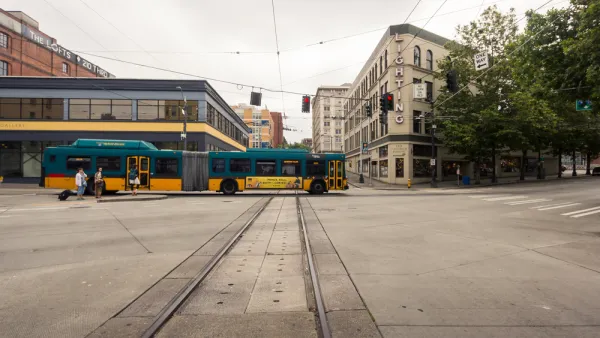
Transit Spending on the Ballot in Seattle and Washington
Voters in the city of Seattle will consider a sales tax to fund bus transit service, while voters around the state of Washington will have a chance to send new leaders to Congress.
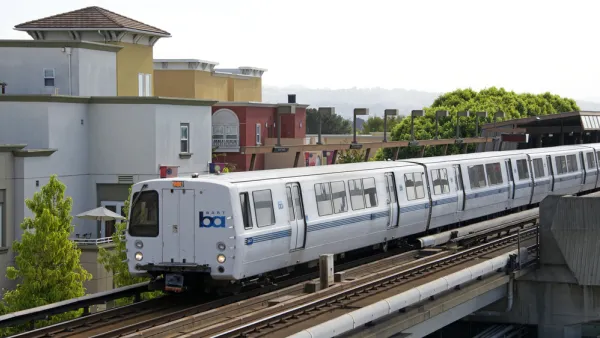
Competing Funding Strategies Promoted for Bay Area Transit Mega-Measure
Two Bay Area transportation sales tax measures affecting three Bay Area counties performed poorly on Super Tuesday, but it hasn't deterred the groups backing a nine-county mega-measure. Progressive groups are proposing non-sales tax alternatives.

Planetizen Federal Action Tracker
A weekly monitor of how Trump’s orders and actions are impacting planners and planning in America.

Amtrak, CN end decades-long dispute with eight-year agreement
The new operating agreement establishes an updated framework for the companies to work together, including processes to resolve disputes.

Northwest rail fans eager for Sept. 30 debut of Amtrak’s Airo fleet
Get ready for that new train smell and more seats. But they won’t go faster or run more frequently on the Cascades route in Washington and Oregon.

Brightline Florida files for bankruptcy
The transit company is over $5 billion in debt.

St. Louis Metro to test if single-car trains can reduce operating costs, maintain rider satisfaction
The pilot program will run from October to spring 2027, and begin with one single-car train operating on Metrolink’s Red and Blue lines.

Pennsylvania is building data centers in abandoned mines
Housing data centers in mines provides an alternative to destroying local forests and may spare residents from data centers’ noise and air pollution.

FREE Course: Walkable City 1: Why Walkability?
After describing his path towards focusing on walkability as the essence of good planning, Jeff Speck marches through his five principal reasons for making more walkable places.
Reinventing Malls: Planning Alchemy—Turning Gray Fields Into Gold
The course focuses on the opportunities and imperatives that shape reinvention of mall sites.

City of Thousand Oaks
City of Wisconsin Rapids
Harvard University Graduate School of Design
The Architects Foundation
University of Cincinnati Online
The Pocatello Development Authority
The Urban Renewal Agency of the City of Pocatello