It is an understatement that Increasing fuel taxes is challenging. If there is an opportune time to do it, it's when gas prices are relatively low, when the state decides to cut other taxes, and when there's bipartisan support.


"Gov. Eric Greitens [R] reiterated Thursday that his plan to cut the state’s tax will not be paired with a fuel tax increase," report Jason Rosenbaum and Erin Achenbach for St. Louis Public Radio on Feb. 8.
The governor's statement comes as a blow to Republicans and Democrats who were backing a plan to hike fuel taxes 10-cents per gallon to maintain the state's extensive highway network.
“As you saw in our tax plan, we are not planning to raise the gas tax. We are not planning to raise the diesel tax in our plan,” Greitens said. “I think what needs to be done this year is to engage in our plan or some version of it that will help to cut taxes for 97 percent of Missourians.”
As noted in a recent post to pair a 12-cents per gallon fuel tax increase with the elimination of the lowest tier of state income tax in Mississippi, which has the nation's fourth lowest gas tax at 18.79-cents per gallon as of Jan. 2, hiking the gas tax after a significant state tax cut can be difficult.
The Mississippi gas tax increase has run into opposition from a gas tax supporter, no less, worried about the loss of revenue to the state's general fund. In 2016, Gov. Phil Bryant approved the state's largest tax cut in history, cutting income and corporate franchise taxes, similar to what Mo. Gov. Eric Greitens has proposed. Both governors are Republicans.
Missouri has an even lower gas tax than Mississippi. The 17.35-cents per gallon tax was last increased in 1996.
Any substantial gas or diesel tax increase would likely have to go to Missouri voters. Greitens didn’t necessarily rule out the idea of a fuel tax increase going to a statewide vote in the future.
Greitens, a former U.S. Navy SEAL, is new to state government, having replaced Democratic Gov. Jay Nixon, who supported a small increase in gas taxes, last year.
Hiking taxes, particularly fuel taxes, is difficult even for a seasoned politician, much less a freshman, illustrated by last year when the South Carolina legislature overrode the veto of freshman Gov. Henry McMaster (R), the former lieutenant governor and two-term state attorney general.
In May 2015, the Nebraska legislature approved a six-cents per gallon gas tax by overriding the veto of Gov. Pete Ricketts (R), who, like Greitens, was new to politics.
Will the Missouri legislature vote to put a fuel tax increase measure before voters this year over the likely objection of the governor? At least one legislator appeared not to rule out that option.
“Let me ask this: If we can’t even build roads and bridges anymore, then what the hell are we doing here in Jefferson City?” said state Rep. Greg Razer, a Democrat from Kansas City who was on a task force that recommended a fuel tax increase. “Hopefully the General Assembly can lead on this issue —because obviously Eric Greitens isn’t interested in that job.”
Hat tip to AASHTO Daily Transportation Update.
FULL STORY: As Greitens touts tax cut proposal, he declines to get behind fuel tax increase

ICYMI: 12 States Hiked Gas Taxes on Monday
On July 1, Illinois and Ohio increased gas taxes by double digits: 19 cents per gallon and 10.5 CPG, respectively, followed by California at 5.6 CPG, all due to legislation passed this year or in 2017. Diesel tax hikes were even higher.
Ten States Could Hike Gas Taxes this Year
With gas prices the lowest since 2009, ten state legislatures and governors consider raising state gas taxes, though many are accompanied by fiscally questionable tax shifts. Some tried and failed last year. All of the proposed increases are modest.
Two States to Decide on Gas Tax Measures on Election Day
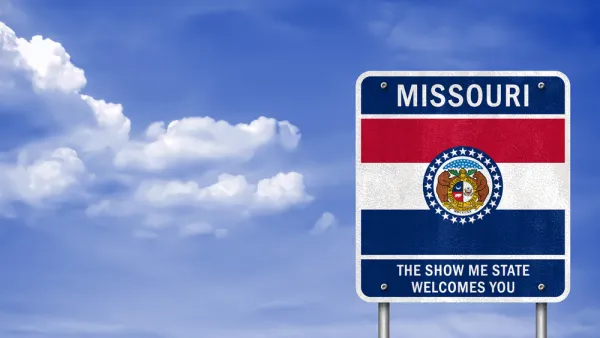
California voters will likely decide on whether to repeal a 12-cents gas tax increase while Missouri voters will decide whether to increase the state's 17-cents per gallon gas tax, fourth lowest in the nation, by 10-cents per gallon over four years.

The state-sanctioned urbicide of Austin
People don’t kill cities. Freeways do.

US to reduce Colorado River water deliveries to Mexico
A new Colorado Treaty amendment reduces Mexico’s Colorado River water allocation by 250,000 acre feet.

New Jersey’s second-largest city bans standalone data centers
Jersey City will continue to allow co-location facilities, such as those meant for research institutions that store their own data.

Amtrak not solely to blame for New Jersey commuter rail's unreliability, report finds
A new study from the Garden State Initiative found that NJ Transit’s budget grew 20% across a 4 year period, but reliability declined significantly over the same period.

EPA erases limits on planet-warming pollution from power plants
Under Monday’s plan, power plants would still have some limits on how much mercury, arsenic and other contaminants they can emit.

Phoenix announces new on-demand transit service, more frequent RAPID buses
Both new services will launch in October, and are part of Phoenix's Project Effective Access Solutions for Easing Congestion.

FREE Course: Walkable City 1: Why Walkability?
After describing his path towards focusing on walkability as the essence of good planning, Jeff Speck marches through his five principal reasons for making more walkable places.
Reinventing Malls: Planning Alchemy—Turning Gray Fields Into Gold
The course focuses on the opportunities and imperatives that shape reinvention of mall sites.

Eagle County Government
Harvard University Graduate School of Design
Nashville Planning Department
The Architects Foundation
University of Cincinnati Online
The Pocatello Development Authority
The Urban Renewal Agency of the City of Pocatello
Journal of the American Planning Association