One of the criticisms of gas taxes is that it is regressive, i.e., everyone pays the same per-gallon price. A Mississippi legislator has a solution: Eliminate the income tax on the lowest income bracket in exchange for hiking the gas tax 12-cents.


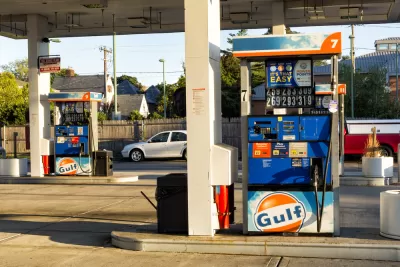
A year ago, the Institute on Taxation and Economic Policy (ITEP) pointed to Mississippi as one of a dozen states that would debate increasing its gas tax, fourth lowest in the nation after Alaska, Oklahoma, and Missouri. The 18.79-cents per gallon gas tax was last increased over 30 years ago.
"Mississippi is in dire need of revenue to repair and maintain its crumbling roads and bridges, but there are doubts that the legislature can come to agreement on a fix despite two obvious options: raising the state's outdated gas tax or repealing last year's misguided tax cuts," wrote Meg Wiehe (posted here). More on those '"misguided tax cuts" below.
While Mississippi was not among the eight states that successfully increased their state gas taxes last year, the effort continues, with the latest proposal coming from House Transportation Committee Chairman Charles Busby, a Pascagoula Republican, reports Jeff Amy for the Associated Press on Feb. 1
His proposal would phase out income tax on the lowest bracket, those earning between $5,001 and $10,000, over four years, costing the state $165 million in lost income.
In return, the gas tax would be raised by 12 cents, and the 18.40 cents-per-gallon diesel tax hiked by 15 cents, both phased over four years. New revenue would amount to $302 million. Fuel taxes would also be adjusted for inflation.
However, this isn't just a dollars to dollars comparison with the fuel tax looking like a winner, because revenues go to and come from different funding pots.
The state's general fund loses $165 million while the Department of Transportation gains $302 million, and that has Sen. Hob Bryan, D-Amory, a supporter of hiking the gas tax, opposed, reports Bobby Harrison for the (Tupelo, MS) Daily Journal on Feb. 4.
“The problem is there is not enough money in the general fund to get by,” he said. “...Long-term we are not going to be able to maintain the core functions of government.”
The loss of general fund revenue is exacerbated due to the aforementioned "misguided tax cuts."
The Legislature already has passed about 50 tax cuts that will take more than $700 million (in today’s dollars) annually out of the general fund when fully phased in. Those tax cuts already have had a negative impact on the general fund of more than $300 million per year.
Busby's plan would also follow the path seen recently in many other states to ensure that motorists who pay little or no fuel taxes would pay for roads by applying new hybrid and electric vehicle (EV) annual registration fees, though the fees he suggests would break a record for being among the highest proposed, $150 and $300 respectively.
Hat tip to AASHTO Daily Transportation Update
Read the full story: Lawmakers consider cutting income tax for higher fuel taxes

ICYMI: 12 States Hiked Gas Taxes on Monday
On July 1, Illinois and Ohio increased gas taxes by double digits: 19 cents per gallon and 10.5 CPG, respectively, followed by California at 5.6 CPG, all due to legislation passed this year or in 2017. Diesel tax hikes were even higher.
A Small but Significant Fuel Tax Hike for Arkansas
The 3 cent gas tax and 6 cent diesel tax increases are among the lowest of any states that have hiked fuel taxes since 2013, but combined with other revenue sources in the legislation, plus an upcoming sales tax ballot measure, it's historic.
Gas Tax Increase Approved in Ohio
On July 1, motorists in Ohio will pay an additional 10.5 cents per gallon to fill up, while truckers will pay 19 cents per gallon more on diesel fuel sales. Accompanying the tax hikes are two controversial provisions that DeWine chose not to veto.

Planetizen Federal Action Tracker
A weekly monitor of how Trump’s orders and actions are impacting planners and planning in America.

Amtrak, CN end decades-long dispute with eight-year agreement
The new operating agreement establishes an updated framework for the companies to work together, including processes to resolve disputes.

Northwest rail fans eager for Sept. 30 debut of Amtrak’s Airo fleet
Get ready for that new train smell and more seats. But they won’t go faster or run more frequently on the Cascades route in Washington and Oregon.

Trump administration unlawfully slashed $7 billion in clean energy grants, judge rules
The Environmental Protection Agency ended the Solar For All program, which provided the grants, after President Donald Trump’s inauguration.

Record-breaking wildlife overpass in Colorado brings 91% reduction in animal collisions
Prior to the overpass, vehicles were hitting one deer per day on Colorado’s Interstate 25.

California lawmakers approve just 5% of much-needed LA28 transportation funding
State legislators appear just as unwilling as Trump to pay for Olympics-related transportation projects.

FREE Course: Walkable City 1: Why Walkability?
After describing his path towards focusing on walkability as the essence of good planning, Jeff Speck marches through his five principal reasons for making more walkable places.
Reinventing Malls: Planning Alchemy—Turning Gray Fields Into Gold
The course focuses on the opportunities and imperatives that shape reinvention of mall sites.

City of Thousand Oaks
City of Wisconsin Rapids
Harvard University Graduate School of Design
The Architects Foundation
University of Cincinnati Online
The Pocatello Development Authority
The Urban Renewal Agency of the City of Pocatello