In addition to commuter trains hauled by an electric or diesel-powered locomotive, there are EMUs and DMUs, and come 2021, for the first time in North America, there should be a ZEMU thanks in part to a $30 million California transportation grant.


Electric multiple unit (EMU) and diesel multiple unit (DMU) trains, where electric traction motors or on-board diesel engines, respectively, are housed in one or more of the passenger cars, are not new. Denver's new A Line and Long Island Rail Road trains are EMUs, with the former receiving power by overhead catenary and the latter by third rail. See the last section of this post on a funding award for Caltrain EMUs.
In California, the SMART and Sprinter (light rail) trains are DMUs, and Tri-Rail in Florida operates Colorado Railcar diesel multiple units.
The Redlands Passenger Rail Project, one of the newest passenger rail projects in California being built by the San Bernardino County Transporation Authority (SBCTA), will operate diesel multiple unit trains. The nine-mile rail line between Redlands and San Bernardino is scheduled to begin service in 2021.
The project was among the 28 transformative projects [see #15 in pdf] selected to receive funding on from the Transit and Intercity Rail Capital Program, administered by the California Department of Transportation (Caltrans) in collaboration with California State Transportation Agency (CalSTA). See Monday's post, "$4.3 Billion Awarded to California Transformative Projects from Gas Tax and Climate Fund."
"The [$30 million] grant was awarded for a pilot program to deploy Zero Emission Multiple Unit [ZEMU] commuter rail vehicles on the Redlands Passenger Rail Corridor in San Bernardino," writes Assemblymember Eloise Gómez Reyes, who represents the district.
With this funding SBCTA and the region will be national leaders in the deployment and testing of near zero and zero emission commuter rail trains... As this new technology grows in use we will see real benefits in reduced traffic congestion and reduced impacts on air quality while putting San Bernardino on the map as a testing hub for green technology.
According to CalSTA, the "conversion includes statewide testing that could impact future equipment acquisition for other rail services, like Metrolink, statewide."
The grant does not specify what type of technology, which presumably would be either battery-electric or fuel cell, also called hydrail, which would include near-zero emissions as the hydrogen could be burned rather than converted to electricity. A fuel cell train is already in operation in Germany, as a November 2016 post on the Coradia iLint, built by French rail technology provider Alstom, foreshadowed.
Another zero-emission trainset based on batteries is being developed by Swiss manufacturer Stadler Rail for Arriva Netherlands, reported Railway Pro last November.
Diesel emissions
Even without conversion to zero-emissions technology, the DMUs on the Redlands line will be powered by the cleanest diesel engines available, known as Tier 4 compliant, meeting the highest standards set by the U.S. Environmental Protection Agency and the California Air Resources Board for off-road, diesel-powered engines.

Courtesy of Diesel Technology Forum
According to the projects August newsletter, the engines will be "[a]kin to a hybrid car in that the DMUs convert a cleaner diesel form of power to electricity to efficiently drive the vehicles to their destination.
Transit and Intercity Rail Capital Program award for Caltrain electrification
While electrification construction has begun, having received a $647 million Federal Transit Administration grant that the Trump administration initially delayed, the Peninsula Corridor Joint Powers Board, which owns and operates the Caltrain line operating from San Francisco to Gilroy, only had enough funds to convert about three-quarters of their trains to electric multiple units.
On April 26, the board was informed it would receive a $164 million grant [see #13 of Project Detail Summary (pdf)] to convert the remaining 25 percent of diesel-locomotive-hauled trains to zero-emissions EMUs. Unlike the Redlands train project, Caltrain uses mostly older locomotives, so the conversion will literally mean cleaner air for Peninsula residents, at least from trains.
Zachary Clark of the San Mateo Daily Journal reports on the Caltrain award, along with a $253 million grant for the San Mateo Highway 101 Managed Lanes project and $36 million grant for SamTrans to run an express bus pilot when the express lanes are constructed and operating, potentially in 2021.
FULL STORY: Funding for San Bernardino Area Rail Project Approved by the California Transportation Agency

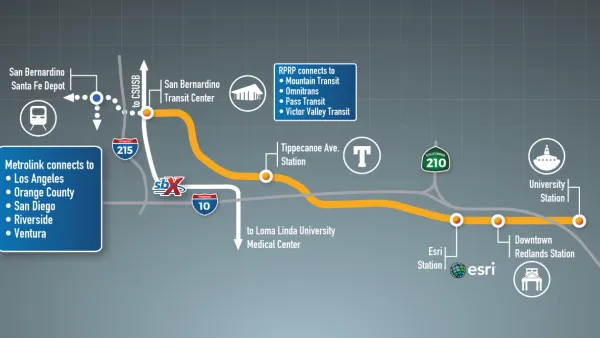
TOD and Zero-Emission Trains: Can You Guess Where the Controversy Is?
The nation's first fuel cell electric train will make its debut in Southern California in about four years, but it's also associated with a controversial ballot measure on the station sites that voters of Redlands will decide on Super Tuesday.

Rail Electrification: Caltrain adds BEMUs to its EMU Order
Caltrain, the San Francisco-to-San Jose commuter railroad, plans to begin electrified operation next year on its 49-mile mainline. A 28-mile extension south to Gilroy would continue to be served by diesel trains, with one train powered by battery.
Alternative Railroad Electrification
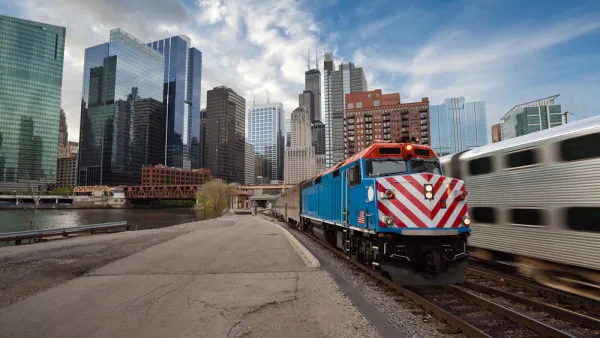
Rather than building costly overhead electrification infrastructure to convert a Chicago-area commuter rail line from polluting diesel power to emission-free electricity, the Metra Board of Directors chose a far less expensive and quicker route.

The state-sanctioned urbicide of Austin
People don’t kill cities. Freeways do.

US to reduce Colorado River water deliveries to Mexico
A new Colorado Treaty amendment reduces Mexico’s Colorado River water allocation by 250,000 acre feet.

New Jersey’s second-largest city bans standalone data centers
Jersey City will continue to allow co-location facilities, such as those meant for research institutions that store their own data.

Amtrak not solely to blame for New Jersey commuter rail's unreliability, report finds
A new study from the Garden State Initiative found that NJ Transit’s budget grew 20% across a 4 year period, but reliability declined significantly over the same period.

EPA erases limits on planet-warming pollution from power plants
Under Monday’s plan, power plants would still have some limits on how much mercury, arsenic and other contaminants they can emit.

Phoenix announces new on-demand transit service, more frequent RAPID buses
Both new services will launch in October, and are part of Phoenix's Project Effective Access Solutions for Easing Congestion.

FREE Course: Walkable City 1: Why Walkability?
After describing his path towards focusing on walkability as the essence of good planning, Jeff Speck marches through his five principal reasons for making more walkable places.
Reinventing Malls: Planning Alchemy—Turning Gray Fields Into Gold
The course focuses on the opportunities and imperatives that shape reinvention of mall sites.

Eagle County Government
Harvard University Graduate School of Design
Nashville Planning Department
The Architects Foundation
University of Cincinnati Online
The Pocatello Development Authority
The Urban Renewal Agency of the City of Pocatello
Journal of the American Planning Association