From an environmental perspective, transit oriented development is hard to argue. From a socio-economic perspective, transit oriented development must make room for all income levels, according to this opinion piece posted on the NRDC website.


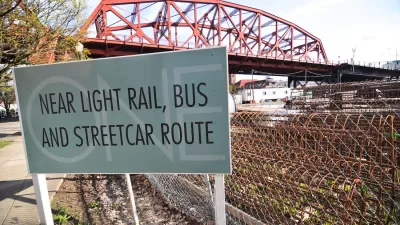
Jeff Turrentine writes about the connections between gentrification and public transit investments.
Things have changed. Transit-oriented development, once little more than a jargony buzz phrase uttered by urban planners and public transportation advocates, is transforming cities and suburbs all across the country as the market for housing near transit hubs continues to explode.
Unfortunately, this type of development is also changing the affordability of long-standing communities that working-class residents have called home for generations. At issue is something called transit-induced gentrification, a socioeconomic by-product of transit-oriented development that would have been largely unthinkable 25 years ago, when the idea of living above a busy train station and not owning a car held less appeal among the upwardly mobile than it does today.
Turrentine cites examples from California, in San Diego, Los Angeles, the San Francisco Bay Area, and Sacramento as evidence of the reality of transit-induced gentrification, but also finds similar concerns reported in Chicago, Atlanta, and Portland.
As a response, Turrentine argues that communitarian interests protesting transit oriented development have understandable concerns, but their actions are short-sighted.
Done right, this type of development can revitalize cities while demonstrably curbing carbon pollution by lowering automobile use. The key is in balancing these social goods with the good that comes from keeping existing communities healthy and intact—even as we set about building new ones.
So what does transit oriented development "done right" look like? Click through to the source article to read Turrentine's take.
Read the full story: When Public Transportation Leads to Gentrification

Can We Resist Displacement From Transit-Oriented Development?
Transit stations increase nearby jobs and populations, but they could also contribute to displacement. What can we do differently?

Displacement Concerns Grow Along With Residential Developments in Vancouver
In its efforts to build a more environmentally sustainable region by prioritizing transit and transit-oriented development, cities in the Vancouver region also create displacement risks for people who already use and depend on transit.

Property Tax Could Fund $7 Billion Transit Plan in Austin, Displacement Mitigation Included
A $7 billion transit investment plan for Austin would include $300 million toward preventing displacement of communities in neighborhoods located near planned transit investments.

Planetizen Federal Action Tracker
A weekly monitor of how Trump’s orders and actions are impacting planners and planning in America.

Amtrak, CN end decades-long dispute with eight-year agreement
The new operating agreement establishes an updated framework for the companies to work together, including processes to resolve disputes.

Colorado’s Largest Data Center Could Rise Next to Homes — Without a Public Hearing
The proposed campus would consume 11 times the power of Denver International Airport; as it has across the country, opposition mounts.

Community feedback ushers in changes to NYC’s Park Avenue redesign
New aspects of the design include a two-way bike lane and separate paths for cyclists and pedestrians.

Road safety in Charlotte, NC, a 'public health crisis'
Twelve serious or fatal crashes happen in the region every week. Since 2021, over 900 people have been killed in accidents.

Federal judge strikes down DOE orders to keep Michigan power plant open past retirement date
The decision is one of the first successful legal challenges to President Trump’s “national energy emergency” ruling, which instructs federal agencies to use emergency powers to increase fossil fuel production.

FREE Course: Walkable City 1: Why Walkability?
After describing his path towards focusing on walkability as the essence of good planning, Jeff Speck marches through his five principal reasons for making more walkable places.
Reinventing Malls: Planning Alchemy—Turning Gray Fields Into Gold
The course focuses on the opportunities and imperatives that shape reinvention of mall sites.

KFH Group Inc.
Greater Baltimore Committee
Eagle County Government
The Architects Foundation
University of Cincinnati Online
The Pocatello Development Authority
The Urban Renewal Agency of the City of Pocatello