An illustration of the intricate relationship between public transit and highways occurred on April 5 when two lines of the D.C. Metro broke down during the peak morning commute, sending many would-be riders to drive I-66 to D.C. instead.


"Metro had a nearly two-hour shutdown [from about 6:15 to 8 a.m.] on part of its Orange and Silver lines after smoke was reported at the Virginia Square station and in tunnels between Clarendon and Ballston" in Arlington, Va., reports Dana Hedgpeth for The Washington Post.
The influx of new drivers on Interstate 66 inside the Beltway who would otherwise have ridden the subway caused congestion, slowing speeds on the general purpose lanes. For solo drivers wanting a faster commute by opting to use the tolled 66 Express Lanes, which applies congestion pricing, i.e., the tolls increase with the level of congestion to keep minimum speeds above 45 mph, it wouldn't come cheap. Unlike many of the nation's other express lanes, the tolls have no upper limit, i.e., they are uncapped.
The $47 [eastbound morning] toll for the 10-mile stretch inside the Beltway was the third highest since the lanes made their debut in December. The high was $47.50 on Feb. 28 [see below], according to figures from the Virginia Department of Transportation.
The toll system is based on a “dynamic pricing” system that changes every six minutes, depending on demand, traffic and speed.
Not all vehicles using the express lanes pay tolls though. Drivers with at least one passenger traveled toll-free as the lanes are also high occupancy toll (HOT) lanes. Motorcyclists also travel toll-free. However, Teslas and other clean cars get no break without passengers.
Metro breakdowns not uncommon
Last Thursday's Metro breakdowns causing the 66 Express Lanes tolls to skyrocket was no anomaly.
On Feb. 28, there were lengthy delays for Metro riders on the Orange and Silver lines after a train had a brake problem at the Ballston station. Metro shut down rail service on part of the lines for about an hour. On that day, the eastbound I-66 toll peaked at $47.50, setting the record.
The subway-road toll relationship illustrates why it is good public policy to allow toll revenues to be used to improve transit service. Tolling need not be restricted to highways but also considered for urban cordons, as proposed in New York, Seattle, and potentially four California cities, to improve urban transit as well as other travel alternatives.
FULL STORY: ‘Took 3 hours to get to work’: Metro service suspension, $47 toll frustrate Virginia commuters

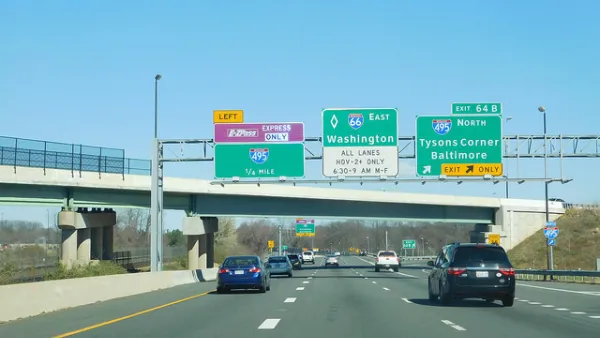
As Tolls Increase, Vehicle Trips Decrease on Dynamically Priced Express Lanes
When tolls rise on the 66 Express Lanes, trips decrease. according to a new report by the Virginia Department of Transportation.
Capitalism at Work on an Interstate Highway
Traffic speeds during the peak eastbound commute on the 66 Express Lanes Inside the Beltway have dropped to 35 mph. "Toll-tweaking" and changing the algorithm are achieving limited success on this dynamically-tolled stretch.
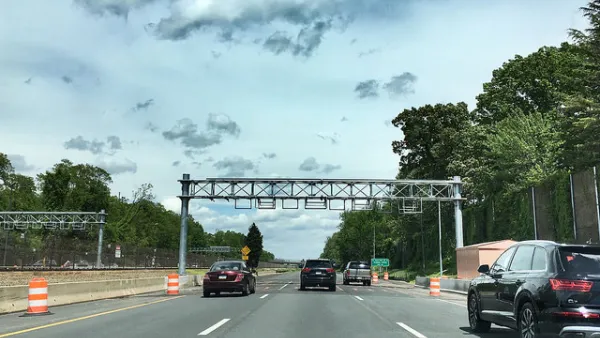
Express Lanes Toll Revenue Benefits Bus Riders, Carpoolers, and Bike Riders
The new 66 Express Lanes Inside the Beltway made headlines when one-way tolls topped $40. Max Smith of WTOP News reports how revenues are used in Northern Virginia. Bus transit and shuttles to park-and-ride lots are two of the biggest beneficiaries.

Planetizen Federal Action Tracker
A weekly monitor of how Trump’s orders and actions are impacting planners and planning in America.

The state-sanctioned urbicide of Austin
People don’t kill cities. Freeways do.

US to reduce Colorado River water deliveries to Mexico
A new Colorado Treaty amendment reduces Mexico’s Colorado River water allocation by 250,000 acre feet.

5 New England states march closer to 800 megawatt wind energy project
Securing federal approval for the project may be complicated under the Trump administration, which has historically been hostile towards domestic wind power.

Baltimore to break ground on $50 million Transit Priority Project
The project will bring faster bus trips, safer streets and better bike connections to Baltimore.

Airbnb launches $250 million 'last-dollar financing' housing accelerator, makes first investment in Austin
The company will put $6.4 million towards affordable housing development in Texas’ capital.

FREE Course: Walkable City 1: Why Walkability?
After describing his path towards focusing on walkability as the essence of good planning, Jeff Speck marches through his five principal reasons for making more walkable places.
Reinventing Malls: Planning Alchemy—Turning Gray Fields Into Gold
The course focuses on the opportunities and imperatives that shape reinvention of mall sites.

Eagle County Government
Harvard University Graduate School of Design
Nashville Planning Department
The Architects Foundation
University of Cincinnati Online
The Pocatello Development Authority
The Urban Renewal Agency of the City of Pocatello
Journal of the American Planning Association