Seattle has been putting its money where its mouth is with policies to discourage driving.


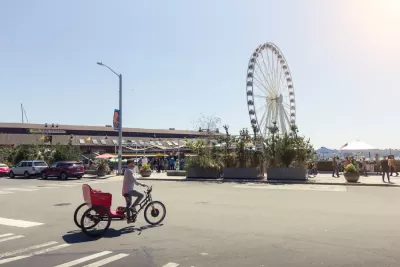
"Seattle will develop a plan to toll city roadways as part of its efforts to reduce traffic congestion and greenhouse-gas emissions," reports David Gutman.
"Details of what such a plan might look like are sparse, and will hinge on a tolling study focused on downtown neighborhoods that should have initial results later this year," adds Gutman.
Seattle Mayor Jenny Durkan announced the plan, so the concept of congestion pricing has more than a little support from its political leadership. Mayor Durkan also congestion could be in place by the end of her first term, in 2021.
Seattle made news last week for approving citywide parking reform that will lower parking requirements in transit oriented neighborhoods and for affordable housing. If congestion pricing were approved in Seattle, the city would take a national leadership role, by far, in approving policies to discourage driving and mitigate congestion.
An article by Angie Schmitt provides more details on the benefits of congestion pricing, such as for public health outcomes, for the international cities that have instituted the policy.
FULL STORY: Tolls on downtown streets? Seattle mayor pushes for plan to cut traffic, greenhouse gases

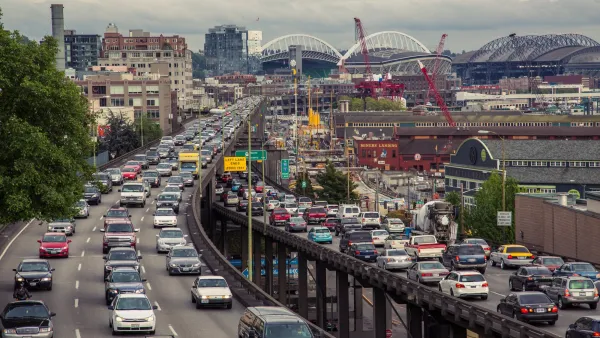
Congestion Pricing Gains Traction in Seattle
Congestion pricing is a popular subject of conversation in Seattle, even if the idea hasn't yet proven popular with voters. The city is looking for ways to lead on climate change by reducing emissions from transportation.
Getting the Politics of Cordon Tolling Right
With Mayor Jenny Durkan's announcement that Seattle will pursue cordon area congestion pricing coming five days after New York dropped its plan, a Washington State pro-business publication looks at the difficulties in getting the politics right.
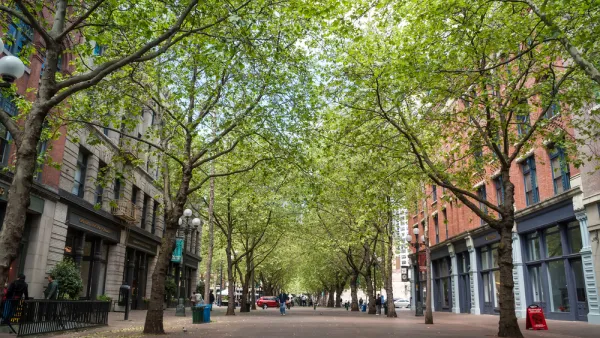
How To Preserve Both Affordable Housing and Urban Trees
Housing and environmental activists are calling on the city to commit to a ‘Trees and’ approach, rejecting the perceived conflict between housing affordability and a healthy urban tree canopy.

The state-sanctioned urbicide of Austin
People don’t kill cities. Freeways do.

US to reduce Colorado River water deliveries to Mexico
A new Colorado Treaty amendment reduces Mexico’s Colorado River water allocation by 250,000 acre feet.

New Jersey’s second-largest city bans standalone data centers
Jersey City will continue to allow co-location facilities, such as those meant for research institutions that store their own data.

Amtrak not solely to blame for New Jersey commuter rail's unreliability, report finds
A new study from the Garden State Initiative found that NJ Transit’s budget grew 20% across a 4 year period, but reliability declined significantly over the same period.

EPA erases limits on planet-warming pollution from power plants
Under Monday’s plan, power plants would still have some limits on how much mercury, arsenic and other contaminants they can emit.

Phoenix announces new on-demand transit service, more frequent RAPID buses
Both new services will launch in October, and are part of Phoenix's Project Effective Access Solutions for Easing Congestion.

FREE Course: Walkable City 1: Why Walkability?
After describing his path towards focusing on walkability as the essence of good planning, Jeff Speck marches through his five principal reasons for making more walkable places.
Reinventing Malls: Planning Alchemy—Turning Gray Fields Into Gold
The course focuses on the opportunities and imperatives that shape reinvention of mall sites.

Eagle County Government
Harvard University Graduate School of Design
Nashville Planning Department
The Architects Foundation
University of Cincinnati Online
The Pocatello Development Authority
The Urban Renewal Agency of the City of Pocatello
Journal of the American Planning Association