The Seattle Department of Transportation has released a five-year roadmap for implementing the city of Seattle's Pedestrian Master Plan (PMP).


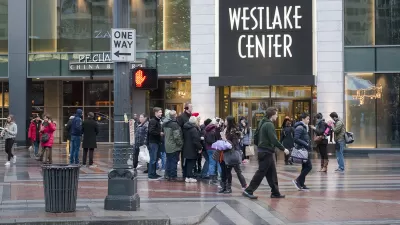
Stephen Fesler reports: "On Tuesday, the Seattle Department of Transportation (SDOT) unveiled its five-year pedestrian implementation plan spanning 2018 through 2022." The implementation plan moves forward with the city's Pedestrian Master Plan, which Planetizen covered in March 2017.
"The plan provides key background information about long-term objectives, assumed costs for pedestrian improvement types, recently completed projects, and projects to be constructed within the next five years," adds Fesler.
The pedestrian improvements listed in the plan are funded with $91 million from the Move Seattle levy, and adding urgency to the projects is a July settlement in an Americans with Disabilities Act lawsuit. Fesler digs into the project list and the maps of where the plan will be implemented in the source article.
Read the full story: SDOT Unveils First Five-Year Pedestrian Implementation Plan

Critiquing the Implementation of Seattle's Pedestrian Master Plan
A status update of the Seattle Pedestrian Master Plan leaves a writer wondering if the backlog of pedestrian infrastructure maintenance will grow while only a few planned projects get built.
Bike and Pedestrian Improvements Proposed for Seattle Light Rail Stations
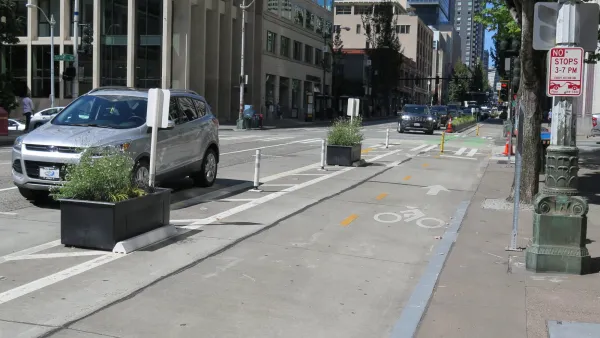
Anticipating the opening of two new stations in 2024, the Seattle Department of Transportation released a study prioritizing bike infrastructure in the surrounding areas.
Criticisms for Two Seattle Transportation Studies
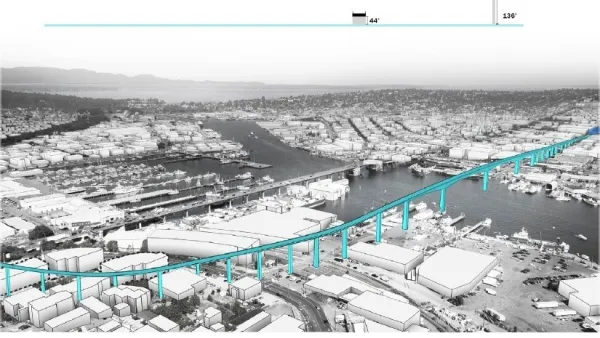
Two studies begin the process of spending billions of dollars for infrastructure in Ballard and Interbay in Seattle. According to this critique, the effort is off on the wrong foot.

Planetizen Federal Action Tracker
A weekly monitor of how Trump’s orders and actions are impacting planners and planning in America.

Amtrak, CN end decades-long dispute with eight-year agreement
The new operating agreement establishes an updated framework for the companies to work together, including processes to resolve disputes.

Judges permit Denver to divert 77,000 acre feet from the Colorado River for reservoir expansion
Overuse and climate change have caused the Colorado River’s water levels to plummet.

NYC DOT wants faster, more permanent street upgrades
The city is examining ways to build more concrete infrastructure without getting entangled in 'decades-long' projects.

'Something we’ve never seen before:' rising utility rates could strain city finances nationwide
Data centers, climate change and other factors have caused utility rates in the United States to increase by 38% since 2020.

Trump to overrule local leaders, lease millions of acres of America’s Pacific Island territories’ seafloors to mining companies
International law says that the Indigenous people of America’s territories have a right to prior and informed consent regarding projects that impact their countries.

FREE Course: Walkable City 1: Why Walkability?
After describing his path towards focusing on walkability as the essence of good planning, Jeff Speck marches through his five principal reasons for making more walkable places.
Reinventing Malls: Planning Alchemy—Turning Gray Fields Into Gold
The course focuses on the opportunities and imperatives that shape reinvention of mall sites.

Harvard University Graduate School of Design
KFH Group Inc.
Greater Baltimore Committee
The Architects Foundation
University of Cincinnati Online
The Pocatello Development Authority
The Urban Renewal Agency of the City of Pocatello