Once again, the ferry is remaking the Brooklyn waterfront. One hundred years after making Brooklyn Heights the nation's original suburb, it's spawning new developments along the Brooklyn and Queens waterfront. And the fare? Same as a subway ride.


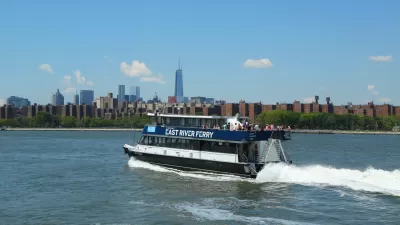
Brooklyn Heights became America's original suburb in 1814 with the maiden voyage of the Nassau, a steamship "carrying 549 passengers, one wagon and three horses" across the East River to Manhattan, wrote New York Times urban affairs correspondent, Sam Roberts, on Dec. 29, 2014. It would be at least 20 years before railroads began carrying passengers.
The East River Ferry, originally launched in 2011, took on new form after Mayor Bill de Blasio announced his intention four years later to greatly expand it. Details of the "ferry gamble" were unveiled in June 2016. The gamble looks like it's paying off.
"About seven months after the city expanded and subsidized the privately run ferry service — reducing the fare from up to $6 to $2.75, [...] ridership is up and so are rents in neighborhoods that were once harder to reach," writes Stefanos Chen, real estate reporter for The New York Times, on Dec. 1. The ferry revival "is luring developers to a long-neglected stretch of the city’s industrial waterfront, from western Queens to south Brooklyn."
After decades of little change, there are now thousands of new apartments coming to the shores of the 16-mile strait, about a quarter of them reserved for lower-income renters.
Residents on the East River waterfront in Astoria, Long Island City and Hunters Point in Queens, and eight Brooklyn neighborhoods from Greenpoint in the north to Bay Ridge in the south [see New York Times map (png)] can access four ferry lines across the East River to Manhattan for the price of a subway ride thanks to the new, expanded NYC Ferry Service launched last May by the city’s Economic Development Corporation.
The "now 16-vessel fleet of ferry boats that can each transport up to 149 passengers [...] with plans next year for routes to the Lower East Side and Soundview in the Bronx," adds Chen. It also serves Rockaway, Queens on the Atlantic coast.
Chen interviews residents who who live along the waterfront and use the ferry service, and reports on how the ferry service has affected real estate development and rental and housing prices in the neighborhoods it serves in the two boroughs.
See a rendering (jpg) of "the Greenpoint, a glassy 40-story rental and condo project opening next year with 603 units, with the ferry prominently placed in the foreground."
FULL STORY: How the Ferry Is Changing the Brooklyn-Queens Waterfront

Measuring the Coronavirus Effect on Development in Brooklyn, Queens
Two development markets charged by an early 2000s rezoning will test the reach of the coronavirus in New York City's development market.
New York City to Reduce Truck Emissions by Investing in Freight Rail Infrastructure
The Big Apple may claim the nation's highest public transit ridership, but it ranks well below average in its use of freight rail. Two small short line railroads are at the center of a $100 million investment to reduce truck reliance.
Who Opposes New York's BQX Streetcar? Not Who You Think
Brooklyn and Queens need better transit, but activists say this waterfront "luxury trolley" is not the way to get it.

Planetizen Federal Action Tracker
A weekly monitor of how Trump’s orders and actions are impacting planners and planning in America.

The state-sanctioned urbicide of Austin
People don’t kill cities. Freeways do.

US to reduce Colorado River water deliveries to Mexico
A new Colorado Treaty amendment reduces Mexico’s Colorado River water allocation by 250,000 acre feet.

5 New England states march closer to 800 megawatt wind energy project
Securing federal approval for the project may be complicated under the Trump administration, which has historically been hostile towards domestic wind power.

Baltimore to break ground on $50 million Transit Priority Project
The project will bring faster bus trips, safer streets and better bike connections to Baltimore.

Airbnb launches $250 million 'last-dollar financing' housing accelerator, makes first investment in Austin
The company will put $6.4 million towards affordable housing development in Texas’ capital.

FREE Course: Walkable City 1: Why Walkability?
After describing his path towards focusing on walkability as the essence of good planning, Jeff Speck marches through his five principal reasons for making more walkable places.
Reinventing Malls: Planning Alchemy—Turning Gray Fields Into Gold
The course focuses on the opportunities and imperatives that shape reinvention of mall sites.

Eagle County Government
Harvard University Graduate School of Design
Nashville Planning Department
The Architects Foundation
University of Cincinnati Online
The Pocatello Development Authority
The Urban Renewal Agency of the City of Pocatello
Journal of the American Planning Association